
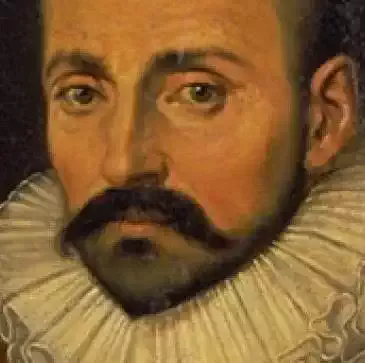
Afonso Eanes de Coton
b. 1200
 PT
PT
PT
Afonso Eanes de Coton was a Portuguese troubadour of the Middle Ages, author of love songs and 'cantigas de amigo'. His work, inserted in the context of Galician-Portuguese lyric poetry, stands out for the delicacy and expressiveness of human sentiments. As a figure of nobility and a knight, his poetic production reflects the codes of honor and customs of the time, contributing to the rich collection of medieval poetry in Portuguese.
n. 1200-01-01, Negreira · m. , Cidade Real
39
Views
Bio
Identification and basic context
Afonso Eanes de Coton was a Galician-Portuguese troubadour, active in the second half of the 13th century and the beginning of the 14th century. His nobility is confirmed by the surname "de Coton" or "Cotón", which refers to a family of knights. His nationality is Galician-Portuguese, as the language and poetic culture were unified at the time.Childhood and education
Detailed information about the childhood and education of Afonso Eanes de Coton is scarce, as is common for most medieval troubadours. It is presumed that, as a member of a noble family, he received an education suitable for his social class, including the learning of arms and, possibly, rudiments of reading and writing, essential for poetic composition.Literary career
Afonso Eanes de Coton is known for a small corpus of cantigas. His compositions are part of the tradition of Galician-Portuguese troubadour lyric poetry. His poetic activity likely took place in the transition period between the 13th and 14th centuries, a time still of vitality for sung and recited poetry.Work, style, and literary characteristics
The cantigas of Afonso Eanes de Coton that have reached us are few and difficult to attribute, but they are generally classified as love cantigas and "cantigas de amigo". In the love cantigas, the troubadour expresses his amorous vassalage to a lady, following the precepts of courtly love, with suffering and exaltation of the feminine figure. In the "cantigas de amigo", the poetic voice is feminine, expressing feelings of longing, anguish, or joy related to the beloved, often in natural settings. The style of Afonso Eanes de Coton, within the limited number of known works, demonstrates a particular sensitivity for sentimental expression, within the formal and thematic molds of Galician-Portuguese lyric poetry.Work, style, and literary characteristics
Cultural and historical context Afonso Eanes de Coton lived in a crucial period in the history of Portugal and Galicia, marked by the consolidation of the Portuguese kingdom and by intense cultural production that crossed linguistic and political borders. Galician-Portuguese lyric poetry was the privileged vehicle of poetic expression for the nobility and poets of the time.Work, style, and literary characteristics
Personal life Being a troubadour, his personal life is intrinsically linked to his literary activity and his status as a nobleman and knight. Specific information about his personal life is very limited, but it is presumed that his social position allowed him access to court circles and the opportunity to compose and disseminate his cantigas.Work, style, and literary characteristics
Recognition and reception The recognition of Afonso Eanes de Coton occurred within the troubadour tradition of the time. His inclusion in medieval songbooks, such as the Cancioneiro da Vaticana or the Cancioneiro Colocci-Brancuti, attests to the relevance of his compositions for posterity and for the study of Galician-Portuguese lyric poetry.Work, style, and literary characteristics
Influences and legacy Afonso Eanes de Coton is part of the vast and rich tradition of Galician-Portuguese lyric poetry, being influenced by the masters who preceded him. His legacy is that of one of the many troubadours who contributed to the formation of a fundamental poetic corpus in Portuguese literature, helping to shape the forms and themes that would influence later poetry.Work, style, and literary characteristics
Interpretation and critical analysis The cantigas of Afonso Eanes de Coton are analyzed in the context of medieval poetry, focusing on the themes of courtly love and "cantiga de amigo", the uses of metaphor, and the formal structure of the compositions. The scarcity of secure attributions makes critical analysis a challenge, but his work is valued for its contribution to the study of the evolution of lyric poetry.Work, style, and literary characteristics
Curiosities and lesser-known aspects The difficulty in confidently attributing some cantigas to Afonso Eanes de Coton is one of the lesser-known aspects. The denomination "de Coton" or "Cotón" itself can have variations and raises doubts about its spelling and exact identity.Work, style, and literary characteristics
Death and memory There are no detailed records about the circumstances of Afonso Eanes de Coton's death. His memory endures through the few cantigas attributed to him that have been preserved in medieval songbooks, remaining a name remembered in the study of Galician-Portuguese poetry.Poems
0No poems found
Comments (0)
Log in
to post a comment.
No comments yet. Be the first to comment.