
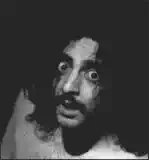
Alberto Augusto Miranda
 PT
PT
Alberto Augusto Miranda was a Portuguese poet and diplomat. He stood out for his poetic work that explores themes such as identity, memory, and the individual's relationship with time and space. His writing is marked by careful language and deep lyrical sensibility, reflecting his experiences and his view of the world. Connected to diplomacy, his life also had an international dimension, which is reflected in his perspective on human issues. His poetry is an invitation to reflect on the human condition, with an introspective and, at times, melancholic approach.
n. 1956-02-21, Vila Real · m. , Madrid
Bio
Identification and basic context
Alberto Augusto Miranda was a Portuguese poet and diplomat. His full name was Alberto Augusto de Miranda. He was known for his poetic output, which placed him within the Portuguese literary landscape of the 20th century.Childhood and education
Detailed information about Alberto Augusto Miranda's childhood and education is scarce in publicly available information. It is known, however, that his professional career as a diplomat suggests a solid academic background, possibly in areas such as Law or International Relations, which prepared him for a diplomatic career and influenced his worldview.Literary career
Alberto Augusto Miranda's literary career was associated with his poetic output. Although not as widely publicized as that of other renowned poets, his poetic work has been studied and valued for its lyrical and thematic quality. Details about the beginnings of his writing or his participation in specific publications are limited.Work, style, and literary characteristics
The work of Alberto Augusto Miranda is characterized by a strong lyrical vein and a deep exploration of existential themes. Identity, memory, the passage of time, and the human being's relationship with space are recurring themes. His poetic style is marked by careful language, sensitivity, and an introspective approach. Miranda's poetry invites reflection on the human condition, often with a melancholic tone.Cultural and historical context
As a diplomat, Alberto Augusto Miranda lived in a context that allowed him a broad view of the world. His work, although deeply rooted in personal sensitivity, may reflect the concerns and cultural dialogues of his time. His connection to the diplomatic environment may have provided him with contact with various artistic and literary currents, influencing his own writing.Personal life
As a diplomat, Alberto Augusto Miranda had a life with a strong international component. Details about his personal life, affective and family relationships, as well as political beliefs or positions, are not widely disclosed. However, his dedication to poetry suggests a rich inner life and refined sensitivity.Recognition and reception
The recognition of Alberto Augusto Miranda's poetic work has been consolidating, especially in academic circles and among poetry enthusiasts. Although he may not have achieved the same popularity as other names in Portuguese literature, his poetry is valued for its depth and artistic quality. His inclusion in anthologies and literary studies attests to his importance.Influences and legacy
Specific influences on Alberto Augusto Miranda are subject to critical analysis, but it is likely that he engaged with the Portuguese lyrical tradition. His legacy lies in his contribution to contemporary poetry, with a body of work that explores universal themes in a personal and sensitive way. The impact of his poetry on later generations of poets can be assessed through dedicated studies.Interpretation and critical analysis
Miranda's work is open to various interpretations, focusing on his exploration of identity, memory, and the transience of existence. His poetry can be read as a mirror of the anxieties and beauties of the human condition, inviting the reader to deep introspection. Critical analyses focus on his language, his imagistic construction, and the emotional charge of his verses.Curiosities and less-known aspects
Few curious or less-known aspects about Alberto Augusto Miranda's life are in the public domain. His duality as a diplomat and poet is, in itself, an interesting aspect, suggesting an ability to move between the pragmatism of public life and the introspection of artistic creation. His writing habits or details about his creative process are not widely documented.Death and memory
Information about the circumstances of Alberto Augusto Miranda's death is not detailed in the available information. His memory endures through his poetic work, which continues to be read, studied, and appreciated, keeping his literary legacy alive.Poems
0No poems found
Comments (0)
No comments yet. Be the first to comment.