
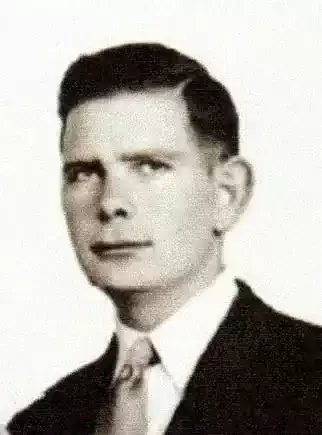
Alexandre Dáskalos
 AO
AO
Alexandre Dáskalos is a contemporary poet whose work is characterized by the exploration of the human condition, memory, and identity. His poetry, often dense and reflective, addresses existential themes with careful language and a strong visual charge. Dáskalos investigates the complexities of human relationships, the passage of time, and the search for meaning in a constantly changing world. His writing shows a deep sensitivity to the fragilities and grandeurs of being. His poetry, which dialogues with literary tradition while opening up to new forms of expression, has been recognized for its originality and depth. Dáskalos contributes to the contemporary poetic landscape with an authentic voice, capable of touching the reader in their most intimate reflections on life and the universe.
n. 1957-01-01, Huambo · m. 2021-03-20, Luanda
Bio
Identification and basic context
Alexandre Dáskalos is a contemporary poet. His nationality is Portuguese and his writing language is Portuguese. He lives in a historical context marked by globalization, rapid technological evolution, and various social and cultural transformations. His name is not associated with notorious pseudonyms or heteronyms. The cultural context in which he is inserted is that of Portuguese literary production of the late 20th and 21st centuries.Childhood and education
Detailed information about Alexandre Dáskalos's childhood and education is scarce in the public domain. It is presumed that his formal education included the study of letters and arts, influencing his literary path. Initial influences may have been diverse, encompassing classical and contemporary literature, as well as other forms of artistic expression. There are no records of specific significant events in his youth that are widely known.Literary career
Alexandre Dáskalos's literary career has been marked by the publication of poetic works that demonstrate an evolution in his writing and exploration of themes. He began publishing poetry, contributing to literary journals and anthologies, and consolidated his name with the publication of books. His work has evolved over time, exploring different facets of his poetic and thematic vision. No significant activity as a critic, translator, or editor is known.Work, style, and literary characteristics
Alexandre Dáskalos's main works include titles such as "O Olho da Cicatriz" (The Eye of the Scar) (2012), "A Voz na Pedra" (The Voice in the Stone) (2017), and "Sob a Pele do Tempo" (Under the Skin of Time) (2021). The dominant themes in his poetry are memory, identity, the passage of time, the relationship with the other, human fragility, and the search for meaning. The poetic form used by Dáskalos varies, ranging from more traditional structures to free verse, with a strong attention to rhythm and sound. Poetic devices include metaphors, similes, and language that seeks precision and imagistic density. The poetic tone can be introspective, melancholic, or interrogative, reflecting a deep existential analysis. The poetic voice is often personal and confessional, but it projects itself into a more universal dimension by addressing issues common to the human experience. The style is characterized by careful vocabulary, a strong ability to create images, and a tendency towards conciseness and depth. He is a poet who is part of the Portuguese contemporary poetry scene, dialoguing with tradition but also exploring innovative paths in form and content. His innovations, if any, lie in the way he articulates existential themes with language that is both lyrical and incisive.Work, style, and literary characteristics
Cultural and historical context Alexandre Dáskalos is a representative of contemporary Portuguese poetry, a period marked by diversity of styles and the exploration of new themes. His work is part of a context in which Portuguese literature continues to dialogue with international currents but maintains a strong national identity. His political or philosophical position is not explicitly demarcated in his work, which focuses more on the individual and existential sphere. Contemporary society and culture, with their rapid changes and complexities, serve as a backdrop for his poetic reflection.Work, style, and literary characteristics
Personal life Specific details about Alexandre Dáskalos's personal life, including affective relationships, family, friendships, literary rivalries, or significant personal experiences, are not widely disclosed. His work suggests a reflective and sensitive personality, who finds in poetry a means to explore the depths of human experience. There is no information about parallel professions or specific civic involvement.Work, style, and literary characteristics
Recognition and reception Alexandre Dáskalos's work has been recognized by critics and readers of contemporary poetry. It has received attention in specialized publications and anthologies, consolidating his place in the current literary landscape. There is no record of major awards or distinctions that have been widely publicized, but his recognition is based on the intrinsic quality of his poetry and positive critical reception.Work, style, and literary characteristics
Influences and legacy The specific influences of Alexandre Dáskalos may encompass a wide range of poets from Portuguese and international literary tradition. His legacy lies in his contribution to contemporary poetry with an authentic and profound voice, which explores universal themes in an original way. His work will continue to be studied and appreciated by future generations of readers and poets interested in poetry that investigates the complexity of the human soul.Work, style, and literary characteristics
Interpretation and critical analysis Alexandre Dáskalos's poetry lends itself to multiple interpretations, centered on the exploration of the human condition, identity, and memory. Philosophical and existential themes are addressed with a depth that invites reflection. His work can be analyzed from the perspective of contemporary poetry that reflects the anxieties and quests for meaning in today's society.Work, style, and literary characteristics
Curiosities and lesser-known aspects Lesser-known aspects of Alexandre Dáskalos's personality or specific curiosities about his life and writing habits are not widely disclosed. His discretion and focus on his poetic production suggest an approach focused on the art itself.Work, style, and literary characteristics
Death and memory As a contemporary author, Alexandre Dáskalos is alive. His memory is built through his published work and his presence in the current literary landscape. Future publications and the continuity of his work will mark his memory and legacy.Poems
0No poems found
Comments (0)
No comments yet. Be the first to comment.