
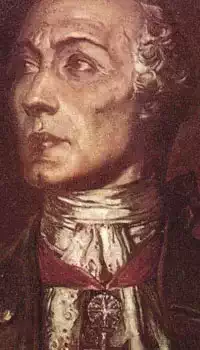
Alexandre de Gusmão
1695–1753
· lived 58 years
 BR
BR
BR
Alexandre de Gusmão, also known by his pseudonym "O Poeta de São Lourenço" (The Poet of São Lourenço), was a multifaceted figure in the cultural and political scene of colonial Brazil. He distinguished himself as a poet, diplomat, and jurist, leaving a significant legacy in various fields. His poetry, although less prolific than his public activity, reveals a particular sensitivity to the issues of the time and to lyrical expression, integrating into the context of the Mineiro Arcadianism.
n. 1695-01-01, Santos · m. 1753-12-31, Lisboa
21
Views
Bio
Identification and basic context
Alexandre de Gusmão, born in 1695, was a notable Luso-Brazilian diplomat, jurist, and poet, a prominent figure in Colonial Brazil. Known by the pseudonym "O Poeta de São Lourenço", he held positions of great political and diplomatic importance, representing Portugal's interests in various missions in Europe. His involvement in the Treaty of Madrid (1750) was crucial.Childhood and education
Information about his childhood and initial education is less detailed, but it is known that he had access to an education that allowed him to excel in the fields of law and diplomacy. He attended the University of Coimbra.Literary career
Alexandre de Gusmão's literary career is marked by a poetic production that, although not his main work, demonstrates his connection to the Arcadian movement. His poems reflect the themes and style of the era, with a focus on nature, mythology, and lyrical sentiments.Work, style, and literary characteristics
Alexandre de Gusmão's poetic work, though limited in volume, fits within the Arcadian style. His poems frequently evoke bucolic life, pastoralism, and classical values, using careful language and mythological references. The themes of love and nature are recurring. His pseudonym, "O Poeta de São Lourenço", refers to a lyrical identity linked to an idealized space.Cultural and historical context
Alexandre de Gusmão lived in a period of intense diplomatic activity and territorial expansion for Portugal, which directly influenced his career. The Arcadian movement, to which he was associated, represented a reaction to Baroque, valuing simplicity, reason, and inspiration from Classical Antiquity.Personal life
As a diplomat and jurist, Alexandre de Gusmão's life was intense and dedicated to the service of the Portuguese Crown. His diplomatic missions in Europe were fundamental.Recognition and reception
Alexandre de Gusmão's main recognition comes from his diplomatic and legal work, especially in the Treaty of Madrid. His poetic work is recognized as part of the Brazilian Arcadian literary heritage.Influences and legacy
His greatest influence lies in the field of diplomacy and international law. As a poet, he contributed to the dissemination of Arcadianism in Brazil.Interpretation and critical analysis
Gusmão's poetic work can be analyzed from the perspective of Arcadian ideals, exploring the tension between real life and pastoral idealization.Curiosities and lesser-known aspects
His pseudonym "O Poeta de São Lourenço" is a curious aspect that links him to a more lyrical and personal facet.Death and memory
Alexandre de Gusmão passed away in 1753. His memory endures mainly through his contribution to diplomacy and the definition of Brazil's borders.Poems
0No poems found
Comments (0)
Log in
to post a comment.
No comments yet. Be the first to comment.