
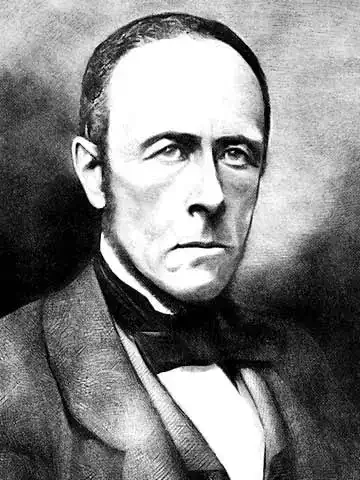
Alexandre Herculano
1810–1877
· lived 67 years
 PT
PT
PT
Alexandre Herculano was a prominent Portuguese writer, historian, and journalist, a central figure of Romanticism in Portugal. His literary work, especially his historical novels, is marked by nationalism, mysticism, and the defense of liberal ideals. As a historian, he dedicated himself to the critical investigation of Portugal's history, using rigorous methods and seeking to demystify legends and traditions.
n. 1810-03-28, Lisboa · m. 1877-09-13, Santarém
45
Views
Bio
Identification and Basic Context
Alexandre Herculano de Carvalho e Araújo was a Portuguese writer, historian, journalist, and politician. He is considered one of the central figures of Portuguese Romanticism and one of the founders of modern historiography in Portugal. He was born in Porto and died in Lisbon.Childhood and Education
Herculano's childhood was marked by political and personal turbulence. Orphaned of his mother at a young age, he was raised by his grandmother. He received an excellent education, which included the study of classical and modern languages, and from a young age, he showed a great passion for reading and history. His intellectual formation was strongly influenced by the liberal and romantic ideas circulating in Europe.Literary Career
Herculano's literary career began with the publication of poems and short stories. He gained notoriety with his first historical novel, "Guerras de Amor" (1836), and consolidated his prestige with works such as "Eurico, o Presbítero" (1844), "O Monge de Cister" (1847), "A Dama das Lágrimas" (1845), and "A Dama do Peito Negro" (1855). In parallel with his literary work, Herculano dedicated himself to historical research, publishing "Lendas e Narrativas" (1851) and the monumental "História de Portugal" (1846-1853). He was also an active journalist and polemicist, defending his liberal ideas.Work, Style, and Literary Characteristics
Herculano's works are characterized by a strong romantic tendency, nationalism, criticism of the abuses of the Church and monarchical power, and the exaltation of the values of freedom and the homeland. In his historical novels, he recreates the Portuguese past with passion and detail, exploring themes such as love, honor, faith, fanaticism, and the struggle for freedom. His style is meticulous, with an often archaic, but always expressive and emotional language. In his historiographical work, he stood out for his methodological rigor, critical analysis of sources, and attempt to reconstruct the past objectively, moving away from hagiographic and legendary narratives.Cultural and Historical Context
Alexandre Herculano lived in a time of great transformations in Portugal, marked by the Liberal Wars, political instability, and the affirmation of liberalism. He was one of the main representatives of Romanticism in Portugal, a movement characterized by the valorization of the individual, nationalism, sentiment, and history.Personal Life
Herculano was a man of strong convictions and remarkable intellectual integrity. He was known for his irascible temperament and his passionate dedication to writing and research. He maintained close relationships with other intellectuals of his time and ardently defended his political and religious positions, which earned him enmities and persecution.Recognition and Reception
Alexandre Herculano is unanimously recognized as one of the greatest figures in Portuguese literature and historiography. His novels were extremely popular during his lifetime and continue to be read and studied. His historical work laid the foundation for modern historiography in Portugal and influenced generations of historians. He received several honors and was distinguished with the Order of Our Lady of the Conception of Vila Viçosa.Influences and Legacy
Herculano was influenced by authors such as Sir Walter Scott and Lord Byron. His legacy is immense, both in literature and historiography. His work contributed to the formation of Portuguese national identity and the consolidation of a critical and scientific view of history. He is considered one of the pillars of Portuguese culture.Interpretation and Critical Analysis
Herculano's work has been the subject of various interpretations, which highlight his contribution to Romanticism, his nationalism, and his defense of liberal ideals. His approach to history, innovative for its time, continues to be a subject of study and debate among historians.Curiosities and Lesser-Known Aspects
Herculano was a fervent defender of historical truth and did not hesitate to confront powerful institutions and personalities when he felt they were distorting the past. His extensive correspondence reveals a man deeply concerned with the destiny of Portugal and individual freedom.Death and Memory
Alexandre Herculano died in Lisbon and was buried in the Monastery of São Vicente de Fora, where his remains were later transferred to the National Pantheon. His memory is celebrated as that of one of the most important Portuguese intellectuals.Poems
0No poems found
Comments (0)
Log in
to post a comment.
No comments yet. Be the first to comment.