
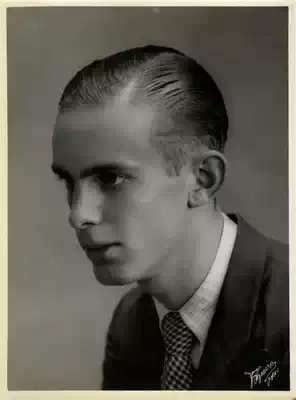
Álvaro Feijó
 PT
PT
Álvaro Feijó was a Portuguese poet whose work is part of the Neorealism context. His poetry is marked by strong social commitment and denunciation of injustices, reflecting the concerns of a time of profound political and social transformations in Portugal. With direct language and an interventionist tone, Feijó sought to give voice to the oppressed and exiled, exploring themes such as freedom, hope, and resistance. His literary production, although sometimes marked by censorship and publication difficulties, left an important testimony of poetic strength in times of adversity, consolidating him as a relevant figure in 20th-century Portuguese social poetry.
n. 1916-07-05, Viana do Castelo · m. 1941-03-09, Coimbra
Bio
Identification and Basic Context
Álvaro Feijó was a Portuguese poet. He was born in 1919, in Alhandra, Vila Franca de Xira, and passed away in 1995, in Funchal, Madeira.Childhood and Education
Little information is publicly available about Álvaro Feijó's childhood and education. It is known that he was actively involved in the political and cultural life of his time.Literary Career
Álvaro Feijó's literary career is intrinsically linked to Portuguese Neorealism. His poetry, marked by a strong sense of social intervention, addressed themes such as the struggle for freedom, oppression, and the hope for a better future. His work was influenced by the political and social context of Portugal, particularly during the Estado Novo, a period when censorship limited artistic expression.Work, Style, and Literary Characteristics
Álvaro Feijó's work is characterized by its strong social and political component. Using direct and interventionist language, the poet gave voice to the working classes and the marginalized, denouncing injustices and repression. Themes such as freedom, human dignity, resistance, and hope are central to his poetry. His style is marked by clarity and expressive force, aligned with the aesthetic principles of Neorealism.Work, Style, and Literary Characteristics
Cultural and Historical Context Álvaro Feijó lived and produced his work during a period of great cultural and political effervescence in Portugal. Neorealism was a movement that sought to portray the social reality of the country, denouncing poverty, exploitation, and the lack of freedom. Feijó, like many other intellectuals of the time, felt the need to use his art as a form of intervention and protest against the dictatorial regime of the Estado Novo.Work, Style, and Literary Characteristics
Personal Life Álvaro Feijó's personal life was marked by his political activism and his dedication to the cause of freedom. Like many of his contemporaries, he faced the constraints imposed by censorship and political repression.Work, Style, and Literary Characteristics
Recognition and Reception Although his work may not have achieved the same notoriety as other neorealist poets, Álvaro Feijó is recognized as an important poet for his contribution to social and interventionist poetry in Portugal. His poetry reflects a historical moment and a spirit of resistance that marked Portuguese culture.Work, Style, and Literary Characteristics
Influences and Legacy Álvaro Feijó is a representative of the neorealist current in Portuguese poetry. His legacy lies in his ability to give voice to those who had none, using poetry as a tool for denunciation and hope. Within his movement, he influenced how poetry could be a mirror of social realities.Work, Style, and Literary Characteristics
Interpretation and Critical Analysis Álvaro Feijó's poetry is often interpreted as a cry of revolt against oppression and a manifestation of faith in humanity's capacity to fight for a more just future. Critical analysis of his work highlights his ethical and aesthetic commitment to social reality.Work, Style, and Literary Characteristics
Curiosities and Lesser-Known Aspects Few curious aspects about Álvaro Feijó's life are widely known, given his more focused stance on literary production and activism, rather than public exposure.Work, Style, and Literary Characteristics
Death and Memory Álvaro Feijó passed away in 1995. His memory is preserved through his poetic work, which continues to be studied and valued in the context of Portuguese social intervention literature.Poems
0No poems found
Comments (0)
No comments yet. Be the first to comment.