
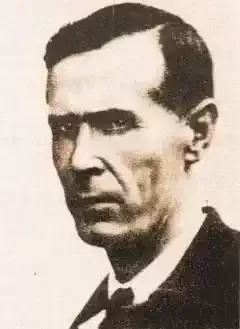
António Aleixo
1899–1949
· lived 50 years
 PT
PT
PT
António Aleixo was a popular Portuguese poet, known for his work that reflects daily life, social difficulties, and popular wisdom. Born in a small Algarve village, his life was marked by hard work and a strong connection to the land, elements that strongly resonate in his verses. Despite limited access to formal education, Aleixo developed a unique poetic voice, characterized by simplicity, authenticity, and profound humanism, earning the appreciation of a wide audience.
n. 1899-02-18, Vila Real de Santo António · m. 1949-11-16, Loulé
31
Views
Bio
Identification and Basic Context
António Aleixo, the name by which he is known, was born into a humble family in the village of Azinhaga, Gavião municipality, Portugal. Although there is no record of pseudonyms or heteronyms, his poetic identity is singular and deeply linked to his origin. His nationality is Portuguese and his writing language is Portuguese. He lived most of his life in the 20th century, a period marked by great social and political transformations in Portugal.Childhood and Education
Born into a peasant family, António Aleixo's childhood was marked by poverty and farm work. His formal education was scarce, having only attended primary school. His true education came through observing daily life, oral popular wisdom, and a passion for reading that he developed self-taught, with the few books he could access. Initial influences were popular religiosity, rural traditions, and stories told by elders, which shaped his worldview and sensitivity.Literary Career
António Aleixo began writing poetry at a more mature stage of his life, driven by the need to express his experiences and reflections on life. His work evolved organically, maintaining thematic and stylistic coherence linked to his origins. His literary activity was not limited to producing poems; he published some books and his verses circulated widely, both in local publications and anthologies, achieving significant public recognition.Work, Style, and Literary Characteristics
The work of António Aleixo consists of poems that portray simple life, rural labor, social injustices, and the search for meaning in existence. Themes such as faith, hope, family, nature, and human dignity are recurrent. His style is characterized by accessible language, musicality, and the frequent use of proverbs and popular sayings, imbuing his verses with ancestral wisdom. Although he did not adhere to rigid poetic forms, his writing possessed a natural rhythm and cadence. The tone is often lyrical, sometimes elegiac, but always with a strong component of authenticity and humanism. Aleixo did not affiliate himself with specific literary movements, developing a genuine and popular voice that directly engaged with the people.Work, Style, and Literary Characteristics
Cultural and Historical Context António Aleixo lived in Portugal during a period of profound social and political changes, including the Estado Novo dictatorship. His work, although centered on the experiences of the common man and rural people, implicitly reflects the difficulties and injustices of the era. His recognition occurred largely at a popular level, transcending narrower literary circles, demonstrating his ability to communicate with a vast and diverse audience. His work engages with the tradition of Portuguese popular poetry but with an originality that makes it timeless.Work, Style, and Literary Characteristics
Personal Life António Aleixo was a peasant and a laborer, dedicating most of his life to supporting his family. His family relationships, particularly with his wife and children, were a constant source of inspiration and motivation. His life was marked by simplicity and dedication to work. Although his religiosity was present, expressed in his work, there are no records of prominent political or civic involvement; his social contribution was made through the power of his verses and his representation of the human condition.Work, Style, and Literary Characteristics
Recognition and Reception António Aleixo achieved notable popular recognition during his lifetime, being considered one of the poets of the people. His books sold well, and his poems were widely recited and disseminated. Although he did not receive major literary awards, his legacy lies in the profound connection he established with his readers, who identified with his language and the themes he addressed. His work continues to be studied and appreciated for its authenticity and social value.Work, Style, and Literary Characteristics
Influences and Legacy António Aleixo was influenced by oral tradition and Portuguese popular poetry, as well as by his readings throughout life. His legacy lies in his ability to give voice to the oppressed and the forgotten, using direct and emotional language. He influenced generations of readers with his authenticity and humanism, becoming a symbol of Portuguese popular poetry. His work remains relevant for its universality and its representation of the human condition.Work, Style, and Literary Characteristics
Interpretation and Critical Analysis António Aleixo's work has been interpreted as a mirror of the struggles of the Portuguese people, especially rural populations. His poetry is often analyzed for its social and existential dimension, addressing universal themes such as faith, hope, injustice, and the search for dignity. His simple yet meaningful language invites multiple readings, from aesthetic appreciation to ethical and philosophical reflection.Work, Style, and Literary Characteristics
Curiosities and Lesser-Known Aspects A curiosity about António Aleixo is that, despite having little formal education, he demonstrated surprising erudition in his readings and reflections. His poems were often written on roll paper or any available material, reflecting his creative spontaneity. His humility and dedication to hard work contrasted with the depth and sensitivity of his poetry.Work, Style, and Literary Characteristics
Death and Memory António Aleixo passed away on a date that is not widely publicized in summary biographies. His death left a void in Portuguese popular poetry, but his memory endures through his work. Posthumous publications continued to disseminate his verses, ensuring that his poetic voice continues to inspire and move readers of all generations.Poems
0No poems found
Comments (0)
Log in
to post a comment.
No comments yet. Be the first to comment.