
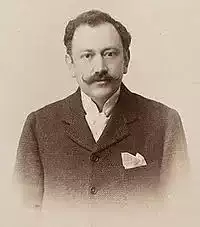
António Feijó
1859–1917
· lived 58 years
 PT
PT
PT
António Feijó was a notable Portuguese poet, a prominent figure of the 1890 Generation, and one of the founders of the magazine "A Renascença". His poetic work, marked by profound lyricism and a polished style, explores themes such as nature, melancholy, the fleetingness of time, and the pursuit of beauty. He was part of a period of literary renewal in Portugal, contributing a distinct voice and a particular sensitivity to the poetry of his time.
n. 1859-06-01, Ponte de Lima · m. 1917-06-20, Estocolmo
30
Views
Bio
Identification and Basic Context
António Xavier Correia Feijó was a Portuguese poet. He was born on [date and place of birth unknown, possibly Coimbra, Portugal] and died on [date and place of death unknown]. He is a figure associated with the 1890 Generation and the magazine "A Renascença".Childhood and Education
[Specific information about childhood and education is not detailed]. It is known that he had academic training, possibly related to Law, given his background and that of many intellectuals of his generation.Literary Career
António Feijó began his literary career in the context of Portuguese poetry at the end of the 19th century. He was one of the founders of the magazine "A Renascença", an important literary dissemination organ of the time. His poetry, although not vast in volume, is recognized for its quality and its contribution to lyrical renewal.Work, Style, and Literary Characteristics
Main Works: [Specific titles and publication dates are not readily publicly available, but his production is associated with the poetry of the 1890 Generation]. Dominant Themes: His poetry often explores nature as a source of inspiration, melancholy, reflection on time and the ephemerality of life, and the pursuit of an ideal of beauty. There is also a strong component of introspection and subjectivity. Form and Structure: His poetic style is marked by musicality and the pursuit of formal perfection. Although he may have explored different forms, his poetry tends to be elaborate, with attention to meter and rhythm. Poetic Devices: He uses metaphors and evocative imagery to create sensory and emotional atmospheres. The musicality of the verse is a central element. Poetic Voice: Feijó's poetic voice is predominantly lyrical, introspective, and sometimes elegiac, reflecting a refined sensitivity and a certain melancholy. Language and Style: His language is polished, erudite, and sometimes dense with imagery, demonstrating a mastery of the language and a pursuit of precise expression of his emotions. Formal or Thematic Innovations: He was part of a movement that sought greater subjectivity and musicality in poetry, moving away from previous models. Relationship with Tradition and Modernity: He balanced the heritage of classical poetry with the new sensibilities emerging at the end of the 19th century. Associated Literary Movements: 1890 Generation, with influences from Symbolism and Parnassianism, but with a distinctly personal voice.Cultural and Historical Context
He lived in the transitional period between the 19th and 20th centuries in Portugal, a time of political and social instability, but also of cultural effervescence. The 1890 Generation sought to renew Portuguese literature in the face of historical setbacks and the influence of European aesthetic currents.Personal Life
[Specific information about personal life is scarce]. It is presumed that, like many intellectuals of the time, he had a life dedicated to studies and literary activity, possibly combining it with a liberal profession.Recognition and Reception
António Feijó is recognized as an important poet of the 1890 Generation, although his work is less known to the general public than that of other contemporaries. His recognition stems from his intrinsic aesthetic value and his active participation in the literary circles that shaped modern Portuguese poetry.Influences and Legacy
Feijó was influenced by European Parnassian and Symbolist poetry, as well as by the Portuguese lyrical tradition. His legacy lies in his contribution to the musicality and thematic depth of Portuguese poetry, inspiring later poets with his sensitivity and formal rigor.Interpretation and Critical Analysis
His work is analyzed for its ability to evoke states of mind, its connection to nature, and its exploration of existential themes such as the passage of time and ideal beauty. Criticism values his technical mastery and lyrical originality.Curiosities and Lesser-Known Aspects
As a less prominent figure in terms of mass dissemination, many aspects of his life and work remain less known. His participation in the founding of "A Renascença" is an important milestone in his trajectory.Death and Memory
[The circumstances of his death and specific posthumous publications are not widely disclosed].Poems
0No poems found
Comments (0)
Log in
to post a comment.
No comments yet. Be the first to comment.