
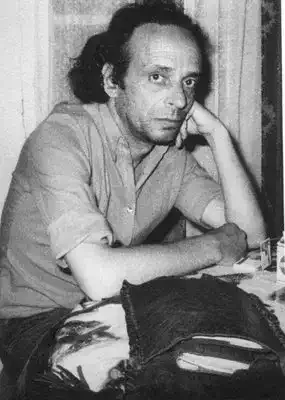
António José Forte
1931–1988
· lived 57 years
 PT
PT
PT
António José Forte was a Portuguese poet known for his work linked to surrealism and the exploration of the unconscious. His poetry often explores themes such as desire, the body, fragmented identity, and social criticism, using bold and imagistic language. His work is marked by profound originality and a rejection of literary conventions, seeking a freer and more authentic expression of the human experience.
n. 1931-02-06, Vila Franca de Xira · m. 1988-12-15, Lisboa
29
Views
Bio
Identification and basic context
António José Forte, born in Lisbon on December 22, 1941, and died in the same city on November 30, 2020, was a Portuguese poet and writer. He stood out as a central figure of surrealism in Portugal, often using the pseudonym 'António Maria Forte'. His work is a landmark in 20th and 21st-century Portuguese poetry.Childhood and education
Forte was born into a middle-class family in Lisbon. His youth was marked by the absorption of various cultural and artistic influences, which would shape his literary path. Although there are no detailed records of his specific education, his involvement with intellectual and artistic circles was crucial for the development of his thought and poetic expression.Literary career
António José Forte's literary career began with a strong connection to the Portuguese surrealist movement. He started publishing poetry in the mid-1960s, collaborating with various literary magazines of the time, such as 'O Falso Barão' and 'Gazeta das Artes'. His work evolved through a continuous exploration of the unconscious and language, always maintaining a stance of experimentation and rupture.Work, style, and literary characteristics
Among his most important works are "O Navio", "Memória de Fogo", and "O Obsceno, o Sagrado e o Profano". The themes of his poetry focus on the exploration of desire, the body, identity, madness, and criticism of social conformity. Formally, Forte favored free verse, exploring syntactic disruption and the creation of impactful and often shocking images. His language is dense, dreamlike, and laden with symbolism, reflecting a quest for the pure expression of the subconscious. The tone of his poetic voice is often confessional, but also universal, delving into the depths of the human psyche. Forte introduced notable innovations in Portuguese poetry through his radical approach to surrealism and his refusal to conform to established literary norms.Work, style, and literary characteristics
Cultural and historical context António José Forte lived in a period of great transformations in Portugal, from the Salazar dictatorship to democracy. His work, deeply linked to surrealism, engaged with international artistic and literary currents but maintained a distinctly Portuguese identity. He was a contemporary of other important poets and artists who, in different ways, questioned the status quo.Work, style, and literary characteristics
Personal life The details of António José Forte's personal life are sometimes enigmatic, which contributes to the aura of mystery surrounding him. His dedication to poetry and the exploration of the unconscious appears to have been the central axis of his existence. His personal relationships and experiences, though not widely disclosed, are evident in the intensity and rawness of his work.Work, style, and literary characteristics
Recognition and reception Although his work was recognized in literary circles connected to surrealism and avant-garde poetry, broad institutional recognition for António José Forte was, in part, posthumous. His poetry, sometimes considered difficult to access, always captivated readers and critics who appreciate experimentation and depth.Work, style, and literary characteristics
Influences and legacy António José Forte was influenced by André Breton and French surrealism, as well as by poets who explored the dreamlike dimension and the unconscious. His legacy lies in the renewal of surrealist poetry in Portugal, opening paths for new forms of expression and the exploration of taboo subjects. He influenced later generations of poets who seek limitless creative freedom.Work, style, and literary characteristics
Interpretation and critical analysis Forte's work is often analyzed from a psychoanalytic perspective, exploring his representations of the unconscious, repressed desire, and the complexity of identity. His poetry challenges univocal interpretations, inviting the reader to delve into the labyrinth of the self and the world.Work, style, and literary characteristics
Curiosities and lesser-known aspects António José Forte was known for his reserved personality and his deep immersion in the surrealist universe. His life and work seem to merge, creating an aura of mysticism around his figure. The rawness and boldness of his imagery often shocked or fascinated his readers, reflecting an unparalleled poetic courage.Work, style, and literary characteristics
Death and memory António José Forte died in Lisbon, victim of illness. His death marked the end of an era for Portuguese surrealism. His memory endures through his work, which continues to be studied, published, and admired by new generations of readers and scholars.Poems
0No poems found
Comments (0)
Log in
to post a comment.
No comments yet. Be the first to comment.