
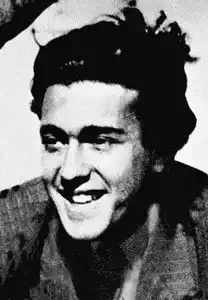
António Maria Lisboa
1928–1953
· lived 25 years
 PT
PT
PT
António Maria Lisboa was a Portuguese poet, a prominent figure in the surrealist movement in Portugal. His poetic work is characterized by innovative language, exploration of the unconscious, and a strong dreamlike and imagery-laden quality. He was one of the founders of the magazine "Orfeu", a starting point for modernism in Portugal, and was intensely active in the surrealist group.
n. 1928-08-01, Lisboa · m. 1953-09-11, Lisboa
38
Views
Bio
Identification and basic context
António Maria Lisboa was a Portuguese poet, known primarily for his connection to the surrealist movement. Born in Lisbon, he was one of the fundamental names in introducing surrealism to Portugal, actively participating in the groups and publications that defined this literary current in the country.Childhood and education
His intellectual development occurred in an environment conducive to the new artistic and literary ideas circulating in Lisbon. Contact with the European avant-garde, especially surrealism, was decisive for the development of his work.Literary career
António Maria Lisboa began his literary career in contact with the Portuguese modernist movement. He was one of the contributors to the emblematic magazine "Orfeu", which marked the beginning of modernism in Portugal. Later, he became a central figure in the Portuguese surrealist group, contributing poems that explored the principles of automatic writing and the dreamlike universe. His poetic output, though concentrated in a specific period, left a significant mark.Work, style, and literary characteristics
António Maria Lisboa's work is profoundly marked by surrealism. His poetry is characterized by formal freedom, exploration of the unconscious, powerful and often disconcerting imagery, and the breakdown of rational logic. He used automatic writing as a creative resource, seeking to access a purer and more revealing stream of consciousness. Themes such as love, desire, mystery, the irrational, and the subversive permeate his verses. The language is frequently surprising, with unusual associations and its own, albeit unconventional, musicality.Cultural and historical context
António Maria Lisboa fits into the context of the European artistic avant-garde of the early 20th century. In Portugal, his activity coincided with the development of modernism and, later, surrealism, movements that sought to break with tradition and propose new forms of artistic and literary expression. The Portuguese surrealist group, of which he was a part, played a crucial role in the country's cultural renewal.Personal life
The details of António Maria Lisboa's personal life are less known, but his dedication to surrealist ideas and poetic production is evident in his work and his engagement with the literary movements of his time.Recognition and reception
Although his output was intense during a specific period, António Maria Lisboa is recognized as one of the important names in surrealism in Portugal. His work contributed to the renewal of Portuguese poetry and the consolidation of surrealism as an aesthetic force in the country.Influences and legacy
Influenced by European surrealist currents, António Maria Lisboa, in turn, influenced later poets with his innovative approach to language and imagery. His legacy lies in the audacity of his poetry and his contribution to the history of surrealism in Portugal.Critical interpretation and analysis
António Maria Lisboa's poetry is a subject of study for its symbolic richness and its ability to access the universe of the unconscious. Critical analysis of his work focuses on the originality of his language and the power of his images, which challenge conventions and invite multiple interpretations.Curiosities and lesser-known aspects
His connection to the surrealist movement and his participation in avant-garde publications demonstrate a restless spirit and a constant search for new forms of expression.Death and memory
António Maria Lisboa passed away prematurely, but his work left a lasting impact on Portuguese poetry, being remembered as one of the exponents of surrealism in the country.Poems
0No poems found
Comments (0)
Log in
to post a comment.
No comments yet. Be the first to comment.