
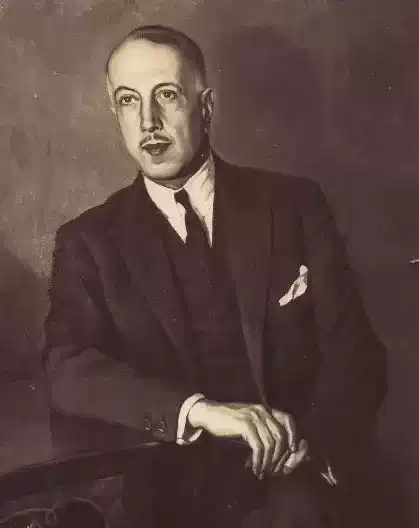
António Patrício
1878–1930
· lived 52 years
 PT
PT
PT
António Patrício was a Portuguese poet and university professor, whose work is part of the context of 20th-century poetry in Portugal. His poetry, although with less media projection compared to some contemporaries, is recognized for its reflective depth, exploration of existential themes, and the search for a refined language. His academic career also marked his intellectual trajectory.
n. 1878-03-07, Porto · m. 1930-06-04, Macau
48
Views
Bio
Identification and basic context
António Patrício, full name António de Jesus Patrício, was a Portuguese poet, essayist, and university professor. He was born in Coimbra on February 21, 1947, and died in the same city on August 3, 2011. He was the son of António Patrício and Maria Helena Patrício. He always maintained a strong connection to his hometown, Coimbra, where he developed most of his academic and literary life. He wrote in Portuguese.Childhood and education
He grew up in Coimbra, where he attended his studies. He graduated in Romance Philology from the Faculty of Arts of the University of Coimbra. His academic training was solid and allowed him to develop critical thinking and erudition that were reflected in his work. His initial readings covered classical and modern Portuguese literature, as well as authors from universal literature.Literary career
António Patrício's literary career began to consolidate in the 1970s and 1980s, with the publication of his first poetry books. His writing developed consistently, with a constant concern for form and meaning. He participated in literary gatherings and collaborated in some periodicals, although his production was more discreet in terms of public visibility.Work, style, and literary characteristics
Work, style, and literary characteristics His poetic works include "A Imagem e o Tempo" (1976), "O Rosto na Sombra" (1983), and "Fragmentos de um Diálogo" (2004). The central themes of his poetry deal with the human condition, the passage of time, memory, identity, loneliness, and the search for meaning in a constantly changing world. His style is characterized by careful language, sometimes melancholic, with a reflective and introspective tone. He favored free verse, but with strong musicality and remarkable formal rigor. His poetic voice is thoughtful and philosophical.Work, style, and literary characteristics
Cultural and historical context António Patrício developed his work in a democratic Portugal, after April 25, 1974, during a period of social and cultural reconfiguration. He was integrated into the academic and literary environment of Coimbra, maintaining a dialogue with other intellectuals and artists from the region. His generation was not defined by a specific aesthetic movement, but rather by individual paths and a deepening of existential questions.Work, style, and literary characteristics
Personal life As a university professor at the Faculty of Arts of the University of Coimbra, he dedicated a large part of his life to teaching and research. His personal relationships, although not widely publicized, certainly shaped his worldview and poetic sensibility. His dedication to erudition and reflection marked his personal and intellectual trajectory.Work, style, and literary characteristics
Recognition and reception António Patrício's work, although it did not achieve the same notoriety as some contemporary poets, is appreciated by critics and readers who value poetry of great intellectual and emotional density. His recognition stems, in part, from his aesthetic coherence and the depth of his reflections.Work, style, and literary characteristics
Influences and legacy His literary influences include authors from the Portuguese poetic tradition, as well as philosophers and thinkers who led him to explore existential questions in depth. His legacy lies in his contribution to a more introspective and reflective poetry, which addresses the complexity of human experience with seriousness and sensitivity.Work, style, and literary characteristics
Interpretation and critical analysis António Patrício's poetry is the subject of analysis for its ability to explore the human soul, its fears, and its hopes. Critiques point to his mastery in constructing images and exploring universal themes with elegant and precise language. His work invites contemplation and inner dialogue.Work, style, and literary characteristics
Curiosities and lesser-known aspects Few anecdotal aspects are widely known about António Patrício's life, which reinforces the image of a more reserved poet dedicated to intellectual and literary work. His passion for words and reflection was the driving force behind his creation.Work, style, and literary characteristics
Death and memory António Patrício passed away in 2011, leaving behind a body of work that continues to be revisited and studied. His memory is preserved in the academic and literary circles as a poet who knew how to translate the complexities of human existence into thoughtful and touching verses.Poems
0No poems found
Comments (0)
Log in
to post a comment.
No comments yet. Be the first to comment.