
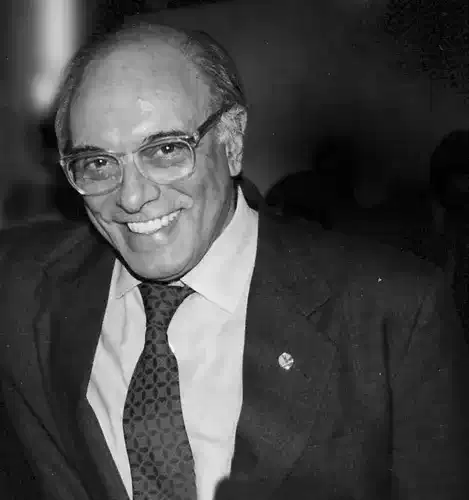
Artur da Távola
1936–2008
· lived 72 years
 BR
BR
BR
Artur da Távola was a Portuguese poet, essayist, and translator, known for his deeply reflective work and his active participation in the cultural and political life of his time. His writing is marked by careful language and an often melancholic tone, exploring universal themes such as love, death, time, and the human condition. He also stood out for his work as a professor and his connection to various intellectual movements.
n. 1936-01-03, Rio de Janeiro · m. 2008-05-09, Rio de Janeiro
28
Views
Bio
Identification and Basic Context
Artur da Távola, pseudonym of Artur Osório de Castro, was a Portuguese poet, essayist, and translator. He was born on July 12, 1945, in Lisbon, and died on February 7, 2024, in the same city. Coming from a family with ties to culture, his work developed in Portugal, during a time marked by significant social and political transformations.Childhood and Education
Artur da Távola's childhood and youth were marked by the experience of the Salazar dictatorship, which would influence his critical view of the world. He completed his studies in Lisbon, where he came into contact with various currents of thought and artistic movements. His education was complemented by a self-taught path, with extensive readings covering poetry, philosophy, and literary criticism.Literary Career
His literary career began in his youth, with a poetic output that evolved over the decades. He collaborated in various cultural and literary publications, contributing poems, essays, and reviews. His activity as a translator of internationally renowned authors was also an important aspect of his career, enabling significant cultural exchange.Work, Style, and Literary Characteristics
Artur da Távola's work encompasses poetry and essays. In his poetry, he explored themes such as love, death, the passage of time, memory, and the search for meaning. His style is characterized by a refined language, an introspective and sometimes elegiac tone, with careful use of verse and meter. His metaphors and images often evoke a sense of melancholy and existential reflection. Although associated with a modern sensibility, he maintained a dialogue with Portuguese lyrical tradition. Works such as "Um Verão em Sintra" and "Os Dias de Novembro" are representative of his journey.Cultural and Historical Context
Artur da Távola lived and produced during a period of profound changes in Portugal, from the end of the Estado Novo to the consolidation of democracy. He was an engaged intellectual, participating in public debates and demonstrating a strong critical sense regarding political and social events. He maintained relationships with other writers and artists, integrating the Lisbon cultural scene.Personal Life
Artur da Távola's personal life, though private, seems to have been influenced by his convictions and his dedication to art and knowledge. His experiences and reflections were transfigured in his work, giving it emotional and intellectual depth.Recognition and Reception
Artur da Távola was a recognized poet, with a body of work that earned a place in contemporary Portuguese literature. He received some distinctions throughout his career, and his work has been the subject of study and analysis by literary critics.Influences and Legacy
The poet engaged with Portuguese and universal poetic tradition, and his work, in turn, influenced subsequent generations of writers through its depth and aesthetic quality. His legacy lies in his contribution to contemporary poetry and his role as an intellectual.Interpretation and Critical Analysis
Artur da Távola's work has been interpreted as a profound meditation on the human condition, the ephemerality of life, and the search for meaning in a constantly changing world. His poetry invites reflection on the great existential themes.Curiosities and Lesser-Known Aspects
Little is publicly known about more anecdotal aspects of his life, but his reserved demeanor contrasted with his public intervention as an intellectual and his participation in cultural and political debates.Death and Memory
Artur da Távola passed away in February 2024, leaving behind a consistent body of work that continues to be read and appreciated. Posthumous publications, if they occur, will certainly enrich the understanding of his literary journey.Poems
0No poems found
Comments (0)
Log in
to post a comment.
No comments yet. Be the first to comment.