
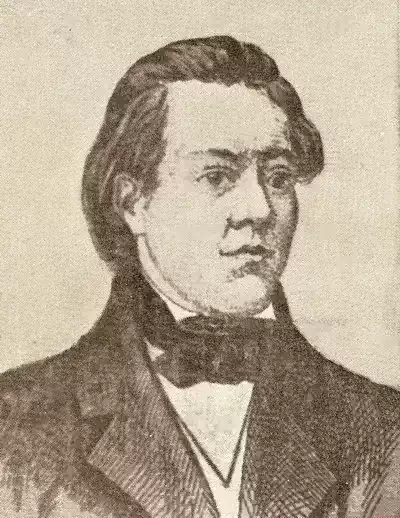
Basílio da Gama
1741–1795
· lived 54 years
 PT
PT
PT
Basílio da Gama was a Luso-Brazilian poet, an important figure of Arcadianism in Portugal and Brazil. His work, marked by classical influence and the idealization of nature, celebrates bucolic life and the figure of the indigenous as a pure and noble being. His poetry, although part of a specific literary context, demonstrates a particular sensibility towards the natural environment and American landscapes, which distinguishes him from many of his contemporaries.
n. 1741-04-08, Tiradentes · m. 1795-07-31, Lisboa
46
Views
Bio
Identification and basic context
Full name: Luiz Basílio da Fonseca Pseudonyms: Basílio da Gama Date and place of birth: July 25, 1740, Vila de São Lourenço de Sabrosa, Trás-os-Montes, Portugal Date and place of death: November 19, 1795, Rome, Italy Family origin, social class, and cultural context of origin: Born into a family of modest means. He joined the Society of Jesus, which gave him access to education and an intellectual life. Nationality and language(s) of writing: Portuguese, but he lived and produced much of his work in the context of Colonial Brazil, being considered a Luso-Brazilian author. Historical context in which he lived: He lived in the 18th century, a period marked by the Enlightenment in Europe and by social and political transformations that would culminate in the independence of the Americas. In Brazil, he experienced the gold cycle and the tensions between the metropolis and the colony.Childhood and education
Family origin and social environment: Originally from Trás-os-Montes, a region of rustic landscapes and traditional customs. At 17, he joined the Society of Jesus. Formal education and self-teaching: He received Jesuit training, which included classical studies, philosophy, and theology. His literary education deeply absorbed the models of Greco-Latin antiquity. Early influences (readings, culture, religion, politics): Classical culture, particularly Virgil and Horace, was his main influence. The Catholic religion, as a Jesuit, also shaped his worldview. Bucolic poetry and the idealization of nature were pillars of his formation. Literary, philosophical, or artistic movements he absorbed: Arcadianism (or Neoclassicism), a literary movement that advocated a return to classical models, the appreciation of nature, and pastoral simplicity. Significant events in his youth: Joining the Society of Jesus and his subsequent move to Brazil.Literary career
Beginning of writing (when and how he started): He began writing poetry during his Jesuit training, still in the Portuguese context. His work gained prominence after his move to Brazil. Evolution over time (phases, style changes): His work remained relatively homogeneous in terms of style and theme, centered on the precepts of Arcadianism. Chronological evolution of work: He published "O Uruguai" in 1769, a work that brought him notoriety. Other important works include "Euphrosina" (1769) and "Os tempos de hoje" (1774). Collaborations in magazines, newspapers, and anthologies: Although less prominent in this regard, his work circulated in literary circles of the time. Activity as critic, translator, or editor: He did not engage in these activities prominently.Work, style, and literary characteristics
Work, style, and literary characteristics Main works with dates and production context: - "O Uruguai" (1769): Epic poem narrating the wars against indigenous peoples in southern Brazil, idealizing the indigenous and criticizing Jesuit actions. It was written in the context of geopolitical and territorial tensions of the time. - "Euphrosina" (1769): Pastoral tragedy. - "Os tempos de hoje" (1774): Satirical poem. Dominant themes — love, death, time, nature, identity, homeland, spirituality, etc.: Idealized nature (locus amoenus), bucolic life, the figure of the "good" and "savage" indigenous person (influenced by the noble savage myth), criticism of corruption and the artificiality of urban life, homeland (in the sense of Brazilian land), religion. Form and structure — use of sonnets, free verse, fixed form, metrical experimentation: He predominantly used the epic form and classical meter (decasyllabic and heptasyllabic verses, rich rhymes), following the models of Greco-Latin poets. Poetic resources (metaphor, rhythm, musicality): Use of epithets, hyperboles, antitheses, comparisons. Musicality is sought through metrical and rhythmic regularity, and the sonority of the verses. Tone and poetic voice — lyrical, satirical, elegiac, epic, ironic, confessional: Predominantly epic in "O Uruguai," with lyrical moments when describing nature. In "Os tempos de hoje," the tone is satirical and critical. Poetic voice (personal, universal, fragmented, etc.): The poetic voice seeks a universalizing tone when dealing with themes like nature and the human condition, but also expresses itself personally when defending its ideas and criticisms. Language and style — vocabulary, imagery density, preferred rhetorical devices: Cultured language, with erudite vocabulary and classical references. Images are often bucolic and idealized. Rhetorical devices are elaborate, aiming for formal perfection. Formal or thematic innovations introduced in literature: The greatest innovation was the theme in "O Uruguai," portraying the indigenous person as a virtuous hero and defender of the land, in contrast to the more savage or demonized view of other authors. The idealization of the Brazilian landscape is also a highlight. Relationship with tradition and modernity: Strongly linked to classical and Arcadian tradition. In relation to modernity, it represents a bridge between European culture and Brazilian reality, but still within a conservative aesthetic framework. Literary movements associated (e.g., symbolism, modernism): Arcadianism. Lesser-known or unpublished works: His non-unpublished production is scarce, with "O Uruguai" being the central and most studied work.Work, style, and literary characteristics
Cultural and historical context Relationship with historical events (wars, revolutions, regimes): "O Uruguai" is directly linked to the Seven Missions Wars and the territorial disputes between Portugal and Spain over control of the Rio da Prata region. His work reflects the tensions between Jesuit order and Portuguese territorial expansion. Relationship with other writers or literary circles: He was a contemporary of other important Arcadians, such as Santa Rita Durão and Cláudio Manuel da Costa. His participation in the literary circles of the time propelled him. Generation or movement to which he belongs (e.g., Romanticism, Modernism, Surrealism): He belongs to the Second Arcadian Generation of Portugal and is one of the most important representatives of Arcadianism in Brazil. Political or philosophical position: He advocated for the expulsion of the Jesuits from Brazil, aligning himself with Pombaline policy. His view on the indigenous was in line with Enlightenment ideas about the "noble savage," although it was an idealization. Influence of society and culture on the work: Brazilian colonial society, with its geographical particularities and conflicts, is the backdrop of his work. Dialogues and tensions with contemporaries: The debate over the figure of the indigenous and the actions of the Jesuits in "O Uruguai" generated discussions with other authors and intellectuals of the time. Critical reception during life vs. posthumous recognition: "O Uruguai" was well-received during his lifetime, consolidating his fame as a poet. His recognition as a central figure of Arcadianism endures to this day.Work, style, and literary characteristics
Personal life Significant affective and family relationships and how they shaped the work: Little detail is known about his personal life beyond his trajectory as a Jesuit and poet. Literary friendships and rivalries: He maintained contact with other writers of his time, but his life was marked by dedication to his ecclesiastical and literary career. Personal experiences and crises, illnesses, or conflicts: The expulsion from the Society of Jesus in 1759 was a crucial event in his life, forcing him to seek other means of subsistence and to re-evaluate his path. Parallel professions (if he didn't live solely from poetry): He was a Jesuit, studied law, and worked as a lawyer. Religious, spiritual, or philosophical beliefs: As a Jesuit, his training was profoundly Catholic, but his work shows a strong influence of Enlightenment thought in his view of nature and society. Political positions and civic involvement: He was in favor of the policies of the Marquis of Pombal, including the expulsion of the Jesuits.Work, style, and literary characteristics
Recognition and reception Place in national and international literature: A prominent figure of Luso-Brazilian Arcadianism, with "O Uruguai" being a seminal work for Brazilian epic poetry. Awards, distinctions, and institutional recognition: There is no record of formal awards in his time. His recognition came from the quality and originality of his work. Critical reception at the time and over time: "O Uruguai" was praised for its epic strength and thematic originality. Later criticism consolidated it as one of the greatest poets of Arcadianism. Popularity vs. academic recognition: His work is studied academically, being less popular among the general public compared to poets from later periods.Work, style, and literary characteristics
Influences and legacy Authors who influenced him: Virgil, Horace, Camões (in "Os Lusíadas"), and the Arcadian poets of his time. Poets and movements he influenced: He influenced poets who sought to portray the Brazilian landscape and scenery with classical elements, although Arcadianism was a transitional movement. Impact on national and world literature and later generations of poets: He contributed to the consolidation of poetry that focused on the American landscape and to the appreciation of the epic form with national themes. His portrayal of the indigenous as a "noble savage" was a significant thematic contribution. Entry into the literary canon: He is an established author in the canon of Portuguese and Brazilian literature, especially concerning the Arcadian period. Translations and international dissemination: His work "O Uruguai" had some dissemination in other European countries, mainly due to its theme and representation of the "noble savage." Adaptations (music, theater, cinema): There are no significant records of adaptations. Academic studies dedicated to the work: His work is studied in Portuguese and Brazilian literature courses, with analyses focusing on his Arcadian style, his themes, and his position in literary history.Work, style, and literary characteristics
Interpretation and critical analysis Possible readings of the work: "O Uruguai" can be read as a nationalist epic poem, a precursor to Indianist literature, a reflection of the tensions between Portugal and Spain, or a work that, despite its classical framework, attempts to give voice to a "new" setting and characters for European literature. Philosophical and existential themes: The search for virtue and simplicity as opposed to urban corruption; the idea of a "perfect nature"; criticism of colonization and the imposition of European values on native peoples (albeit with an idealized view). Controversies or critical debates: The main debate revolves around his pro-Pombaline stance and his criticism of the Jesuits, which some scholars see as a reflection of the anti-clerical policies of the time. The portrayal of the indigenous as a "noble savage" is also critically viewed as a European projection.Work, style, and literary characteristics
Curiosities and lesser-known aspects Lesser-known aspects of his personality: Little is known about his private life; his public persona was shaped by his Jesuit and literary activities. Contradictions between life and work: The idealization of nature and the indigenous in his work contrasts with the often harsh reality of the colonial period and with his own trajectory as a man of the Church and letters, involved in the power struggles of the time. Striking or anecdotal episodes that illuminate the author's profile: His departure from the Society of Jesus and his subsequent approach to the Marquis of Pombal are events that demonstrate a certain flexibility in his life's journey. Objects, places, or rituals associated with poetic creation: The landscape of southern Brazil and European bucolic settings inspired his poetry. Dedication to study and writing were his rituals. Writing habits: He wrote with formal rigor, applying the precepts of Arcadian aesthetics. Curious episodes: His death in Rome, unable to return to Portugal or Brazil, marks the end of a life of transit between two cultures. Manuscripts, diaries, or correspondence: The correspondence he maintained with other intellectuals of the time is an important record of his literary circle and his ideas.Work, style, and literary characteristics
Death and memory Circumstances of death: He died in Rome in 1795 due to an illness (possibly tuberculosis or jaundice). Posthumous publications: His main work, "O Uruguai," had already been published during his lifetime. Other works and editions of his poems were compiled posthumously.Poems
0No poems found
Comments (0)
Log in
to post a comment.
No comments yet. Be the first to comment.