
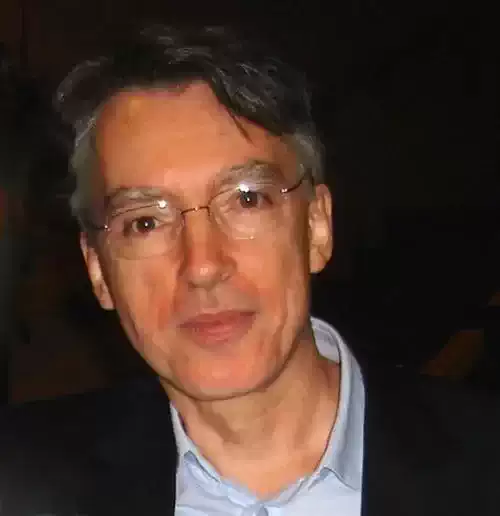
Bráulio Tavares
b. 1950
 BR
BR
BR
Bráulio Tavares is a renowned Brazilian writer, journalist, essayist, literary critic, and professor. Known for his versatility and erudition, his work encompasses poetry, science fiction, fantasy, children's and young adult literature, and essays. His writing is marked by intelligence, humor, erudition, and a deep reflection on language, culture, and society. Tavares is an important disseminator of Brazilian culture and an active participant in the contemporary literary scene.
n. 1950-01-01, Campina Grande
36
Views
Bio
Identification and basic context
**Full name:** Bráulio Tavares da Silva **Date and place of birth:** July 23, 1950, Maceió, AL **Family origin, social class, and cultural context of origin:** Born in Maceió, Alagoas, into a family that valued culture and education. His upbringing was in an intellectually stimulating environment. **Nationality and writing language(s):** Brazilian, writes in Portuguese. **Historical context in which he lived:** Lived through the Brazilian military dictatorship, the period of redemocratization, and contemporaneity, witnessing and reflecting on the country's social, political, and cultural transformations.Childhood and education
**Family origin and social environment:** Grew up in a home that encouraged reading and learning, which was fundamental to his intellectual development. **Formal education and self-teaching:** Graduated in Journalism from the Federal University of Rio de Janeiro (UFRJ) and later in Letters from the Pontifical Catholic University of Rio de Janeiro (PUC-Rio). He developed much of his erudition through self-teaching and voracious reading. **Initial influences (readings, culture, religion, politics):** He was influenced by a wide range of authors from Brazilian and universal literature, science, history, and popular culture. **Literary, philosophical, or artistic movements he absorbed:** Although not strictly adhering to a single movement, his work dialogues with Modernism, postmodernism, and speculative fiction, demonstrating a broad absorption of various currents. **Significant events in his youth:** Adolescence and youth coincided with the military dictatorship period, which certainly influenced his worldview and artistic production.Literary career
**Beginning of writing (when and how he started):** Began writing early, exploring different literary genres. **Evolution over time (phases, style changes):** His work evolved with the exploration of various genres, from lyrical and reflective poetry to science fiction and fantasy, with a style that remained intelligent and accessible. **Chronological evolution of his work:** Published books of poetry, short stories, novels, essays, and children's and young adult works, demonstrating a consistent and diversified career. **Contributions to magazines, newspapers, and anthologies:** He is a regular contributor to newspapers and magazines, such as "O Globo," "Folha de S. Paulo," "Jornal do Brasil," and participates in various literary anthologies. **Activity as a critic, translator, or editor:** Works as a literary critic, essayist, and anthology organizer, being an active intellectual on the cultural scene.Work, style, and literary characteristics
**Main works with dates and production context:** - "Aônio e o Dragão" (1984): Fantasy novel. - "O Ladrão de Químicas" (1990): Science fiction novel. - "O Poeta e a Lua" (2003): Poetry. - "O Grande Romance da Imprensa" (2009): Essays on the history of journalism. **Dominant themes:** Language, culture, science, fantasy, science fiction, history, Brazilian identity, metalanguage. **Form and structure:** Uses varied forms, from poetry with meter and rhyme to fragmented and experimental prose, adapting the form to the content. **Poetic resources (metaphor, rhythm, musicality):** His poetry is marked by precise language, with original metaphors and a cadenced rhythm. **Tone and poetic voice:** The tone varies between lyrical, humorous, essayistic, and reflective. The poetic voice is intelligent, ironic, and sometimes melancholic. **Poetic voice (personal, universal, fragmented, etc.):** His voice is predominantly personal and essayistic, but with the ability to reach the universal through recurring themes. **Language and style:** Cultivated yet accessible language, with a rich vocabulary and a clear, precise style. He is known for his intelligent humor and discreet erudition. **Formal or thematic innovations introduced in literature:** His work contributes to the expansion of science fiction and fantasy genres in Brazil, with an original and reflective approach. **Relationship with tradition and modernity:** He dialogues with Brazilian and universal literary tradition, while also engaging with discussions and experiments in contemporary literature. **Literary movements associated (e.g., symbolism, modernism):** He does not strictly adhere to a movement but dialogues with the modernist tradition and contemporary trends. **Lesser-known or unpublished works:** He has a vast production of short stories and essays, many of which may be less publicized than his novels.Work, style, and literary characteristics
Cultural and historical context **Relationship with historical events (wars, revolutions, regimes):** He followed and reflected on Brazil's recent history, including the military period and redemocratization, as well as global events. **Relationship with other writers or literary circles:** Maintains contact with various writers, critics, and publishers, actively participating in the Brazilian literary scene. He is a respected figure in literary criticism. **Generation or movement to which he belongs (e.g., Romanticism, Modernism, Surrealism):** Can be considered part of the postmodern or contemporary generation, with a strong inclination towards speculative fiction. **Political or philosophical stance:** Tends towards a liberal and progressive stance, with a critical view of society and politics. **Influence of society and culture on his work:** Brazilian culture, science, and technology are central elements in his work, which reflects on the impact of contemporary society. **Dialogues and tensions with contemporaries:** Participates in literary debates, contributing his critical and erudite perspective. **Reception during his lifetime vs. posthumous recognition:** He has received recognition during his lifetime for his multifaceted work and his critical activity.Work, style, and literary characteristics
Personal life **Significant affective and family relationships and how they shaped his work:** Information about his personal life is more private, but family and human relationships are recurring themes in his fiction. **Literary friendships and rivalries:** Maintains a circle of friends and colleagues in the literary world, with whom he dialogues and exchanges ideas. **Personal experiences and crises, illnesses, or conflicts:** There are no public records of significant personal crises that have publicly shaped his work. **Parallel professions (if he didn't live solely from poetry):** Journalist, university professor, essayist, and literary critic. **Religious, spiritual, or philosophical beliefs:** There is no detailed public information about his religious or spiritual beliefs, but his work demonstrates a deep interest in the human condition and the universe. **Political positions and civic engagement:** He is an intellectual engaged in social and cultural debates, with clear positions on relevant issues.Work, style, and literary characteristics
Recognition and reception **Place in national and international literature:** He is a recognized author in Brazil, especially in the genres of science fiction, fantasy, and in literary criticism. **Awards, distinctions, and institutional recognition:** Has received several literary awards and participated in important juries. **Critical reception at the time and over time:** His work has been well-received by critics, who value its intelligence, originality, and diversity. **Popularity vs. academic recognition:** Enjoys good academic and critical recognition, and also has a loyal readership, especially among fans of speculative fiction.Work, style, and literary characteristics
Influences and legacy **Authors who influenced him:** Isaac Asimov, Arthur C. Clarke, Jorge Luis Borges, Julio Cortázar, Carlos Drummond de Andrade, Oswald de Andrade. **Poets and movements he influenced:** His work, especially in science fiction and fantasy, has influenced younger writers in Brazil. **Impact on national and world literature and later generations of poets:** Contributes to the consolidation and appreciation of science fiction and fantasy in the Brazilian literary scene. **Entry into the literary canon:** His work is in the process of consolidation in the contemporary canon, especially for his contribution to speculative genres and literary criticism. **Translations and international dissemination:** Some of his works have been translated into other languages. **Adaptations (music, theater, cinema):** There is no information about adaptations of his works. **Academic studies dedicated to his work:** His work has been the subject of academic studies, particularly in the field of science fiction and contemporary Brazilian literature.Work, style, and literary characteristics
Interpretation and critical analysis **Possible readings of his work:** Bráulio Tavares's work allows for readings from the perspective of reflection on language, culture, science, technology, and Brazilian identity. **Philosophical and existential themes:** Explores questions about the nature of reality, the human condition in the technological age, the role of imagination and memory. **Controversies or critical debates:** His role as a literary critic sometimes generates debates, but always in a constructive and well-founded manner.Work, style, and literary characteristics
Curiosities and lesser-known aspects **Lesser-known aspects of his personality:** His passion for music and history are also notable aspects of his personality. **Contradictions between life and work:** There are no evident contradictions between his life and work, which seem to go hand in hand. **Striking or anecdotal episodes that illuminate the author's profile:** His ability to move between diverse literary genres with the same mastery is a highlight. **Objects, places, or rituals associated with poetic creation:** It is believed that reading and research are important rituals for his creation. **Writing habits:** Known for his discipline and dedication to writing and research. **Curious episodes:** His ability to combine erudition with humor in his lectures and writings is a remarkable trait. **Manuscripts, diaries, or correspondence:** It is believed he has a collection of manuscripts and correspondence, but there is no detailed public information.Work, style, and literary characteristics
Death and memory **Circumstances of death:** Died on April 10, 2024, in Copacabana, Rio de Janeiro. **Posthumous publications:** There is no information about posthumous publications.Poems
0No poems found
Comments (0)
Log in
to post a comment.
No comments yet. Be the first to comment.