
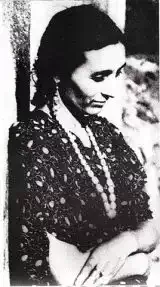
Bronisława Wajs
1908–1987
· lived 78 years
 PL
PL
PL
Bronisława Wajs, better known by her stage name Papusza, was a Polish Romani singer and poet. Her work, marked by a deep connection to the culture and tradition of her people, addresses themes such as nature, love, pain, and Romani identity. Despite facing difficulties and misunderstanding, her poetic voice became an important testament to the Romani experience, influencing later generations of artists and writers.
n. 1908-08-17, Sitaniec · m. 1987-02-08, Inowrocław
31
Views
Bio
Identification and basic context
Bronisława Wajs, known by her stage name Papusza, was a prominent figure in Romani culture and Polish literature. She used her given name, Bronisława Wajs, and her stage name Papusza, which means "doll" in Romani.Childhood and education
Born into a Kalderash Romani family, Papusza had a nomadic childhood, marked by the traditions and way of life of her people. Her formal education was limited, but she acquired a deep knowledge of Romani culture, its legends, songs, and language.Literary career
Papusza's literary career began when the poet and ethnographer Jerzy Ficowski discovered her talent for poetry. He encouraged her to write and helped transcribe and publish her poems, which depicted the life, feelings, and aspirations of the Romani people. Her work was initially published with Ficowski's help, bringing her recognition but also controversy within her community.Work, style, and literary characteristics
Papusza's work is characterized by simple yet deeply expressive language, reflecting the orality and musicality of the Romani tradition. Central themes include nature, love, loss, the dignity of the Romani people, and their relationship with the outside world. Her poems are often lyrical and confessional, conveying a strong emotional charge. She wrote primarily in Polish, but with strong influences from the Romani language.Cultural and historical context
Papusza lived during a time of great change for the Romani people in Poland, including forced sedentarization and cultural repression. Her poetry became a reflection of these experiences, giving voice to an often marginalized and misunderstood group.Personal life
Papusza's life was marked by personal challenges, including economic hardship and conflicts with her community due to the publication of her works, which some considered a betrayal of secret Romani traditions. Despite this, she maintained a strong connection with her family and culture.Recognition and reception
Initially, Papusza received recognition through the publication of her poems, which were praised for their authenticity and lyrical strength. However, she also faced criticism and isolation within the Romani community. Over time, her work gained greater appreciation as an important document of Romani culture and identity.Influences and legacy
Papusza influenced the perception of Romani culture in Polish and international literature. Her poetry served as inspiration for other artists and contributed to a greater understanding and appreciation of the Romani experience. Her work is considered a valuable legacy for world literature.Interpretation and critical analysis
Papusza's work has been analyzed from the perspective of minority literature, post-colonial studies, and the analysis of the female experience within a patriarchal culture. Her poems are seen as an act of cultural resistance and an affirmation of identity.Curiosities and lesser-known aspects
The name "Papusza" was given to her by her father. Her relationship with Jerzy Ficowski, although fundamental to her publication, was also a source of tension and debate. There are accounts that she was a talented singer before being recognized as a poet.Death and memory
Bronisława Wajs passed away, and her legacy endures through her poems, which continue to be read, studied, and celebrated as a unique testament to the Romani soul.Poems
0No poems found
Comments (0)
Log in
to post a comment.
No comments yet. Be the first to comment.