
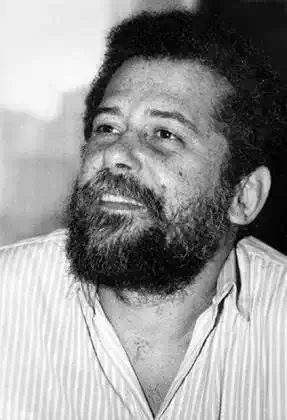
Capinan
b. 1941
 BR
BR
BR
Capinan, pseudonym of José Carlos Capinan, was a Brazilian poet and composer, a prominent figure of Tropicália and the musical and literary movement in Brazil in the 1960s and 1970s. His poetic work, often associated with song lyrics, stands out for its aesthetic boldness, social criticism, and fusion of elements from Brazilian popular culture with artistic avant-garde. He was one of the most important lyricists of MPB, collaborating with several renowned musicians.
n. 1941-02-19, Esplanada
31
Views
Bio
Identification and basic context
Capinan, whose registered name is José Carlos Capinan, was a Brazilian poet, composer, and lyricist. He was a central figure in the Tropicalist movement and the Brazilian cultural scene of the 1960s and 1970s. His nationality is Brazilian, and his writing language was Portuguese.Childhood and education
José Carlos Capinan was born and raised in Brazil, where he developed his interest in music and literature. His education was marked by the country's cultural effervescence in the 1960s, a period during which he became involved with Brazilian popular music and poetry. The absorption of Brazilian popular culture, combined with avant-garde artistic influences, shaped his language and perspective.Literary career
Capinan's literary career is intrinsically linked to his work as a lyricist and composer. He began his activity by writing lyrics for songs, many of which became landmarks of Música Popular Brasileira (MPB) and Tropicália. His poetic work explores language in an innovative way, blending the colloquial with the erudite, the regional with the universal. He collaborated intensely with various musicians, contributing to the lyrical richness of numerous songs.Work, style, and literary characteristics
Capinan is known for his bold and innovative poetic writing, frequently used in song lyrics. Themes such as social criticism, love, Brazilian identity, and urban modernity are recurrent. His style is characterized by the fusion of elements from popular culture, avant-garde poetry, and colloquial language. He uses creative metaphors, wordplay, and a striking rhythm that reflects the intrinsic musicality of his work. His poetic voice, at times ironic and questioning, dialogues with Brazilian reality, proposing new forms of expression.Cultural and historical context
Capinan emerged in the context of Tropicália, a revolutionary cultural and musical movement in Brazil that challenged the artistic and social conventions of the time. He lived through a period of great political and cultural transformations in Brazil, including the military dictatorship, which influenced his work, often loaded with veiled criticisms and allegories. His generation of artists sought to reinvent Brazilian cultural identity, mixing local and foreign influences.Personal life
Detailed information about Capinan's personal life, beyond his artistic involvement, is not widely disclosed. It is known that his relationships with other artists and musicians were fundamental to his career, collaborating with names such as Caetano Veloso, Gilberto Gil, Gal Costa, among others. His dedication to art and music seems to have been the main focus of his life.Recognition and reception
Capinan achieved considerable recognition as a lyricist and composer, being considered one of the great names of MPB and Tropicália. His lyrics are studied and admired for their poetic quality and their ability to portray modern Brazil. Although his work may have had a more restricted reception in traditional academic poetry circles, its impact on Brazilian popular music is undeniable.Influences and legacy
Capinan was influenced by Brazilian poetry, popular music, popular culture, and artistic avant-gardes. His legacy lies in his contribution to the renewal of poetic language in Brazilian music, paving the way for new experimentation. His work continues to inspire composers and poets, marking the history of Brazilian music and literature.Interpretation and critical analysis
Capinan's work invites analyses that intertwine poetry and music, popular culture and avant-garde. His lyrics are seen as expressions of Brazilian identity, social criticism, and the search for new forms of artistic expression. The complexity of his language and the multiplicity of cultural references in his work leave room for diverse interpretations.Curiosities and lesser-known aspects
Capinan is known for his close collaboration with major names in Brazilian music, but the extent of his poetic production beyond song lyrics may be a less explored aspect. His ability to capture the essence of Brazil through concise and impactful verses is a striking characteristic.Death and memory
Capinan passed away in Brazil, leaving a rich body of lyrics and poems that continue to be celebrated. His memory is kept alive through his musical and poetic work, which remains relevant and influential in Brazilian culture.Poems
0No poems found
Comments (0)
Log in
to post a comment.
No comments yet. Be the first to comment.