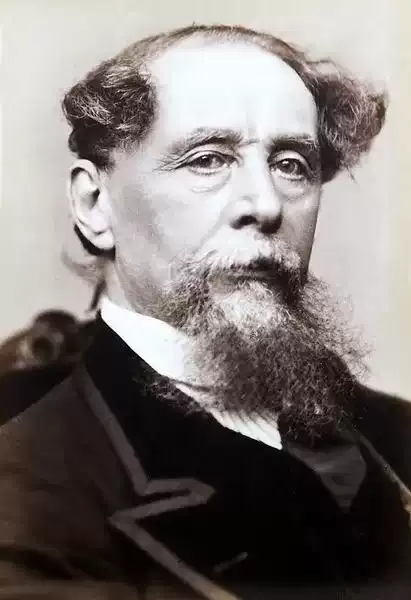
Charles Dickens

Charles Dickens

1812–1870 · lived 58 years GB GB

Charles Dickens was a towering figure of Victorian literature, renowned for his vivid portrayals of London life, unforgettable characters, and social commentary. His novels, such as 'Oliver Twist' and 'Great Expectations,' skillfully blended humor, pathos, and melodrama to expose the injustices and inequalities of his era. Dickens was a prolific writer, a keen observer of society, and a masterful storyteller whose works continue to be widely read and adapted.

n. 1812-02-07, Landport · m. 1870-06-09, Gads Hill Place

13,625 Views

A Child's Hymn

A Child's Hymn

Hear my prayer, O heavenly Father,
Ere I lay me down to sleep;
Bid Thy angels, pure and holy,
Round my bed their vigil keep.


My sins are heavy, but Thy mercy
Far outweighs them, every one;
Down before Thy cross I cast them,
Trusting in Thy help alone.


Keep me through this night of peril
Underneath its boundless shade;
Take me to Thy rest, I pray Thee,
When my pilgrimage is made.


None shall measure out Thy patience
By the span of human thought;
None shall bound the tender mercies
Which Thy Holy Son has bought.


Pardon all my past transgressions,
Give me strength for days to come;
Guide and guard me with Thy blessing
Till Thy angels bid me home.
Read full poem
Bio

Identification and basic context

Charles Dickens was an English novelist and social critic who is widely regarded as the greatest of the Victorian era. He produced a body of work that continues to be read and enjoyed in the 21st century. His novels are characterized by their humor, satire, and detailed social commentary, often focusing on the plight of the poor and oppressed.

Childhood and education

Dickens's childhood was marked by financial hardship and instability. His father, John Dickens, was a clerk in the Navy Pay Office, but he was prone to extravagance and ended up in debtors' prison. At the age of twelve, Charles had to leave school and work in a blacking warehouse to help support his family. This experience of poverty and grueling labor profoundly affected him and would later inform his writing. His formal education was limited, but he was an avid reader and possessed a keen observational mind.

Literary trajectory

Dickens began his literary career as a journalist, writing sketches of London life under the pseudonym "Boz." His first novel, 'The Pickwick Papers' (1836-1837), was an immediate success, establishing him as a popular author. He then embarked on a prolific career, publishing a series of major novels, often serially, including 'Oliver Twist,' 'Nicholas Nickleby,' 'A Christmas Carol,' 'David Copperfield,' 'Bleak House,' 'Great Expectations,' and 'Our Mutual Friend.' His works were serialized in magazines he edited, such as 'Household Words' and 'All the Year Round,' which also featured his short stories and essays.

Works, style, and literary characteristics

Dickens's novels are known for their sprawling plots, memorable characters (often caricatured or eccentric), and vivid descriptions of Victorian society. His major themes include poverty, social injustice, the corruption of institutions, the importance of family, and the possibility of redemption. He employed a distinctive style characterized by rich vocabulary, elaborate sentence structures, and a blend of humor and pathos. His use of suspense, serialized publication, and cliffhangers made his works immensely popular. He masterfully crafted complex narratives that often intertwined the lives of characters from different social strata. His style evolved over his career, with later works like 'Great Expectations' and 'Our Mutual Friend' exhibiting greater psychological depth and narrative sophistication.

Cultural and historical context

Dickens was a product of and a commentator on the Victorian era, a period of rapid industrialization, social change, and stark contrasts between wealth and poverty in Britain. He was acutely aware of the social issues of his time, including child labor, inadequate sanitation, the legal system's failings, and the harsh conditions in workhouses and schools. He was part of a literary generation that included authors like William Makepeace Thackeray and the Brontë sisters, and he engaged with the prevailing social and political debates of the period through his writing. His work often reflected and shaped public opinion on these matters.

Personal life

Dickens's personal life was as dramatic as his novels. He married Catherine Hogarth, with whom he had ten children, but their marriage eventually deteriorated. He later had a long-term relationship with the actress Ellen Ternan, which was kept secret from the public. He was a tireless worker, often writing and traveling extensively. His public readings of his works were enormously popular and physically demanding. He was also deeply involved in charitable causes, particularly those concerning children and the poor.

Recognition and reception

Dickens achieved immense popularity during his lifetime, becoming a literary celebrity. His novels were eagerly awaited and widely read, both in Britain and internationally. He was celebrated for his ability to entertain and to bring social issues to the public's attention. While he received some criticism for the sentimentality or melodramatic aspects of his work, his overall reception was overwhelmingly positive, cementing his status as a preeminent figure in English literature.

Influences and legacy

Dickens was influenced by earlier writers such as Henry Fielding and Laurence Sterne, as well as by the Romantic movement's emphasis on emotion and individualism. His own influence on subsequent literature is immense. He set a standard for the novel as a vehicle for social commentary and realistic depiction of urban life. His narrative techniques and characterizations have inspired generations of writers. His works have been continuously adapted for stage, film, and television, ensuring their enduring presence in popular culture.

Interpretation and critical analysis

Dickens's work has been analyzed from various critical perspectives, including Marxist, feminist, and psychological approaches. Critics have debated the extent to which his social critiques were truly radical or merely reformist. His portrayal of class relations, gender roles, and the urban experience remains a rich area of study. His ability to combine compelling storytelling with profound social insights continues to be a subject of admiration.

Curiosities and lesser-known aspects

Dickens was known for his astonishing memory and his ability to recall minute details, which contributed to the richness of his descriptive passages. He was also an amateur actor and a keen amateur magician, often incorporating elements of theatricality into his life and public readings. He undertook extensive tours of Britain and America, giving dramatic readings of his works, which were often grueling but highly successful.

Death and memory

Charles Dickens died of a stroke in 1870 at his home, Gad's Hill Place, in Kent. He was buried in Poets' Corner of Westminster Abbey, a testament to his immense national importance. His legacy continues to be celebrated through numerous institutions, literary societies, and the ongoing popularity of his novels, which remain foundational texts in English literature and are continually reinterpreted for new audiences.

Poems

6

The Song Of The Wreck

The Song Of The Wreck

The wind blew high, the waters raved,
A ship drove on the land,
A hundred human creatures saved
Kneel'd down upon the sand.
Threescore were drown'd, threescore were thrown
Upon the black rocks wild,
And thus among them, left alone,
They found one helpless child.


A seaman rough, to shipwreck bred,
Stood out from all the rest,
And gently laid the lonely head
Upon his honest breast.
And travelling o'er the desert wide
It was a solemn joy,
To see them, ever side by side,
The sailor and the boy.


In famine, sickness, hunger, thirst,
The two were still but one,
Until the strong man droop'd the first
And felt his labors done.
Then to a trusty friend he spake,
'Across the desert wide,
Oh, take this poor boy for my sake!'
And kiss'd the child and died.


Toiling along in weary plight
Through heavy jungle, mire,
These two came later every night
To warm them at the fire.
Until the captain said one day
'O seaman, good and kind,
To save thyself now come away,
And leave the boy behind!'


The child was slumbering near the blaze:
'O captain, let him rest
Until it sinks, when God's own ways
Shall teach us what is best!'
They watch'd the whiten'd, ashy heap,
They touch'd the child in vain;
They did not leave him there asleep,
He never woke again.
397

Lucy's Song

Lucy's Song

How beautiful at eventide
To see the twilight shadows pale,
Steal o'er the landscape, far and wide,
O'er stream and meadow, mound and dale!


How soft is Nature's calm repose
When ev'ning skies their cool dews weep:
The gentlest wind more gently blows,
As if to soothe her in her sleep!


The gay morn breaks,
Mists roll away,
All Nature awakes
To glorious day.
In my breast alone
Dark shadows remain;
The peace it has known
It can never regain.
441

The Hymn Of The Wiltshire Laborers

The Hymn Of The Wiltshire Laborers

O God! who by Thy prophet's hand
Didst smite the rocky brake,
Whence water came, at Thy command,
Thy people's thirst to slake;
Strike, now, upon this granite wall,
Stern, obdurate, and high;
And let some drops of pity fall
For us who starve and die!


The God who took a little child
And set him in the midst,
And promised him His mercy mild,
As, by Thy Son, Thou didst:
Look down upon our children dear,
So gaunt, so cold, so spare,
And let their images appear
Where lords and gentry are!


O God! teach them to feel how we,
When our poor infants droop,
Are weakened in our trust in Thee,
And how our spirits stoop;
For, in Thy rest, so bright and fair,
All tears and sorrows sleep:
And their young looks, so full of care,
Would make Thine angels weep!


The God who with His finger drew
The judgment coming on,
Write, for these men, what must ensue,
Ere many years be gone!
O God! whose bow is in the sky,
Let them not brave and dare,
Until they look (too late) on high,
And see an Arrow there!


O God, remind them! In the bread
They break upon the knee,
These sacred words may yet be read,
'In memory of Me!'
O God! remind them of His sweet
Compassion for the poor,
And how He gave them Bread to eat,
And went from door to door!
271

George Edmunds' Song

George Edmunds' Song

Autumn leaves, autumn leaves, lie strewn around he here;
Autumn leaves, autumn leaves, how sad, how cold, how drear!
How like the hopes of childhood's day,
Thick clust'ring on the bough!
How like those hopes in their decay-
How faded are they now!
Autumn leaves, autumn leaves, lie strewn around me here;
Autumn leaves, autumn leaves, how sad, how cold, how drear!


Wither'd leaves, wither'd leaves, that fly before the gale:
Withered leaves, withered leaves, ye tell a mournful tale,
Of love once true, and friends once kind,
And happy moments fled:
Dispersed by every breath of wind,
Forgotten, changed, or dead!
Autumn leaves, autumn leaves, lie strewn around me here!
Autumn leaves, autumn leaves, how sad, how cold, how drear!
313

A fine Old English Gentleman

A fine Old English Gentleman

I'll sing you a new ballad, and I'll warrant it first-rate,
Of the days of that old gentleman who had that old estate;
When they spent the public money at a bountiful old rate
On ev'ry mistress, pimp, and scamp, at ev'ry noble gate,
In the fine old English Tory times;
Soon may they come again!


The good old laws were garnished well with gibbets, whips, and chains,
With fine old English penalties, and fine old English pains,
With rebel heads, and seas of blood once hot in rebel veins;
For all these things were requisite to guard the rich old gains
Of the fine old English Tory times;
Soon may they come again!


This brave old code, like Argus, had a hundred watchful eyes,
And ev'ry English peasant had his good old English spies,
To tempt his starving discontent with fine old English lies,
Then call the good old Yeomanry to stop his peevish cries,
In the fine old English Tory times;
Soon may they come again!


The good old times for cutting throats that cried out in their need,
The good old times for hunting men who held their fathers' creed,
The good old times when William Pitt, as all good men agreed,
Came down direct from Paradise at more than railroad speed. . . .
Oh the fine old English Tory times;
When will they come again!


In those rare days, the press was seldom known to snarl or bark,
But sweetly sang of men in pow'r, like any tuneful lark;
Grave judges, too, to all their evil deeds were in the dark;
And not a man in twenty score knew how to make his mark.
Oh the fine old English Tory times;
Soon may they come again!


Those were the days for taxes, and for war's infernal din;
For scarcity of bread, that fine old dowagers might win;
For shutting men of letters up, through iron bars to grin,
Because they didn't think the Prince was altogether thin,
In the fine old English Tory times;
Soon may they come again!


But Tolerance, though slow in flight, is strong-wing'd in the main;
That night must come on these fine days, in course of time was plain;
The pure old spirit struggled, but Its struggles were in vain;
A nation's grip was on it, and it died in choking pain,
With the fine old English Tory days,
All of the olden time.


The bright old day now dawns again; the cry runs through the land,
In England there shall be dear bread -- in Ireland, sword and brand;


And poverty, and ignorance, shall swell the rich and grand,
So, rally round the rulers with the gentle iron hand,
Of the fine old English Tory days; Hail to the coming time!

891

A Child's Hymn

A Child's Hymn

Hear my prayer, O heavenly Father,
Ere I lay me down to sleep;
Bid Thy angels, pure and holy,
Round my bed their vigil keep.


My sins are heavy, but Thy mercy
Far outweighs them, every one;
Down before Thy cross I cast them,
Trusting in Thy help alone.


Keep me through this night of peril
Underneath its boundless shade;
Take me to Thy rest, I pray Thee,
When my pilgrimage is made.


None shall measure out Thy patience
By the span of human thought;
None shall bound the tender mercies
Which Thy Holy Son has bought.


Pardon all my past transgressions,
Give me strength for days to come;
Guide and guard me with Thy blessing
Till Thy angels bid me home.
416

Quotes

40

Videos

50

Comments (0)

Share
Log in to post a comment.

No comments yet. Be the first to comment.