
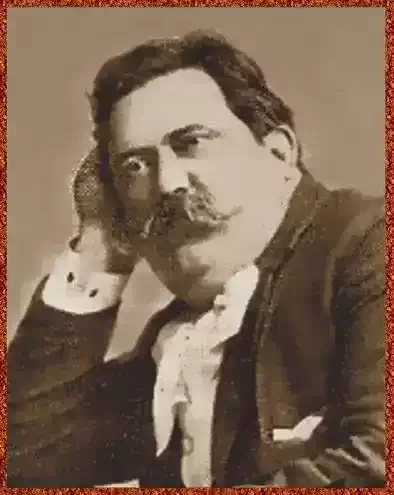
Emílio de Menezes
1866–1918
· lived 51 years
 BR
BR
BR
Emílio de Menezes was a Brazilian poet, journalist, and politician, primarily known for his participation in the Symbolist movement. His poetic work is marked by an atmosphere of mystery, musicality, and exploration of the unconscious and the irrational. Besides being a poet, he was an intellectual active on various fronts, contributing to the press and the political debate of his time.
n. 1866-07-04, Curitiba · m. 1918-06-06, Rio de Janeiro
20
Views
Bio
Identification and basic context
Emílio de Menezes (full name: Emílio de Menezes Júnior) was a Brazilian poet, journalist, and politician. He was born in São Paulo. He is a prominent figure of Brazilian Symbolism, a literary movement that sought the exploration of the subjective, the mystical, and the musical in poetry. His work reflects the aesthetic and thematic characteristics of Symbolism, with a language full of suggestion and spirituality.Childhood and education
His intellectual education took place in São Paulo, where he came into contact with the literary and philosophical ideas that influenced him. His youth in a transforming urban environment provided the setting for the development of his artistic sensitivity and worldview.Literary career
Emílio de Menezes's literary career is intrinsically linked to Symbolism, a movement of which he was one of the main representatives in Brazil. He published important poetic works that established him as one of the most original voices of the period. His work as a journalist was also relevant, using the press to disseminate his ideas and discuss literary and social issues.Work, style, and literary characteristics
Work, style, and literary characteristics Emílio de Menezes's main works include poetic collections that stand out for their atmosphere of mystery, melancholy, and spirituality. Recurring themes are idealized love, death, dreams, mysticism, and the search for the transcendent. His style is marked by musicality, the use of synesthesia, erudite vocabulary, and suggestion, in detriment of objective description. The poetic voice is often introspective and in search of an unattainable ideal.Work, style, and literary characteristics
Cultural and historical context Emílio de Menezes lived in a period of cultural and political effervescence in Brazil, with the end of the 19th century and the beginning of the 20th century witnessing the consolidation of the Republic and the emergence of new artistic movements. As a Symbolist, his work dialogued with the European trends of the movement, adapting them to the Brazilian reality and seeking a more subjective and spiritual expression of art.Work, style, and literary characteristics
Personal life In addition to his literary and journalistic activities, Emílio de Menezes was also involved in politics. His personal life, although less documented in intimate detail, reveals a multifaceted intellectual, committed to the arts and the issues of his time.Work, style, and literary characteristics
Recognition and reception Emílio de Menezes is recognized as one of the exponents of Brazilian Symbolism. His work, although not always fully understood by the critics of his time, is valued today for its originality and its contribution to the renewal of Brazilian poetry.Work, style, and literary characteristics
Influences and legacy His work was influenced by European Symbolist poets, such as Baudelaire and Verlaine, and also by authors who explored mysticism and subjectivity. Emílio de Menezes's legacy lies in the introduction of new sensibilities and aesthetics into Brazilian poetry, opening paths for the exploration of the unconscious and the irrational.Work, style, and literary characteristics
Interpretation and critical analysis Emílio de Menezes's poetry invites an interpretation that goes beyond the apparent, seeking layers of meaning, the symbolism of images, and intrinsic musicality. His work is analyzed from the perspective of psychology, philosophy, and Symbolist aesthetics.Work, style, and literary characteristics
Curiosities and lesser-known aspects Few details are known about specific curiosities of his life. His involvement in journalism and politics, alongside his poetic production, demonstrates an individual with multiple interests and engaged with the society of his time.Work, style, and literary characteristics
Death and memory Emílio de Menezes passed away in Rio de Janeiro. His work remains an important landmark in the history of Brazilian poetry, being studied and appreciated for its originality and depth.Poems
0No poems found
Comments (0)
Log in
to post a comment.
No comments yet. Be the first to comment.