
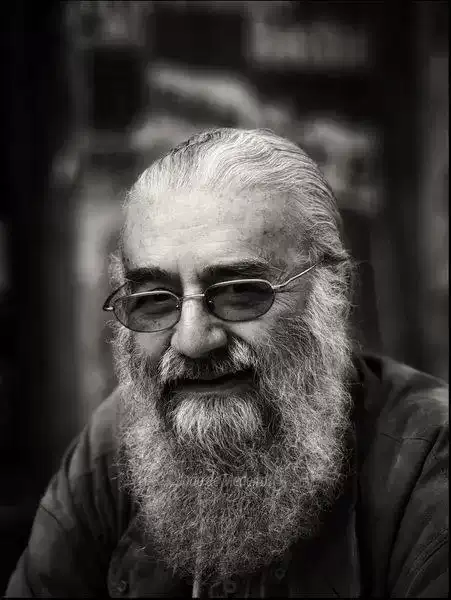
Ernesto de Melo e Castro
 PT
PT
Ernesto de Melo e Castro was a multifaceted figure in Portuguese arts and letters, known for his experimental poetry and his pioneering work in visual and concrete poetry. His work challenges the traditional boundaries of poetic language, exploring the word as form, image, and sound. Throughout his career, Melo e Castro was a tireless promoter of new artistic languages, leaving a significant legacy in contemporary poetry and visual arts. His avant-garde vision and incessant experimentation make him one of the most innovative authors of his generation.
n. 1932, Covilhã · m. 2020-08-29, São Paulo
Bio
Identification and basic context
Ernesto de Melo e Castro (1932-2019) was a Portuguese poet, professor, and essayist, a central figure in the renewal of poetry in Portugal, especially in the field of visual and concrete poetry. Pseudonym: E.M.C. He was born in São Romão de Arões, Vale de Cambra. His work is written in Portuguese.Childhood and education
Born in 1932, Melo e Castro had a childhood marked by the common experiences of many Portuguese people at the time. His academic training included studies at the Faculty of Arts of the University of Coimbra and the University of Lisbon. From an early age, he showed a deep interest in language and the arts, which would lead him to explore less conventional paths in poetry.Literary career
Ernesto de Melo e Castro's literary career began to take shape from the 1950s onwards, but it was in the following decades that his experimentation consolidated. He was one of the founders of the Poesia 61 movement, a landmark in the modernization of Portuguese poetry. Later, he distinguished himself as a pioneer of visual and concrete poetry in Portugal, exploring the graphic and spatial dimension of the word. He actively collaborated in various publications and anthologies, both national and international, and also engaged in literary and artistic criticism.Work, style, and literary characteristics
Melo e Castro's work is vast and diverse, encompassing poetry, prose, essays, and criticism. His main works include "Obra Poética" (1972), "Poesia Concreta" (1973), "O Fio da Palavra" (1981), and "Poesia Visual" (1996). The themes addressed are varied, ranging from reflection on language and communication to social and existential criticism. His most distinctive characteristic is the experimentation with poetic form, using the word as a visual and sound element. Free verse and the exploration of new structures are recurrent, as is the use of metaphor and rhythm to create unique effects. The tone of his poetry can vary between the lyrical, the conceptual, and the playful. His language is innovative, often deconstructing syntax and traditional meaning. Melo e Castro introduced the trends of concrete and visual poetry to Portugal, influenced by international movements. He is associated with Modernism and avant-garde currents.Cultural and historical context
Ernesto de Melo e Castro lived and produced most of his work during a period of great transformations in Portugal, including the end of the Estado Novo dictatorship and the transition to democracy. He was one of the intellectuals who drove the cultural and artistic renewal of the country. He was part of a generation of poets who sought to break with literary traditions and embrace the new artistic languages of the 20th century. His political and philosophical stance was generally progressive and oriented towards freedom of expression and experimentation.Personal life
Ernesto de Melo e Castro was also a university professor, dedicating part of his life to teaching and promoting literature and art. His personal relationships and contacts with other artists and writers were fundamental for the exchange of ideas and the consolidation of the artistic movements in which he was involved. His passion for art and words profoundly shaped his life.Recognition and reception
The recognition of Ernesto de Melo e Castro as one of the great innovators of Portuguese poetry grew considerably over time. He received several awards and distinctions for his literary and artistic work. His visual and concrete poetry is studied in universities and art centers, consolidating his place in the canon of Portuguese and international literature.Influences and legacy
Melo e Castro was influenced by international concrete poets such as Eugen Gomringer and by the avant-garde movements of the 20th century. In turn, his work influenced generations of poets, visual artists, and designers in Portugal and abroad. His legacy lies in opening new paths for poetry, showing that the word can be explored beyond its conventional boundaries. His work is the subject of academic study and has been disseminated internationally.Interpretation and critical analysis
Melo e Castro's work invites critical analysis that explores the intersection between literature and visual arts, the deconstruction of language, and the critique of communication systems. His reflections on the polysemy of the word and its capacity to evoke multiple meanings are central to the interpretations of his work.Curiosities and lesser-known aspects
A curiosity about Melo e Castro is his ability to move between different artistic disciplines, demonstrating an integrated vision of art. His visual poems often contain hidden messages or subtle social criticisms that are only revealed upon close observation.Death and memory
Ernesto de Melo e Castro passed away in 2019, leaving an immense legacy for Portuguese art and literature. His memory is celebrated through exhibitions, publications, and studies that continue to explore his innovative work and its lasting impact.Poems
0No poems found
Comments (0)
No comments yet. Be the first to comment.