
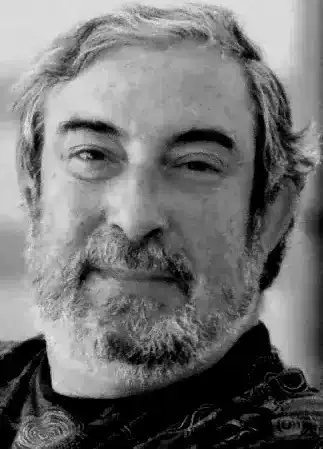
Fernando Assis Pacheco
1937–1995
· lived 58 years
 PT
PT
PT
Fernando Assis Pacheco was a Portuguese poet, journalist, and literary critic, a prominent figure in contemporary poetry. His work, characterized by irony, melancholy, and deep reflection on time and the human condition, reveals a constant dialogue with literary tradition and an unmistakable originality. As a journalist and critic, he played an important role in promoting and debating Portuguese literature. His poetry is an invitation to introspection, exploring the complexities of feeling and thinking.
n. 1937-02-01, Coimbra · m. 1995-11-30, Lisboa
40
Views
Bio
Identification and basic context
Fernando Assis Pacheco was a Portuguese poet, journalist, literary critic, and translator. He was born and died in Lisbon. His work is written in Portuguese. He was part of the so-called "Generation of 50" or "Orpheu Generation," although his work has a distinctive character.Childhood and education
He spent his childhood and adolescence in a middle-class family environment in Lisbon. His intellectual formation was marked by a vast literary culture, largely acquired self-taught, through intense and diverse readings. He absorbed influences from classical and contemporary authors, both Portuguese and foreign, which is reflected in his writing.Literary career
The beginning of his literary activity dates back to his youth, with the publication of poems in various publications. His poetic work developed over several decades, with a notable evolution in his style and themes. Assis Pacheco was a regular contributor to newspapers and literary magazines, where he published poetry, criticism, and essays. He also played a role as a translator of foreign authors, enriching the Portuguese literary landscape.Work, style, and literary characteristics
His most significant poetic works include "O Gosto Amargo da Terra" (1951), "O Caminho e o Cheiro" (1955), "Os Amantes" (1957), "Tanta Dela" (1967), and "O Pão e as Pedras" (1976). The dominant themes in his poetry are the ephemerality of time, melancholy, love, solitude, death, the fragility of existence, and man's relationship with his life journey. His style is characterized by subtle irony, lyrical restraint, philosophical reflection, and an often elegiac tone. He frequently uses free verse but with a very personal internal musicality and rhythm. The language is refined but accessible, with an imagistic density that evokes sensations and states of mind. His work fits within Portuguese modernism, dialoguing with tradition while seeking an authentic and innovative voice.Work, style, and literary characteristics
Cultural and historical context Fernando Assis Pacheco lived and produced his work during a period of great cultural effervescence in Portugal, marked by the Estado Novo dictatorship and the colonial war. He was a contemporary of many of the great names in Portuguese literature of the second half of the 20th century. His critical and ironic position, often subtle, reflects his complex relationship with the regime and the society of the time.Work, style, and literary characteristics
Personal life Assis Pacheco's life was marked by dedication to writing and journalism. His personal relationships and life experiences shaped his worldview and influenced his work, conveying a keen sensitivity to the complexities of human relationships and the fragility of the human condition.Work, style, and literary characteristics
Recognition and reception Although he did not achieve the same media prominence as other poets of his generation, Fernando Assis Pacheco is widely recognized by critics and readers as one of the great Portuguese poets of the second half of the 20th century. His work has been rediscovered and valued, consolidating his place in the Portuguese literary canon.Work, style, and literary characteristics
Influences and legacy Fernando Assis Pacheco was influenced by poets such as Fernando Pessoa, Mário de Sá-Carneiro, and Miguel Torga. His work, due to the originality of its tone and the depth of its reflections, influenced later poets who found in him a model of lyrical and intellectually rigorous writing. His legacy lies in his ability to translate the melancholy and irony of human existence into poetry of great formal and expressive rigor.Work, style, and literary characteristics
Interpretation and critical analysis Assis Pacheco's poetry invites reflection on the meaning of life, the impact of time, and the search for a place in the world. Critical analyses highlight his mastery in constructing imagery and exploring complex states of mind, as well as his ability to reconcile irony with a deep tenderness for the human condition.Work, style, and literary characteristics
Curiosities and lesser-known aspects He was known for his discretion and his exclusive dedication to art. Many of his poems were written in notebooks or on small notes, reflecting a creative process that was often intimate and solitary.Work, style, and literary characteristics
Death and memory Fernando Assis Pacheco died in 2002. His memory is kept alive through the reading and study of his work, which continues to enchant and provoke reflection in readers.Poems
0No poems found
Comments (0)
Log in
to post a comment.
No comments yet. Be the first to comment.