
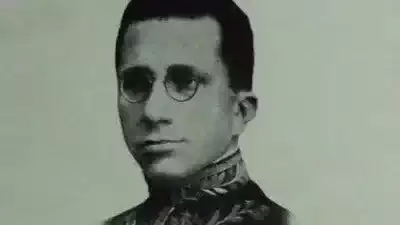
Humberto de Campos
 BR
BR
Poet, short story writer, novelist, and columnist, Humberto de Campos was a multifaceted figure in Brazilian literature. Known for his fluid and lyrical prose, he explored themes such as love, nature, and spirituality, often with an approach that blended the earthly and the transcendent. His work, though diverse in genres, carries an unmistakable poetic signature, marked by musicality and acute sensitivity to the everyday and human feelings. His literary career established him as one of the significant names of his time.
n. 1886-10-25, Humberto de Campos · m. 1934-12-05, Rio de Janeiro
Bio
Identification and basic context
Humberto de Campos, the literary name of Agenor de Campos, was a prolific Brazilian writer, working as a poet, short story writer, novelist, and columnist. He was born in Benjamin Constant, in the state of Rio de Janeiro, and lived much of his life in Brazil, becoming an important voice in national literature. He wrote in Portuguese.Childhood and education
His childhood and youth were marked by an environment that favored the development of his literary vein. His educational background, combined with a wide range of readings and contact with various cultural and intellectual manifestations, were fundamental in shaping his artistic sensibility and literary style. He absorbed influences that were reflected in his work, transitioning between the classic and the modern.Literary career
The beginning of his literary career came with the publication of poems and short stories, gradually expanding his range of genres to include novels and columns. His writing evolved over time, showing a constant search for new forms of expression and themes. He actively participated in literary life, publishing in newspapers and magazines and establishing a direct connection with the public through his daily columns.Work, style, and literary characteristics
Humberto de Campos's work is vast and diverse, encompassing poetry, fictional prose, and journalistic texts. His recurring themes include love, nature, spirituality, everyday life, and existential questions. His style is characterized by lyrical prose, musicality, accessible language, and profound sensitivity. In poetry, he explored various forms, while in prose, he stood out for his fluidity and ability to evoke images and feelings. His poetic voice is often confessional and reflective. He is associated with a strand of Brazilian Modernism that valued lyrical expression and observation of reality. Works like "Vidas em Fuga" and "O Sol na Cabeça" are examples of his talent in prose, while his poetry reveals a striking lyrical vein.Cultural and historical context
Humberto de Campos integrated into the vibrant Brazilian cultural scene, especially during the first decades of the 20th century, a period of modernist effervescence. His work engages with the aesthetic and thematic concerns of the time, seeking a renewal in literary language and a greater approximation with Brazilian reality. His position as a columnist, in particular, allowed him to interact directly with the social and cultural events of his time, commenting on the daily life of Brazilian society and intellectual trends.Personal life
Humberto de Campos's life experiences, including personal relationships, friendships, and possible crises, inevitably shaped his literary production. The fact that he was a public figure and a prolific writer suggests a life dedicated to art and communication. His beliefs and worldview, often expressed in his works, gave him a unique depth.Recognition and reception
Humberto de Campos was a widely read and appreciated author in his time, especially as a columnist. His captivating prose and sensitive approach to universal themes earned him a solid readership. His recognition in Brazilian literature is undisputed, with works that continue to be revisited and studied.Influences and legacy
Humberto de Campos's legacy lies in his contribution to the diversity of Brazilian literature, demonstrating the versatility of an author who masterfully navigated different genres. His works continue to inspire readers and writers with their lyrical beauty and ability to capture the essence of the human experience. His influence can be seen in how he approached everyday themes with poetic depth.Interpretation and critical analysis
Humberto de Campos's work offers rich material for interpretation, exploring the complexities of love, spirituality, and the human condition. His columns, in particular, are a faithful portrait of the society of his time, allowing for analyses of customs, mentalities, and values. Literary criticism has highlighted his skill in blending lyricism and realism, creating texts that touch the reader on a deep level.Curiosities and lesser-known aspects
Lesser-known aspects of his personal life or writing habits can reveal more about his personality and creative process. His vast production suggests intense dedication to writing, possibly with specific rituals or routines that aided his literary creation.Death and memory
Knowledge about the circumstances of Humberto de Campos's death contributes to a complete understanding of his trajectory. Posthumous publications, if they exist, help keep his work and the memory of a writer who left a significant mark on Brazilian literature alive.Poems
0No poems found
Comments (0)
No comments yet. Be the first to comment.