
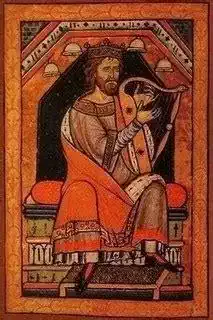
João Soares de Paiva
b. 1140
 PT
PT
PT
João Soares de Paiva was a Portuguese poet and humanist, a prominent figure of the Renaissance. His poetic work, although less extensive than that of some contemporaries, reveals a remarkable lyrical sensitivity and a profound knowledge of the classical tradition. His work as a humanist and teacher left a significant impact on the cultural and intellectual landscape of his time.
n. 1140, Portugal
16
Views
Bio
Identification and basic context
João Soares de Paiva was a Portuguese poet, humanist, and teacher. Little is known about his date and place of birth, but he is believed to have lived in the 16th century. He was Portuguese and wrote in Portuguese and Latin.Childhood and education
He is known to have studied at the University of Salamanca, where he graduated in Arts and later in Theology. His education in Salamanca, one of the most important intellectual centers in Europe at the time, allowed him to absorb the humanist fervor and knowledge of classical antiquity.Literary career
His literary career is intrinsically linked to his academic activity. Although not known for an extensive poetic work, the poems that have come down to us reveal lyrical talent and mastery of form. He was also an active promoter of classical culture and humanism.Work, style, and literary characteristics
João Soares de Paiva's work consists of poems in Latin and Portuguese. His verses in Portuguese, such as those found in anthologies of the time, reveal a refined style, influenced by Petrarchan lyricism and classical rhetoric. The themes addressed include love, longing, reflection on the transience of life, and admiration for nature. His ability to combine classical erudition with the expression of personal feelings is noteworthy.Work, style, and literary characteristics
Cultural and historical context João Soares de Paiva lived in a period of great cultural effervescence in Portugal, the Renaissance, marked by maritime expansion, the flourishing of arts and sciences, and the influence of European humanism. He was a contemporary of great figures in Portuguese literature such as Sá de Miranda and Luís de Camões.Work, style, and literary characteristics
Personal life Few details are known about his personal life, beyond his dedication to study and teaching. His activity as a teacher and humanist suggests a life dedicated to knowledge and the dissemination of culture.Work, style, and literary characteristics
Recognition and reception The recognition of João Soares de Paiva stems mainly from his contribution to humanism and 16th-century poetry. Although his fame did not reach the dimension of other poets of his time, his work is valued for its quality and for its testimony to the humanist spirit.Work, style, and literary characteristics
Influences and legacy Soares de Paiva was influenced by classical Latin poets (Virgil, Horace) and Italian humanists, such as Petrarch. His legacy lies in his contribution to Portuguese-language poetry in the 16th century and in his role as a humanist, helping to shape the intellectual thought of the time.Work, style, and literary characteristics
Interpretation and critical analysis The critical analysis of his work focuses on the fusion between classical tradition and lyrical expression in Portuguese, as well as his role as a vehicle for humanist thought in Portugal.Work, style, and literary characteristics
Curiosities and lesser-known aspects An interesting aspect is his education in Salamanca, which put him in contact with the most advanced currents of thought of the time. His relative scarcity of published work may be due to a greater dedication to teaching and erudition.Work, style, and literary characteristics
Death and memory There are no clear records about the circumstances of his death. His memory endures through the poems that have come down to us and his role as a humanist in the Portuguese literary context of the 16th century.Poems
0No poems found
Comments (0)
Log in
to post a comment.
No comments yet. Be the first to comment.