
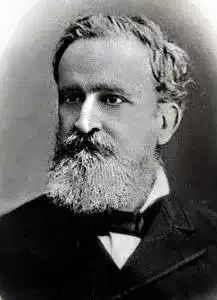
José Bonifácio, o Moço
 BR
BR
José Bonifácio de Andrade e Silva, known as o Moço, was a prominent figure in the Empire of Brazil, acting as a politician, diplomat, jurist, and professor. He was the nephew of José Bonifácio de Andrade e Silva, the Patriarch of Independence, and played a crucial role in the consolidation of the regency period and in the defense of Brazilian territorial unity. His political activity was marked by the defense of abolitionism and the pursuit of a political system that guaranteed the country's stability at a time of great transformations.
n. 1827-11-08, Bordéus · m. 1886-10-26, São Paulo
Bio
Identification and basic context
José Bonifácio de Andrade e Silva, known as o Moço, was born in Santos, São Paulo. He was an influential Brazilian politician, diplomat, jurist, and professor. Nephew of José Bonifácio de Andrade e Silva, the Patriarch of Independence, he inherited the name and part of the family prestige. His career took place mainly during the regency period and the Second Reign of the Empire of Brazil. He was known for his defense of Brazilian territorial unity and his abolitionist stance.Childhood and education
Born into a distinguished family, José Bonifácio, o Moço, received a privileged education. He studied Law at the University of Coimbra, Portugal, where he graduated, deepening his legal and political knowledge. The vibrant European intellectual and political environment influenced his worldview and his commitment to Brazilian causes, especially the abolition of slavery and the organization of the State.Literary career
Although better known for his political and legal career, José Bonifácio, o Moço, also had a relevant intellectual output. He wrote on legal, political, and social topics, reflecting his convictions and his vision for Brazil's future. His writing was marked by clarity and consistent argumentation, aiming to influence public debate and legislation of the time.Work, style, and literary characteristics
The work of José Bonifácio, o Moço, mainly includes legal treatises and political speeches. His writings in defense of the abolition of slavery stand out, in which he presented rational and humanitarian arguments. His style was formal and erudite, consistent with his education and intended audience, but always with the aim of defending causes of great social and national importance.Work, style, and literary characteristics
Cultural and historical context José Bonifácio, o Moço, lived in a period of intense transformations in Brazil and the world. The Empire of Brazil was in its early years of independence, facing challenges to consolidate its territorial unity and political structure. The abolitionist movement was gaining strength, and the issue of slavery was one of the central debates in Brazilian society. He also engaged with European currents of thought on law, politics, and society.Work, style, and literary characteristics
Personal life José Bonifácio, o Moço, dedicated a large part of his life to public service and the service of the Empire. His legal education and family background positioned him for a prominent political career. He maintained firm positions regarding the causes he defended, especially abolition, which demonstrated a strong sense of justice and social commitment.Work, style, and literary characteristics
Recognition and reception Recognized in his time for his intelligence and dedication, José Bonifácio, o Moço, played an important role in Brazilian politics. His contributions to the abolitionist debate and the formulation of laws were significant. His work, although focused on contemporary issues, reflects a progressive legal and political thinking for his time.Work, style, and literary characteristics
Influences and legacy Influenced by Enlightenment thought and the ideas of his uncle, José Bonifácio de Andrade e Silva, o Moço contributed to the dissemination of abolitionist and liberal ideas in Brazil. His legacy lies in his political and legal career at a crucial moment in Brazilian history, especially in his defense of abolition, which anticipated a movement of great social impact.Work, style, and literary characteristics
Interpretation and critical analysis The work of José Bonifácio, o Moço, can be interpreted as a reflection of his time, marked by the struggle for abolition and the consolidation of the nation-state. His legal and political arguments in favor of the freedom of slaves demonstrate an ethical awareness and a desire for social progress, aligned with the most advanced trends of his time.Work, style, and literary characteristics
Curiosities and lesser-known aspects As the nephew of the Patriarch of Independence, José Bonifácio, o Moço, had his political and intellectual career often compared to his uncle's. However, he developed his own remarkable trajectory, with specific contributions, especially in the field of law and in the defense of the abolitionist cause, with a more contemporary vision.Work, style, and literary characteristics
Death and memory José Bonifácio, o Moço, died in Rio de Janeiro. His memory is preserved as that of an important Brazilian statesman and intellectual, whose political and legal career contributed to the country's development and the fight against slavery.Poems
0No poems found
Comments (0)
No comments yet. Be the first to comment.