
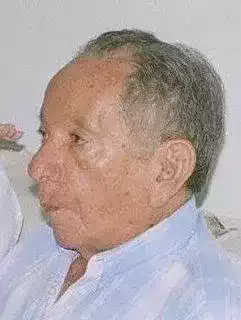
José Costa Matos

José Costa Matos was a Portuguese poet and university professor, known for his poetic work that often explores landscape, memory, and identity, with a careful language and a sometimes melancholic and reflective tone. His academic background as a Doctor in Portuguese Literature and his career in university teaching provided him with a profound theoretical and critical foundation, which is reflected in his writing, marked by erudition and lyrical sensitivity. His poetry dialogues with literary tradition and, at the same time, seeks a contemporary and personal expression.
n. , Ponte de Lima, Reino de Portugallocal_morte = Ponte de Lima, República Portuguesa
Bio
Identification and basic context
José Manuel da Costa Matos, widely known as José Costa Matos, is a Portuguese poet, essayist, and university professor. He was born in Viana do Castelo in 1951. His professional and literary trajectory is strongly associated with the city of Porto, where he developed most of his academic and literary career. His family background and social class are not widely disclosed details, but his university education indicates access to education and a valued intellectual path. He is a Portuguese citizen and his writing language is Portuguese. He lived and produced during a period of profound transformations in Portugal, from the end of the dictatorship to the consolidation of democracy.Childhood and education
José Costa Matos was born in Viana do Castelo. His childhood and youth took place in Portugal under the Estado Novo regime, a period of cultural and political repression. His academic training culminated in a Doctorate in Portuguese Literature, which denotes a dedicated and in-depth school path in literary studies. This university education in Portugal was crucial for the development of his career as a professor and for his consolidation as an intellectual and poet, absorbing the influences of the rich Portuguese literary tradition and contemporary critical currents.Literary career
José Costa Matos's literary career is marked by his foray into poetry and his activity as an essayist and literary critic. He published his first poetic work in 1981, titled "Maré Alta" (High Tide), and has maintained a regular production since then. His poetic work has evolved over time, exploring themes such as landscape, memory, identity, the passage of time, and the human condition. In addition to his poetic creation, José Costa Matos has a significant role as a university professor, where he also dedicates himself to literary criticism and the publication of essays on Portuguese literature, with a special interest in 20th-century authors. He collaborated and collaborates in various academic and literary publications, consolidating his name in the Portuguese intellectual milieu.Work, style, and literary characteristics
Work, style, and literary characteristics José Costa Matos's poetic work is characterized by refined language, a strong connection to the landscape, especially that of Northern Portugal, and an exploration of memory and identity. His poems often evoke a reflective, sometimes melancholic tone, addressing the ephemerality of life, human relationships, and the search for meaning. His style is marked by clarity, imagistic density, and the musicality of verse. He predominantly uses free verse, but with a refined rhythmic sense. As an essayist, he stands out for his erudition and capacity for critical analysis, with publications on poets such as Eugénio de Andrade and Sophia de Mello Breyner Andresen, and on contemporary Portuguese poetry. His work is part of the context of contemporary Portuguese poetry, dialoguing with tradition but seeking a distinct and current authorial voice.Work, style, and literary characteristics
Cultural and historical context José Costa Matos produced his work in a democratic Portugal, after April 25, 1974. His academic training and career developed during a period of cultural effervescence and reconfiguration of higher education institutions. His poetic work, by addressing themes such as identity and memory, reflects the concerns of a society that sought to consolidate its democracy and redefine its cultural references. His role as a university professor places him within an active intellectual circle, in dialogue with other writers and academics, and in the task of transmitting knowledge and appreciation for Portuguese literature.Work, style, and literary characteristics
Personal life José Costa Matos is an intellectual whose personal life seems intrinsically linked to his dedication to letters and teaching. As a university professor, his professional life is dedicated to disseminating literary knowledge. There is no detailed public information about his affective or family life, or about specific literary rivalries. His work, however, suggests a refined sensitivity to human relationships and interiority, elements that, although not directly autobiographical, may have been shaped by his life experiences. His political position and specific civic involvement are not widely disclosed.Work, style, and literary characteristics
Recognition and reception José Costa Matos has consolidated recognition in Portuguese academic and literary circles. His poetic work is appreciated for its aesthetic quality and thematic depth, and his essays are valued for their erudition and critical rigor. As a university professor, his role is respected. There is no record of awards of great public notoriety, but his work is frequently cited and studied in academic contexts, attesting to his relevance in Portugal's literary and intellectual landscape.Work, style, and literary characteristics
Influences and legacy José Costa Matos shows influences from great names in Portuguese poetry, such as Fernando Pessoa, Eugénio de Andrade, and Sophia de Mello Breyner Andresen, dialoguing with modern and contemporary tradition. His legacy lies both in his poetic production, which contributes to the renewal of lyrics in Portuguese, and in his essayistic and critical work, which deepens the study of national literature. His role as an educator trains new generations of readers and literature scholars, ensuring the continuity of interest in Portuguese poetry and literary culture.Work, style, and literary characteristics
Interpretation and critical analysis José Costa Matos's work can be interpreted as a meditation on existence, the individual's relationship with their surrounding space, memory as a construct of identity, and the fugacity of time. His poetry invites contemplation and introspection, exploring the beauty contained in the everyday and the depth of human feelings. Critical analyses of his essays highlight his ability to articulate theory and literary practice, offering new perspectives on authors and movements in Portuguese literature.Work, style, and literary characteristics
Curiosities and lesser-known aspects A relevant aspect of José Costa Matos's life is his dual role as a poetic creator and academic. The combination of the poet's lyrical sensitivity and the analytical rigor of the professor and literary critic lends his work a singular depth. His dedication to the study and dissemination of the work of other poets, such as Eugénio de Andrade, also reveals a generous side engaged with the Portuguese literary heritage. His connection to the landscape of Northern Portugal is a recurring and striking element in his poetry.Work, style, and literary characteristics
Death and memory José Costa Matos remains alive and active, contributing to Portuguese literature and academia. Therefore, there is no information about his death or posthumous publications.Poems
0No poems found
Comments (0)
No comments yet. Be the first to comment.