
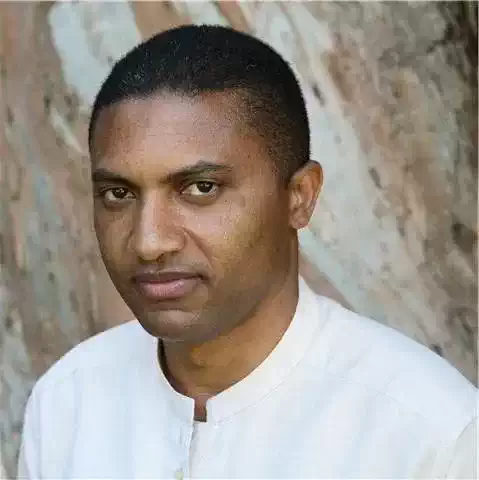
José Luís Tavares
b. 1967
 CV
CV
CV
José Luís Tavares is a contemporary Portuguese poet whose work is characterized by its lyrical strength, reflection on memory, time, and identity, and by a refined and evocative language. His poetry moves between the personal and the universal, exploring the depths of human experience with a unique sensibility. Recognized by critics and readers alike, Tavares has established himself as a singular voice in contemporary Portuguese poetry, leaving a legacy of verses that resonate for their beauty, intelligence, and capacity to question the world and ourselves.
n. 1967-06-10, Tarrafal
35
Views
Bio
Identification and basic context
José Luís Tavares is a contemporary Portuguese poet. His poetic work is recognized for its lyrical quality and reflective depth on themes such as memory, time, identity, and the human condition. He is also associated with literary criticism and translation.Childhood and education
Information about José Luís Tavares's childhood and education is limited in public sources. It is known that he dedicated himself intensely to the study and practice of literature, suggesting a solid self-taught or academic background in the humanities.Literary career
José Luís Tavares began his literary journey as a poet, quickly distinguishing himself by the originality and maturity of his voice. Over time, his work has evolved, maintaining thematic and stylistic consistency while exploring new approaches and deepening his concerns. Alongside his poetic work, he has developed significant activity as an essayist, literary critic, and translator, collaborating in various publications and contributing to cultural debate.Work, style, and literary characteristics
José Luís Tavares's work focuses on the lyrical exploration of memory, time, identity, love, and the very nature of writing. His poems are often characterized by precise and evocative language, a musical rhythm, and an ability to move between the personal and the universal register. The tone of his poetry can vary, but it often reveals a considered melancholy, an existential questioning, and an admiration for the fleeting beauty of the world. Free verse is a common form, albeit with great metrical and rhythmic control. Tavares demonstrates great mastery in the use of metaphor and imagery, creating dense atmospheres and deep resonances.Cultural and historical context
José Luís Tavares is part of the contemporary Portuguese poetry scene, engaging with the aesthetic and existential concerns of his generation. His work reflects an awareness of historical time and the complexities of the contemporary world, but addresses these issues through a markedly lyrical and introspective perspective. He maintains a dialogue with literary tradition, but with a strong mark of originality and modernity.Personal life
Detailed information about José Luís Tavares's personal life, including specific family, affective, or professional relationships, is not widely disclosed. His dedication to literature in various aspects (poetry, essay, translation) is known.Recognition and reception
José Luís Tavares has established himself as one of the most relevant Portuguese poets of today. His work has been praised by literary critics and has gained an increasingly larger audience, often being invited to poetry festivals and literary events. His work is recognized for its aesthetic quality and the depth of the reflections it proposes.Influences and legacy
Although José Luís Tavares's specific influences may vary, his work demonstrates familiarity with the great lyrical tradition, both Portuguese and universal. His legacy lies in his ability to renew poetic language, to address universal themes with a unique voice, and to create a body of work that challenges the reader with its intelligence and sensitivity. His influence extends to younger poets who are inspired by his formal mastery and thematic depth.Interpretation and critical analysis
José Luís Tavares's poetry is rich in material for critical analysis, especially regarding his approach to memory, time, and identity. The relationship between individual experience and the universality of themes, as well as how language is used to capture the fleeting nature of existence, are central aspects for the interpretation of his work.Curiosities and lesser-known aspects
Lesser-known aspects of his life and creative process may include details about his writing habits, the places that inspire his poetry, or his less obvious readings. However, these details are not widely disclosed.Death and memory
José Luís Tavares is a living author, and his work continues to be produced and studied and appreciated.Poems
0No poems found
Comments (0)
Log in
to post a comment.
No comments yet. Be the first to comment.