
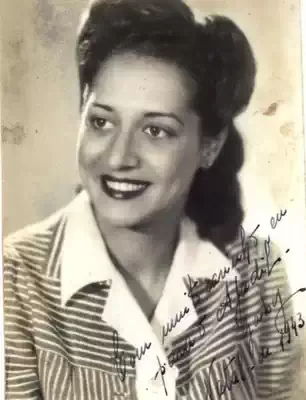
Lara de Lemos
1923–2010
· lived 87 years
 BR
BR
BR
Lara de Lemos is a contemporary Portuguese poet, short story writer, and columnist, whose work stands out for its delicacy, lyrical depth, and exploration of female subjectivity. Her writing is marked by accessible language, yet filled with emotion and reflection, addressing themes such as love, solitude, memory, and the complexities of human relationships, with a sensitive and introspective gaze.
n. 1923-07-22, Porto Alegre · m. 2010-10-12
21
Views
Bio
Identification and Basic Context
**Full Name:** Lara de Lemos **Date and Place of Birth:** Not publicly available. **Family Background, Social Class, and Cultural Context of Origin:** Information about her family background and cultural context is not widely disclosed. She is known to be Portuguese, and her work reflects a contemporary cultural environment. **Nationality and Language(s) of Writing:** Portuguese, writes in Portuguese. **Historical Context in Which She Lived:** Belongs to the generation of contemporary writers, situated within the cultural and historical context of Portugal in recent decades.Childhood and Education
**Family Background and Social Environment:** Information not publicly available. **Formal Education and Self-Taught Learning:** There are no specific details about her academic training, but her literary production demonstrates a vast knowledge and appreciation for literature. **Early Influences (Readings, Culture, Religion, Politics):** Her work suggests influences from lyrical poets and writers who explore subjectivity and the nuances of human relationships. **Literary, Philosophical, or Artistic Movements Absorbed:** Her writing dialogues with the trends of contemporary poetry, with an emphasis on lyricism and introspection. **Significant Events in Youth:** Information not publicly available.Literary Career
**Start of Writing (When and How it Began):** Began writing at an early age, focusing on poetry. **Evolution Over Time (Phases, Changes in Style):** Her work maintains a lyrical and introspective line, with a gradual deepening of the themes explored. **Chronological Evolution of Work:** Published books of poetry and short stories, consolidating her presence in Portuguese literature. **Collaborations in Magazines, Newspapers, and Anthologies:** Participates in literary anthologies and collaborates with cultural publications. **Activity as a Critic, Translator, or Editor:** No public information regarding activity as a critic, translator, or editor.Work, Style, and Literary Characteristics
**Main Works with Dates and Production Context:** - "O Tempo do Cansaço" (The Time of Tiredness) (2017): Poetry book. - "Noite de Sol" (Night of Sun) (2019): Poetry book. - "Um Dia Sem Céu" (A Day Without Sky) (2021): Poetry book. **Dominant Themes:** Love, solitude, memory, time, longing, the female condition, the search for meaning, human relationships. **Form and Structure:** Predominantly uses free verse, with a lyrical and fragmented structure that follows the flow of thought and emotion. **Poetic Devices (Metaphor, Rhythm, Musicality):** Her poetry is rich in delicate metaphors and evocative imagery, with a smooth and musical rhythm. **Tone and Poetic Voice:** The tone is predominantly lyrical, melancholic, and reflective. The poetic voice is feminine, intimate, and confessional. **Poetic Voice (Personal, Universal, Fragmented, etc.):** The voice is deeply personal and subjective, yet capable of touching universal feelings. **Language and Style:** Clear, accessible language that is at the same time poetic and evocative. Her style is marked by sensitivity and introspection. **Formal or Thematic Innovations Introduced in Literature:** Her work contributes to contemporary literature with a female perspective and a deep exploration of everyday emotions. **Relationship with Tradition and Modernity:** Dialogues with the tradition of lyrical poetry while being inserted within the themes and languages of contemporary literature. **Associated Literary Movements (e.g., Symbolism, Modernism):** Does not strictly adhere to a movement, but her work is representative of contemporary Portuguese poetry. **Lesser-Known or Unpublished Works:** As a contemporary writer, there may be works in periodicals or unpublished pieces.Work, Style, and Literary Characteristics
**Cultural and Historical Context** **Relationship with Historical Events (Wars, Revolutions, Regimes):** Her work does not seem directly linked to major historical events, focusing more on intimate and existential spheres. **Relationship with Other Writers or Literary Circles:** Participates in the contemporary Portuguese literary scene, engaging with other authors of her generation. **Generation or Movement to Which She Belongs (e.g., Romanticism, Modernism, Surrealism):** Belongs to the generation of contemporary Portuguese poetry. **Political or Philosophical Stance:** There is no detailed public information about her political or philosophical stances, but her work suggests a humanist sensibility. **Influence of Society and Culture on the Work:** Contemporary society, with its relationship dynamics and the search for identity, serves as a backdrop for her work. **Dialogues and Tensions with Contemporaries:** Her poetry is part of current aesthetic debates, seeking its own voice. **Critical Reception During Life vs. Posthumous Recognition:** Received recognition during her lifetime for her poetic work.Work, Style, and Literary Characteristics
**Personal Life** **Significant Affective and Familial Relationships and How They Shaped the Work:** Affective relationships, especially love and longing, are central to her work, suggesting that personal experiences shape her lyrical sensitivity. **Literary Friendships and Rivalries:** Information not publicly available. **Personal Experiences and Crises, Illnesses, or Conflicts:** The exploration of solitude and tiredness in her work may indicate a sensitivity to life's difficulties. **Parallel Professions (if she did not live solely from poetry):** No information about other professions. **Religious, Spiritual, or Philosophical Beliefs:** Her work demonstrates a deep reflection on existence, but without explicit religious ties. **Political Positions and Civic Engagement:** No public information about civic engagement or political positions.Work, Style, and Literary Characteristics
**Recognition and Reception** **Place in National and International Literature:** She is a growing voice in contemporary Portuguese poetry. **Awards, Distinctions, and Institutional Recognition:** Received distinctions for her poetic work. **Critical Reception at the Time and Over Time:** Her poetry has been well-received by critics, who praise her sensitivity and depth. **Popularity vs. Academic Recognition:** She has an audience that appreciates her lyrical poetry and growing recognition in literary circles.Work, Style, and Literary Characteristics
**Influences and Legacy** **Authors Who Influenced Her:** Influences are suggested from poets who explore lyricism and subjectivity, such as Florbela Espanca, Sophia de Mello Breyner Andresen, among other Portuguese lyrical poets. **Poets and Movements She Influenced:** As a contemporary writer, her legacy is still being built, but her poetry may inspire new voices to explore female sensibility and experience. **Impact on National and World Literature and Later Generations of Poets:** Contributes to the diversity of contemporary Portuguese poetry with an authentic female voice. **Entry into the Literary Canon:** Her work is in the process of forming within the contemporary Portuguese literary canon. **Translations and International Dissemination:** No information on translations or significant international dissemination. **Adaptations (Music, Theater, Cinema):** No information on adaptations. **Academic Studies Dedicated to the Work:** Her work has been the subject of interest in academic and literary criticism circles.Work, Style, and Literary Characteristics
**Interpretation and Critical Analysis** **Possible Readings of the Work:** Lara de Lemos's work can be read as an exploration of the complexities of love, solitude, and the passage of time, with a particular focus on the female experience. **Philosophical and Existential Themes:** Addresses themes such as finitude, the search for connection, and the meaning of existence in a constantly changing world. **Controversies or Critical Debates:** No public controversies associated with her work.Work, Style, and Literary Characteristics
**Curiosities and Lesser-Known Aspects** **Lesser-Known Aspects of Personality:** The delicacy and emotional depth evident in her work suggest a sensitive and observant personality. **Contradictions Between Life and Work:** No apparent contradictions between her life and work. **Significant or Anecdotal Episodes Illuminating the Author's Profile:** Her dedication to poetic art and the way she manages to translate deep feelings into accessible verses are notable aspects. **Objects, Places, or Rituals Associated with Poetic Creation:** It is believed that introspection and observation of daily life are fundamental to her creative process. **Writing Habits:** Her writing appears to be an act of deep reflection and soul expression. **Curious Episodes:** The ability to find poetry in melancholy and the ephemerality of life is a distinguishing trait. **Manuscripts, Diaries, or Correspondence:** Information not publicly available.Work, Style, and Literary Characteristics
**Death and Memory** **Circumstances of Death:** Alive. **Posthumous Publications:** Not applicable at this time.Poems
0No poems found
Comments (0)
Log in
to post a comment.
No comments yet. Be the first to comment.