
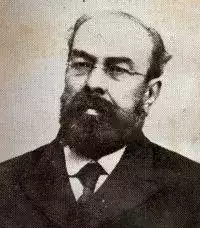
Luís Delfino
1834–1910
· lived 75 years
 BR
BR
BR
Luís Delfino was a poet and journalist known for his satirical poetry and social critique, with a style that combined biting irony with sharp observation of the customs of his time. His work reflects a penetrating look at societal contradictions, hypocrisies, and the excesses of public and private life, using often caustic humor and vigorous vocabulary to unmask human and institutional flaws. He was a prominent figure in the press and literary life of his era.
n. 1834-08-25, Desterro · m. 1910-01-31, Rio de Janeiro
27
Views
Bio
Identification and basic context
Full name: Luís António Delfino Date and place of birth: February 26, 1837, Lisbon Date and place of death: January 28, 1910, Lisbon Nationality: Portuguese Language of writing: Portuguese Historical context in which he lived: He lived through the second half of the 19th century and the early 20th century in Portugal, a period of great political, social, and cultural instability, marked by the Constitutional Monarchy, the crisis of 1890, the fall of the Monarchy, and the establishment of the Republic. He was a critical observer of the transformations and continuities of Portuguese society.Childhood and education
Details about his childhood and education are less documented, but it is known that he dedicated himself to journalism and writing from an early age. His education appears to have been more self-taught and linked to journalistic and literary practice than to extensive formal academic education, which gave him a direct and critical perspective on reality.Literary career
Luís Delfino's literary career is intrinsically linked to his journalistic activity. He began his career in the press, where he published poems, chronicles, and opinion articles that gained him fame. His poetic work, although concentrated in books published throughout his life, was frequently disseminated in newspapers and magazines. He evolved from a more lyrical poetry to a markedly satirical and combative vein, becoming a biting chronicler of society.Work, style, and literary characteristics
Work, style, and literary characteristics Notable works include "O Homenzinho" (1880), "A Alma" (1882), "Os Ciganos" (1886), and "A Vingança de Lísias" (1887). The central themes of his work are social criticism, satire of customs, hypocrisy of the bourgeoisie and politics, observation of different social classes, and reflection on human nature. Delfino used verse, often with regular meter and agile rhythm, to construct his satires. His style is characterized by irony, sarcasm, colloquial language, and the use of rhetorical figures to emphasize his critical commentary. His work fits within the tradition of satirical and realist poetry, with a strong vein of social engagement.Work, style, and literary characteristics
Cultural and historical context Luís Delfino was an influential figure in the Portuguese cultural and journalistic landscape. His intervention through writing was a way to participate in the debates of the time. He was a contemporary of other writers and journalists who, like him, used the press as a platform for expression and critique. His work reflects the tensions and contradictions of Portuguese society in transition to the 20th century.Work, style, and literary characteristics
Personal life Delfino's personal life is, to a large extent, intertwined with his professional life as a journalist and writer. He dedicated himself intensely to his literary and journalistic activity, using it as a vehicle for his opinions and criticisms. His relationships with the literary and political circles of the time were marked by his combative and critical stance.Work, style, and literary characteristics
Recognition and reception Luís Delfino was widely recognized in his lifetime for his satirical insight and his capacity for social observation. His name became synonymous with a certain type of critical and engaged poetry. His work, although sometimes considered more popular than academic, solidified his place as one of the important satirical poets in Portuguese literature.Work, style, and literary characteristics
Influences and legacy His work is part of the lineage of Portuguese satirical poetry. He influenced generations of writers who saw in his capacity for critique and his language a model for literary and journalistic engagement. His legacy lies in his contribution to social and satirical poetry, and in the way he used art to comment on and question reality.Work, style, and literary characteristics
Interpretation and critical analysis Delfino's poetry is often analyzed as a mirror of the contradictions of Portuguese society of his time, exposing its flaws with a sharp eye and caustic humor. His work invites reflection on human nature and the social mechanisms that shape individual and collective behavior.Work, style, and literary characteristics
Curiosities and lesser-known aspects Delfino was known for his sharp wit and his ability to improvise, qualities that were evident in his writing. His intense journalistic activity allowed him to be in direct contact with the events and characters he later portrayed in his poetry.Work, style, and literary characteristics
Death and memory He passed away in Lisbon, leaving behind a body of work that continues to be remembered for its critical relevance and literary value. His memory is associated with the figure of the satirical and engaged poet, an astute observer of society.Poems
0No poems found
Comments (0)
Log in
to post a comment.
No comments yet. Be the first to comment.