
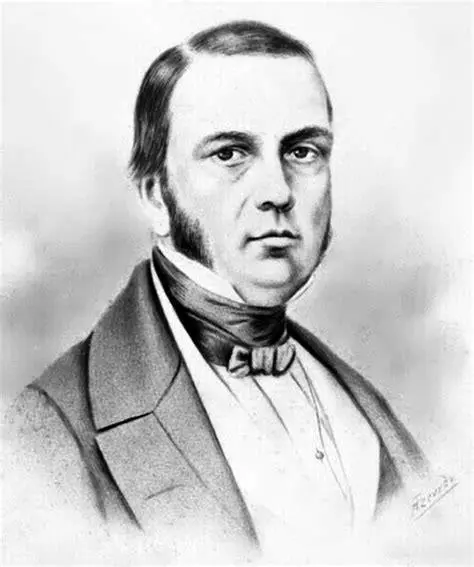
Maciel Monteiro
 BR
BR
Maciel Monteiro was a Brazilian poet whose work, although not as widely publicized as that of his contemporaries, is an important testament to 19th-century poetry. His writing is characterized by Romantic sensibility, with themes that address love, nature, and saudade (longing), reflecting the spirit of his time. His contribution, though sometimes forgotten, is relevant to understanding the Brazilian literary landscape. Maciel Monteiro navigated the literary currents of Romanticism, expressing in his verses the melancholy and yearnings characteristic of this period. His poetry, marked by a particular lyricism, invites reflection on the human condition and the ephemeral beauty of life, consolidating his place in the history of Brazilian literature as a poet of notable sensitivity and expression.
n. 1804-04-30, Recife · m. 1868-01-05, Lisboa
Bio
Identification and basic context
Maciel Monteiro was a 19th-century Brazilian poet. Information about his full name, pseudonyms or heteronyms, and exact birth and death dates and locations is scarce in current literature. He belonged to the Romantic period in Brazil. His nationality was Brazilian, and the language of writing was Portuguese.Childhood and education
Details about his childhood and education are limited. It is presumed that he received an education compatible with the era and social class to which he belonged. The literary influences of his time, centered on Romanticism, certainly shaped his writing.Literary career
Maciel Monteiro's literary career is part of the Brazilian romantic tradition. His poetic work, although not extensive, contributed to the expression of sentiments and themes dear to the Romantic movement, such as idealized love, saudade, nature, and escapism.Work, style, and literary characteristics
Maciel Monteiro's works are marked by lyricism and melancholy, strong characteristics of Romanticism. The predominant themes in his poetry include love, nature as a refuge and mirror of emotions, and saudade for a past or a lost ideal. The poetic style tends to be more traditional, with the use of meter and rhyme, seeking musicality and the expressiveness of feelings.Work, style, and literary characteristics
Cultural and historical context Maciel Monteiro lived in a period of consolidation of Brazilian national identity, after Independence, and of effervescence of the Romantic movement. He belongs to the second generation of Romanticism, known as "Mal do Século" (the "Sickness of the Century"), characterized by pessimism and subjectivity.Work, style, and literary characteristics
Personal life Detailed information about his personal life is rare. It is presumed that his life experiences were reflected in his poetry, with an emphasis on individual emotions and feelings.Work, style, and literary characteristics
Recognition and reception Maciel Monteiro's recognition may not have reached the prominence of other Romantic poets, but his work is considered relevant to understanding the diversity and nuances of the literary movement in question.Work, style, and literary characteristics
Influences and legacy Maciel Monteiro was influenced by the Romantic poets of his time and, in turn, left a legacy as one of the representatives of lyrical poetry in Brazilian Romanticism. His work contributes to the canon of national poetry.Work, style, and literary characteristics
Interpretation and critical analysis Maciel Monteiro's work can be interpreted through the lens of "Mal do Século," exploring its nuances of melancholy, subjectivity, and the pursuit of an unattainable ideal.Work, style, and literary characteristics
Curiosities and lesser-known aspects Lesser-known aspects of his life and work may lie in the difficulty of accessing complete biographical information and an extensive corpus of his literary production.Work, style, and literary characteristics
Death and memory Information about his circumstances of death and posthumous publications is limited in academic and critical literature.Poems
0No poems found
Comments (0)
No comments yet. Be the first to comment.