
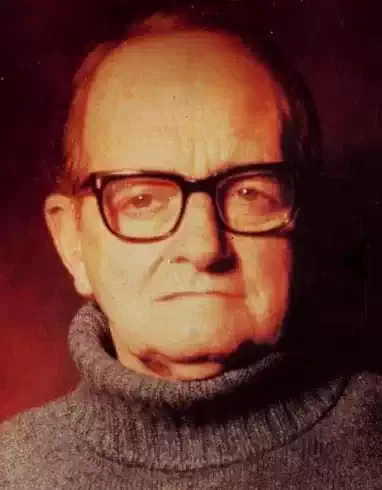
Mário Dionísio
 PT
PT
Mário Dionísio was a Portuguese poet, painter, and essayist, known for his profound reflection on the human condition and poetry as a form of intervention in the world. His work, marked by an existential and social tone, explores themes such as freedom, oppression, and the search for meaning in a context of uncertainty. With rigorous language and a critical view of society, Dionísio stood out for his ability to combine personal experience with the universality of the issues addressed, consolidating himself as a unique voice in contemporary Portuguese poetry.
n. 1916-07-16, Lisboa · m. 1993-11-17, Lisboa
Bio
Identification and basic context
Mário Dionísio was born in Lisbon, Portugal, in 1916, and passed away in 1997. He was a renowned poet, painter, sculptor, and essayist. Pseudonym used: "Mário". He was Portuguese and wrote in Portuguese.Childhood and education
Information about his childhood and education is not widely disseminated, but it is known that his artistic and intellectual sensitivity developed in an environment conducive to reflection. He likely had access to readings that shaped his thinking.Literary career
Mário Dionísio began his literary career as a poet, but his activity also extended to the plastic arts and essay writing. His poetic work is characterized by an evolution that reflects a deepening of his existential and social concerns. He collaborated in various publications, consolidating his presence in the Portuguese cultural scene.Work, style, and literary characteristics
Among his poetic works, "Ode Marítima" (1940), "A Poesia e a Vida" (1950), and "Tempo de Luto" (1993) stand out. The dominant themes in his work include freedom, oppression, the human condition, death, and the search for meaning. His style is marked by formal rigor, dense and imagistic language, and a confessional and reflective tone. Dionísio explored free verse and metrical experimentation, combining personal experience with the universality of the issues addressed. His poetry dialogues with literary tradition but introduces thematic and formal innovations, often associating him with an existentialist vision of art.Cultural and historical context
Mário Dionísio lived much of his life under the Estado Novo regime in Portugal, a historical context marked by censorship and political repression. This background influenced his work, which frequently addresses freedom and oppression. He belonged to a generation of artists and intellectuals who, despite adversities, sought to keep cultural production and critical reflection alive.Personal life
Specific details about Mário Dionísio's personal life are less publicly known. It is known that his life was dedicated to art and thought, but his affective and family relationships, as well as any personal crises, are not widely documented in the public sphere.Recognition and reception
Although he may not have achieved the massive popularity of other poets, Mário Dionísio is recognized by critics and academics as a poet of great importance in 20th-century Portuguese literature. His work is studied for the depth of its reflection and its aesthetic quality.Influences and legacy
Mário Dionísio was likely influenced by existentialist poets and currents of thought that questioned the human condition. His legacy lies in his interventionist and reflective poetry, which continues to inspire subsequent generations of poets and readers interested in art that challenges and questions.Interpretation and critical analysis
Mário Dionísio's work invites readings that explore the philosophical dimension of his poetry, especially concerning freedom, individual responsibility, and the search for transcendent meaning in a fragmented world. His poetry has been the subject of critical analysis that highlights its expressive power and its ability to evoke deep feelings.Curiosities and lesser-known aspects
Beyond his facet as a poet, Mário Dionísio also distinguished himself in the plastic arts, demonstrating creative versatility. His dedication to painting and sculpture, combined with writing, reveals a multifaceted artist.Death and memory
Mário Dionísio passed away in 1997. His memory is preserved through his work, which continues to be disseminated and studied, keeping his contribution to Portuguese literature and arts alive.Poems
0No poems found
Comments (0)
No comments yet. Be the first to comment.