
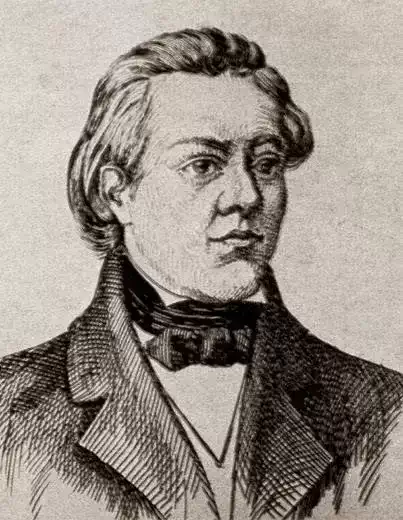
Nicolau Tolentino
1740–1811
· lived 70 years
 PT
PT
PT
Nicolau Tolentino was a Portuguese poet known for his lyrical and satirical work. His writing reflects a keen observation of society and human relationships, often with a touch of irony and melancholy. Although he did not achieve the notoriety of other contemporaries, his contribution to Portuguese poetry of his time is recognized for its originality and its exploration of universal themes with a particular sensitivity.
n. 1740-09-10, Lisboa · m. 1811-06-23, Lisboa
38
Views
Bio
Identification and basic context
Nicolau Tolentino de Almeida was a Portuguese poet. Pseudonyms or heteronyms are not widely documented. His nationality was Portuguese and the language of writing was Portuguese. He lived in a period of transition and cultural effervescence in Portugal.Childhood and education
The childhood and education of Nicolau Tolentino are not extensively detailed in easily accessible sources. It is presumed that he had access to an education that allowed him to develop his literary talent, absorbing the cultural and literary influences of his time.Literary career
Nicolau Tolentino's writing began in the context of the poetry of his time. His work evolved, exploring both lyrical and satirical aspects. His most notable work is "O Poeta" (1787), a poem that earned him recognition. He collaborated with other publications and anthologies of the time, contributing to the Portuguese literary landscape.Work, style, and literary characteristics
Nicolau Tolentino's main work is "O Poeta" (1787), a poem that addresses themes such as the condition of the poet in society and the nature of inspiration. The dominant themes in his poetry include love, the fugacity of time, social criticism, and reflection on life. His style is marked by careful language, a melodious rhythm, and the use of poetic devices such as metaphor and irony. His poetic voice is often lyrical, but he also ventures into satire, demonstrating versatility. His work dialogues with literary tradition, but introduces a personal and critical perspective, associating him with a sensitivity that anticipates or fits within the context of Neoclassicism and the early manifestations of a more individual and observant feeling.Work, style, and literary characteristics
Cultural and historical context Nicolau Tolentino lived in a period when Portugal was undergoing social and political transformations. His work, in a way, reflects the tensions and cultural debates of the time. His poetry is situated in the context of the Enlightenment and Neoclassicism, where reason and social observation gained prominence, without, however, abandoning lyrical sensitivity.Work, style, and literary characteristics
Personal life Detailed information about Nicolau Tolentino's personal life is scarce. It is known that he dedicated his life to poetry and social observation, but details about family relationships, friendships, or personal beliefs are not widely disclosed.Work, style, and literary characteristics
Recognition and reception Nicolau Tolentino gained some recognition during his lifetime, especially with the publication of "O Poeta". However, his work may have been overshadowed by other more prominent poets of his generation. Critical reception over time has increasingly valued his individual contribution to Portuguese poetry.Work, style, and literary characteristics
Influences and legacy It is likely that Nicolau Tolentino was influenced by classical and contemporary poets. His legacy lies in his ability to combine careful form with thematic depth, exploring the human condition and poetic art with sensitivity. His work contributed to the diversification of Portuguese poetry.Work, style, and literary characteristics
Interpretation and critical analysis Nicolau Tolentino's work allows for various readings, from the analysis of his formal mastery to the interpretation of his social and existential commentary. His poetry invites reflection on the nature of art and the role of the artist in society.Work, style, and literary characteristics
Curiosities and lesser-known aspects A curious aspect of his work is his ability to transition between lyricism and satire, demonstrating remarkable versatility. Details about his writing habits or significant episodes in his life are little known.Work, style, and literary characteristics
Death and memory The exact circumstances of Nicolau Tolentino's death and posthumous publications are not widely documented in general sources.Poems
0No poems found
Comments (0)
Log in
to post a comment.
No comments yet. Be the first to comment.