
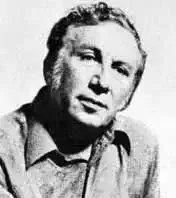
Nizâr Qabbânî
 SY
SY
Nizâr Qabbânî was a prominent Syrian poet and diplomat, known for his works exploring love, sensuality, and social and political critique. His poetry, written in accessible and direct language, resonated deeply with the Arab public, making him one of the most popular Arab poets of the 20th century. Qabbânî addressed universal themes such as romantic love and passion, but also social and political issues, including the status of women in Arab society and criticism of oppressive regimes. His works are characterized by a strong emotional charge and a language that combines tradition with modernity.
n. 1923-03-21, Damasco · m. 1998-04-30, Londres
Bio
Identification and Basic Context
Nizâr Qabbânî (نزار قباني) was a Syrian poet, widely considered one of the most influential Arab poets of the 20th century. Pseudonyms are not prominent, but he is known as a powerful voice in Arab literature. He was born in Damascus, Syria. His work encompassed social and political critique, as well as themes of love and sensuality, which brought him immense popularity throughout the Arab world. He wrote in standard modern Arabic and dialects. He lived through a period of great political and social transformations in the Arab world, including Arab nationalism, the creation of the State of Israel, and the Arab-Israeli wars, which significantly shaped his perspective and work.Childhood and Education
Born into a wealthy and cultured family in Damascus, Qabbânî had access to a privileged education. His childhood was marked by a rich cultural atmosphere, which fostered his interest in literature from an early age. He attended the University of Damascus, where he studied law. During his studies, he began writing poetry, absorbing influences from classical Arabic poetry and the modern literary trends that were beginning to emerge. A significant event in his youth was the suicide of his sister, which he attributed to social oppression and rigid customs, a theme he would explore in his work, particularly concerning the condition of women.Literary Career
Qabbânî began writing poetry in his adolescence. His first collection of poems, "Khalatni Al-Hubb" (Love Has Left Me), published in 1944, was an immediate success. His literary career was extensive and prolific, marked by constant evolution. Initially focused on romantic love, his poetry evolved to address broader social and political issues. He published over 30 collections of poetry throughout his life. He also served as a diplomat for Syria, serving in various embassies, which gave him an international perspective and allowed him to travel extensively, but he always remained focused on his writing and his connection to the Arab world. He was also the editor of an important literary magazine.Work, Style, and Literary Characteristics
Qabbânî's major works include "Qasa'id" (Poems), "Fi Mahab Al-Hubb" (In the River of Love), "La Elah Ela Al-Hubb" (There Is No God But Love), and "Ashiq Min Al-Yābān" (Lover from Japan). The dominant themes in his work are love, sensuality, women, homeland, social injustice, and political critique. He revolutionized Arab poetry by using clear, direct, and accessible language, moving away from the complexity and excessive formalism of classical poetry. He frequently used free verse, but also explored more traditional forms with a modern approach. His poetic devices include vivid metaphors, a musical rhythm, and a deep capacity to evoke emotions. The tone of his poetry ranges from lyrical and passionate to ironic and critical. His poetic voice is often confessional and personal, yet resonates with the collective experience of the Arab people. His style is characterized by emotional intensity, clarity, and eloquence, with a vocabulary that draws from both tradition and modernity. Qabbânî is often associated with the modernist movement in Arab poetry, although his work transcends rigid classifications. A notable feature is his ability to speak directly to the reader's heart, making poetry relevant to everyday life.Work, Style, and Literary Characteristics
Cultural and Historical Context Qabbânî lived during a turbulent period in Arab history, marked by colonialism, the struggle for independence, pan-Arabism, and regional conflicts. His poetry often reflected these tensions, criticizing authoritarian regimes, social hypocrisy, and disillusionment with the promises of progress. He was a contemporary of many other great Arab poets, and his work engaged with the concerns and aspirations of his generation. His poetry was a unifying force, speaking to a shared Arab identity, even in times of political division. The rise of Arab nationalism and the Palestinian issue were recurring themes in his work. His popularity contrasts with the sometimes cautious reception by more conservative critics, who viewed his direct approach to love and sensuality as transgressive.Work, Style, and Literary Characteristics
Personal Life Nizâr Qabbânî was married twice. His first wife, a cousin, committed suicide, an event that profoundly marked him and influenced his views on the condition of women and social oppression. He remarried an Egyptian woman, with whom he had two children. His personal experiences, especially pain and loss, permeated his poetry, lending it an authenticity and emotional depth that captivated millions of readers. As a diplomat, he lived in several countries, which broadened his perspective but never distanced him from his Arab identity. His convictions were strongly humanist and progressive, advocating for individual freedom and equality, especially for women.Work, Style, and Literary Characteristics
Recognition and Reception Nizâr Qabbânî is one of the most celebrated and beloved Arab poets of the 20th century. His work achieved massive recognition throughout the Arab world, with his poems memorized and recited by generations. Although he did not receive major international awards, his greatest recognition comes from his immense popularity and lasting impact on Arab culture. His poetry is widely studied in schools and universities and is considered a landmark in modern Arab literature.Work, Style, and Literary Characteristics
Influences and Legacy Qabbânî was influenced by classical Arabic poetry, but also by Western literary currents. His legacy is immense; he renewed the Arabic poetic language and made poetry accessible to a vast audience. He influenced countless later Arab poets, who adopted his direct approach and thematic focus. His work continues to be a reference in contemporary Arab literature, and his poetic voice remains relevant in discussions of social and political issues. His poetry has been set to music by many famous Arab artists, contributing to its dissemination and popularity.Work, Style, and Literary Characteristics
Interpretation and Critical Analysis Qabbânî's work has been interpreted as a reflection of the aspirations and disillusionments of the modern Arab world. His approach to love is seen by many as a liberation from social and religious repression, while others consider it sometimes overly sentimental. His social and political critiques are generally praised for their courage and clarity. Philosophically, his poetry explores themes of freedom, identity, and the search for meaning in a constantly changing world.Work, Style, and Literary Characteristics
Curiosities and Lesser-Known Aspects Although known for his passionate poetry, Qabbânî was also a keen observer of social and political dynamics. His diplomatic career provided him with direct contact with different cultures and realities, which was reflected in his work. One of the lesser-known aspects is his dedication to writing, which he maintained with discipline, even during his periods as a diplomat. His manuscripts and correspondence reveal an author constantly seeking perfection in language and the most authentic expression of human emotions.Work, Style, and Literary Characteristics
Death and Memory Nizâr Qabbânî passed away in Beirut, Lebanon. His death was mourned throughout the Arab world. After his death, several posthumous compilations of his work were published, ensuring that his poetic legacy continues to be celebrated and studied. His impact on Arab literature and culture is indelible, and he is remembered as the "poet of love and revolution."Poems
0No poems found
Quotes
1No poems found
Comments (0)
No comments yet. Be the first to comment.