Identification and basic context
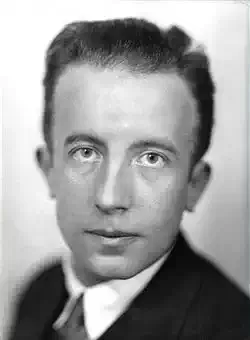
Paul Eluard, born Eugène Émile Paul Grindel, was a major French poet and one of the most significant figures of the Surrealist movement. He was also a member of the French Communist Party for much of his adult life. He wrote primarily in French. His life spanned periods of immense social and political upheaval in Europe, including both World Wars, profoundly influencing his work.
Childhood and education
Eluard had a relatively conventional childhood in Saint-Denis, a suburb of Paris. His father was a tax inspector, and his mother was a dressmaker. He suffered from tuberculosis during his youth, which interrupted his formal schooling. Despite this, he was an avid reader and developed a deep appreciation for poetry from a young age, particularly influenced by Symbolist poets.
Literary trajectory
Eluard's literary journey began in his adolescence, initially showing Symbolist tendencies. He soon became associated with the burgeoning Surrealist movement in the 1920s, where he found a collaborative and experimental environment that allowed his unique voice to flourish. His early Surrealist works explored themes of dreams, love, and the subconscious with great intensity and innovative imagery. Over time, his poetry evolved, becoming more focused on social and political issues, particularly during the Spanish Civil War and World War II, when he became a prominent voice of the French Resistance. He continued to write and publish prolifically throughout his life.
Works, style, and literary characteristics
Key works include "Capitale de la douleur" (Capital of Pain, 1926), "L'Amour la Poésie" (Love, Poetry, 1929), "La Liberté" (Freedom, 1942), and "Poésie et Vérité" (Poetry and Truth, 1942). Eluard's poetry is celebrated for its themes of love, beauty, freedom, and solidarity. His style is characterized by its lyrical quality, its clear and often simple language, and its potent imagery. While deeply rooted in Surrealism, his work moved towards a more direct and accessible expression of emotion and political commitment. He masterfully employed metaphors and similes, often juxtaposing the mundane with the sublime. His poetic voice ranges from intimate and confessional to universally resonant, particularly in his poems of resistance.
Cultural and historical context
Eluard was a central figure in the interwar avant-garde, particularly within the Surrealist group, alongside artists like André Breton. His engagement with political activism, especially his membership in the Communist Party and his role during the Resistance, placed him at the intersection of art and politics. His poems from the Resistance period became anthems of hope and defiance for many French citizens. He was part of a generation of artists and intellectuals grappling with the rise of fascism and the devastating impact of war.
Personal life
Eluard's personal life was deeply intertwined with his art and his political commitments. His relationships, particularly with his muses and wives, were a significant source of inspiration for his love poetry. His experiences with loss and political struggle informed the emotional depth of his work. He maintained close friendships with many prominent writers and artists of his time, though his political stances sometimes led to ideological conflicts within literary circles.
Recognition and reception
Paul Eluard is widely considered one of the most important French poets of the 20th century. His work received critical acclaim both during his lifetime and posthumously. While his Surrealist phase was sometimes controversial, his poetry of the Resistance achieved widespread popularity and resonance. He is recognized for his significant contribution to modern French poetry and his ability to unite artistic innovation with social consciousness.
Influences and legacy
Eluard was influenced by earlier Symbolist poets like Rimbaud and Baudelaire, as well as by the broader currents of Surrealism. His own work, in turn, exerted a considerable influence on subsequent generations of poets, both in France and internationally. His poems on love and freedom remain iconic, and his role as a poet of the Resistance continues to be studied and celebrated. His poetry has been set to music by numerous composers.
Interpretation and critical analysis
Eluard's poetry offers rich ground for critical analysis, with scholars exploring its evolution from Surrealism to political engagement, its intricate use of imagery, and its profound articulation of human emotions and ideals. Debates often focus on the relationship between his aesthetic principles and his political convictions.
Curiosities and lesser-known aspects
Despite his profound and often serious poetry, Eluard was known for his charm and wit. He was also a collector of art, and his home was a meeting place for many leading artists and writers of his time. His commitment to peace and social justice was a lifelong endeavor.
Death and memory
Paul Eluard died of lung cancer in 1952. He is remembered as a poet who eloquently captured the human spirit's capacity for love, beauty, and resistance. His poems are still widely read, studied, and recited, ensuring his enduring place in literary history.