
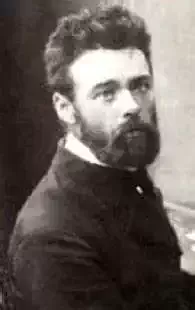
Pedro de Calasans
 BR
BR
Pedro de Calasans was a poet whose work is part of the panorama of Brazilian poetry. He stood out for his exploration of lyrical and existential themes, using a language that, at times, echoed tradition, but also opened itself to formal experimentation. His poetry is marked by profound sensitivity and a constant search for the expression of the nuances of the human soul. His legacy, although sometimes associated with more restricted circles, represents a valuable contribution to the diversity of Portuguese-language poetry, reflecting a period of literary effervescence and questioning about the art of writing itself.
n. 1837-01-29, Santa Luzia do Itanhy · m. 1874-02-24, Madeira
Bio
Identification and Basic Context
Pedro de Calasans is the poet's full name. His nationality was Brazilian, and the language of writing was Portuguese. The historical context in which he lived was that of the 20th century in Brazil, a period of intense social, political, and cultural transformations.Childhood and Education
There are no detailed records available about his childhood and education. It is presumed that he had access to readings that shaped his interest in poetry. His formal education and specific youthful influences are not widely documented.Literary Career
Pedro de Calasans' literary career is not extensively documented in public sources. He is known to have been an active poet whose works were disseminated in publications of the time, possibly in newspapers and literary magazines. His evolution over time and his activities in areas such as criticism, translation, or editing are not detailed.Work, Style, and Literary Characteristics
Pedro de Calasans' work, although less widely known, reveals a poet with a particular sensitivity. The themes addressed tend to explore the inner universe, the ephemerality of existence, and the intrinsic beauty of language. His poetic style seems to oscillate between a certain formal restraint and the search for evocative images, characteristic of literary movements that valued subjectivity and the musicality of verse.Cultural and Historical Context
Pedro de Calasans lived in a Brazil in transformation, a stage for cultural effervescence and intellectual debates. His work, in a way, dialogues with this environment, although there are no records of direct involvement with specific literary movements or declared political positions. His cultural insertion seems to have been more focused on the poetry production circuit.Personal Life
Information about Pedro de Calasans' personal life is scarce. There are no available details about affective relationships, family, friendships, or literary rivalries that may have shaped his work. His dedication to poetry and possible parallel professions, beliefs, or civic involvement are not documented.Recognition and Reception
Pedro de Calasans' recognition in Brazilian literature appears to have been more restricted, possibly limited to circles of admirers and literary critics of his time. There is no record of significant awards or distinctions, and his popularity and academic recognition are not widely established.Influences and Legacy
The specific influences that shaped Pedro de Calasans' poetry are not clearly identified. His legacy lies in his contribution to the diversity of Brazilian poetry, offering a lyrical voice that, although discreet, possesses aesthetic and expressive merits. His influence on later generations of poets is not a prominent subject of study.Interpretation and Critical Analysis
Pedro de Calasans' work allows for interpretations focused on his exploration of lyricism and introspection. Critical analyses of his poetry, if they exist in significant volume, likely focus on the aesthetic quality of his verses and the depth of the themes addressed.Curiosities and Lesser-Known Aspects
There are no widely publicized curiosities or lesser-known aspects about Pedro de Calasans' personality or writing habits. His figure remains associated with his poetic production, with few biographical details illuminating his profile.Death and Memory
There is no detailed information about the circumstances of Pedro de Calasans' death, nor about posthumous publications that may have expanded his legacy.Poems
0No poems found
Comments (0)
No comments yet. Be the first to comment.