Authors List
Browse our collection of authors
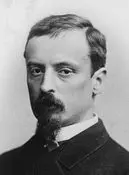
Friedrich Hayek
Joseph Campbell
1879-07-15 — 1944-06-01
Joseph John Campbell was an American mythologist, writer, and lecturer. He is best known for his work on comparative mythology and comparative religion. Campbell's most famous work, 'The Hero with a Thousand Faces', introduced the concept of the monomyth, or the archetypal hero's journey, which has had a significant influence on literature, film, and popular culture.
Elmar Carvalho
1956-04-09
Elmar Carvalho is a poet who emerged on the literary scene with a unique voice. His work explores the depths of human experience, navigating between melancholy and the celebration of life. With careful language and keen sensitivity, his poems invite reflection on universal themes such as love, the passage of time, and the search for meaning. Elmar Carvalho has established himself as a relevant name in contemporary poetry, captivating readers with his authenticity and the power of his words.
Shinobu Saiki
Shinobu Saiki is a prominent figure in contemporary Japanese poetry, known for her writing that oscillates between the subtle and the impactful. Her work explores the complexity of human emotions, interpersonal relationships, and keen observation of daily life, often imbued with a poetic melancholy and a sharp perception of the passage of time. Saiki uses language that, while accessible, carries layers of meaning, inviting the reader into a deep immersion in her reflections.
Étienne de La Boétie
1530-11-01 — 1563-08-18
Étienne de La Boétie was a French jurist, poet, and political activist, best known for his essay 'Discourse on Voluntary Servitude'. A close friend and collaborator of Michel de Montaigne, La Boétie is admired for his eloquence and his ideas on freedom and tyranny, which continue to influence political thought.
Di Souto
Di Souto is a poet whose writing is characterized by lyrical depth and the exploration of universal themes such as love, the ephemerality of life, and the search for meaning. His poetry, often marked by careful and imagistic language, invites introspection and contemplation. Souto establishes an intimate connection with the reader through the sharing of emotions and reflections on the human condition. Di Souto's work reveals a keen sensitivity to the nuances of existence, translating into verses the beauty and melancholy of fleeting moments. His contribution to poetry lies in his ability to evoke deep feelings and offer a lyrical perspective on the world.
Helena Parente Cunha
1929 — 2023-02-11
Helena Parente Cunha was a Brazilian poet, essayist, and literary critic. Her poetic work is marked by reflective depth, exploring themes such as memory, time, and the human condition with precise and evocative language. As an essayist and critic, she dedicated herself to the analysis of Brazilian literature, with special attention to modern and contemporary poetry.
Mario Pirata
1957-08-19 — 2025-07-21
Mario Pirata is a name associated with Portuguese-language poetry, standing out for his contribution in the lyrical field. His work, although perhaps less widely disseminated, reflects a particular sensitivity for exploring existential themes and human feelings. Pirata's poetry is characterized by the depth of his reflections and the intrinsic musicality of his verses, inviting the reader to an introspection about life and its nuances.
W. C. Fields
Herberto Helder
1930-11-23 — 2015-03-23
Herberto Helder was a singular and enigmatic Portuguese poet, known for his overwhelming and experimental work that defies easy classification. His poetry is a dense and labyrinthine universe, marked by transgressive language, by the visceral exploration of the body, sexuality, death, and transcendence. Helder is considered one of the most original and influential poets in contemporary Portuguese literature, with a body of work that continues to intrigue and fascinate readers and critics with its radicalism and profound reflection on the human condition and the very nature of language and poetry.
Roberto Saito
Roberto Saito is a poet whose work is characterized by the exploration of language and reflection on the human condition, fitting within the context of contemporary Portuguese-language poetry. His writing, often marked by imagistic density and an introspective tone, invites the reader to delve into themes such as memory, time, and identity. His legacy lies in his ability to renew poetic expression, offering a unique perspective on the world and on the art of writing itself.
Ednólia Fontenele
Ednólia Fontenele is a Brazilian writer, poet, and short story author. Her literary work explores the female condition, interpersonal relationships, memory, and identity, with a language that combines lyricism and a keen observation of reality. With a diverse output, Fontenele has contributed to contemporary Brazilian literature through poetry and prose. Her work is marked by keen sensitivity and reflection on the most intimate aspects of the human experience.
Jules Laforgue
1860-08-16 — 1887-08-20
Jules Laforgue was a French poet and literary critic, a transitional figure between symbolism and modernism. Known for his irony, melancholy, and formal experimentation, his work explored themes such as love, death, time, and the human condition with a skeptical and disillusioned perspective. Despite a relatively short literary output and limited recognition during his lifetime, his innovative style and unique vision of modernity exerted a significant influence on 20th-century poetry, particularly on American modernist poets.
Étienne Pasquier
1529-06-07 — 1615-09-01
Étienne Pasquier was a French jurist and humanist, known for being one of the main historians of French law. He served as advocate-general in the Parliament of Paris and was an important intellectual of the Renaissance.
Homero Prates
1890-08-01 — 1957-11-14
Homero Prates was a Portuguese poet whose work is part of the context of contemporary poetry, exploring universal themes through lyrical and reflective language. His writing is marked by sensitivity in approaching human emotions and by the search for meaning in existence. Although he did not achieve the same notoriety as other names in Lusophone poetry, his poetic contribution is recognized for the depth and aesthetic quality of his verses. His work reflects an attentive gaze on the human condition, its fragilities, and its capacity for resilience in the face of life's challenges. His legacy endures in the memory of those who connected with his poetic voice.
Ivaldo Gomes
1964-12-11
Ivaldo Gomes is an Angolan writer whose work is part of the context of contemporary Angolan literature, frequently addressing social, political, and existential themes. His writing is marked by a strong awareness of Angolan reality, exploring historical legacies and present challenges with a language that sometimes leans towards lyricism and at other times towards rawness. Gomes has been establishing himself as a relevant voice in his country's literature, contributing to the reflection on Angola's identity and future.
Joyce Carol Oates
1938-06-16
Joyce Carol Oates is a prolific American writer, recipient of numerous literary awards. Her work spans novels, short stories, poetry, and essays, often exploring violence, poverty, identity, and the female condition in American society. She is known for her intense literary output and her ability to portray complex characters and dramatic situations.
Paulo Garcez
Eduardo Guimaraens
1892-03-30 — 1928-12-13
Eduardo Guimaraens was a Portuguese poet whose work is part of a lyrical renewal context. His writing, marked by deep sensitivity and a remarkable command of form, explored universal themes such as love, the passage of time, and existential melancholy. His poetry is recognized for its musicality, rich imagery, and careful language, evoking the best of Portuguese lyrical tradition while engaging with modern anxieties. Despite a less extensive literary output compared to other prominent figures in Portuguese poetry, Guimaraens's work left an indelible mark, appreciated for its depth and formal beauty. His legacy lies in his ability to translate the complexities of the human soul into verse with singular elegance and authenticity.
Sá Júnior
José de Sá Júnior was a Portuguese poet and professor, whose work is predominantly inserted in the context of Portuguese modernism. He stood out for his lyrical and reflective poetry, exploring themes such as love, nature, and the ephemerality of life, with a careful language and refined musicality. His writing reflects a dialogue with poetic tradition, while also opening up to new sensibilities and forms of expression, marking his individuality in the literary landscape of his time.
Jorge Barros Duarte
1912-01-14 — 1995-06-06
Jorge Barros Duarte was a Portuguese poet known for his work that deeply explores the human condition, the passage of time, and the individual's relationship with the cosmos. His poetry is characterized by a refined yet symbolism-laden language and an intrinsic musicality, reflecting a profound lyrical sensibility and a contemplative view of existence. With a body of work that transitions between the personal and the universal, Duarte addressed themes such as memory, the ephemerality of life, and the search for meaning in a constantly changing world. His writing demonstrates formal mastery, combined with a unique ability to evoke images and sensations, consolidating him as a singular voice in contemporary Portuguese poetry.
Eustache Deschamps
1346 — 1406-01-01
Eustache Deschamps was a French poet and musician of the Middle Ages, known for his work in the late 14th century. He was a follower and friend of Guillaume de Machaut, and his work reflects the poetic tradition of the time, including ballads, rhymes, and virelais. Deschamps is also notable for his "Art de Dictier", a treatise on the art of poetry and music.
Juscelino Vieira Mendes
— 1976-12-09
Juscelino Vieira Mendes is a contemporary Portuguese poet, known for his deep exploration of the human condition and the complexities of existence. His poetic work is distinguished by introspection, the musicality of verse, and the ability to evoke vivid images and subtle emotions. With writing that moves between the intimate and the universal, Juscelino Vieira Mendes addresses themes such as love, memory, the passage of time, and the search for meaning. His poetry is often marked by careful language and a refined sensitivity to the nuances of feeling, which gives him a prominent place in current Portuguese poetry.
Henrique de Rezende
Henrique de Rezende is a notable figure in Portuguese poetry, whose work is characterized by lyrical intensity, profound meditation on the human condition, and the pursuit of a language capable of translating the nuances of the soul. His poetry often addresses themes such as love, death, time, and the search for meaning, with a refined sensitivity that captivates the reader through its emotional honesty and aesthetic elaboration. Throughout his career, Henrique de Rezende has consolidated his own style, which combines tradition with a contemporary perspective, establishing him as a prominent poet in Lusophone literature. His work is an invitation to reflection, introspection, and the rediscovery of the beauty and complexity of existence. Through carefully crafted verses, the poet offers a mirror to human anxieties, proposing a continuous dialogue between the individual and the universe that surrounds them, and between the self and the other.