
Quotes
Quotes to inspire and reflect
The only thing that it is advisable to know in any language is the numerals; and even there, you can do a lot with the fingers.
22
Remember that, however patient your study, you will never in adult life learn any language perfectly; the best you can hope for is to be a bore.
18
Ours is a precarious language, as every writer knows, in which the merest shadow line often separates affirmation from negation, sense from nonsense, and one sex from the other.
17
Where shall we look for standard English, but to the words of a standard man?
13

Battered wowien is a phrase that uncovered major, long-hidden violence. It helps us to face the fact that, statistically speaking, the most dangerous place for a woman is in her own home, not in the streets.
20
It begins to look, more and more disturbingly, as if the gift of language is the single human trait that marks us all genetically, setting us apart from all the rest of life.
22
It were as wise to cast a violet into a crucible that you might discover the formal principle of its colour and odour, as seek to transfuse from one language into another the creations of a poet.
26
The sum of human wisdom is not contained in any one language, and no single language is CAPABLE of expressing all forms and degrees of human comprehension.
28
Most people who bother with the matter at all would admit that the English language is in a bad way, but it is generally assumed that we cannot by conscious action do anything about it.
11
Language lies outside of society because it is its foundation; but it also lies within society because that is the only place where it exists and the only place where it develops.
25
Language, if it throws a veil over our ideas, adds a softness and refinement to them, like that which the atmosphere gives to naked objects.
11
But if thought corrupts language, language can also corrupt thought. A bad usage can spread by tradition and imitation, even among people who should and do know better.
14
Language,—human language,—after all is but little better than the croak and cackle of fowls, and other utterances of brute nature,—sometimes not so adequate.
18

The language of Mexicans springs from abysmal extremes of power and impotence, domination and resentment.
13
Language is the archives of history.
8
Wherever illiteracy is a problem, it’s as fundamental a problem as getting enough to eat or a place to sleep.
19

To a teacher of language there comes a time when the world is but a place of many words and man appears a mere talking animal not much more wonderful than a parrot.
14
Poetry should help, not only to refine the language of the time, but to prevent it from changing too rapidly.
9
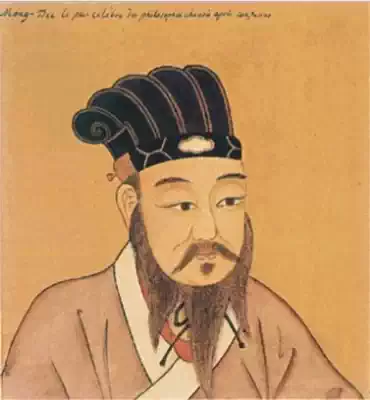
If language be not in accordance with the truth of things, affairs cannot be carried on to success.
27
I am still of the opinion that only two topics can be of the least interest to a serious and studious mind—sex and the dead.
32

I don’t know nothing, I think. And glad of it.
20
So much has already been written about everything that you can’t find out anything about it.
18
Learning is but an adjunct to ourself, / And where we are our learning likewise is.
22
The right to know is like the right to live. It is fundamental and unconditional in its assumption that knowledge, like life, is a desirable thing.
18

Knowledge—that is, education in its true sense— is our best protection against unreasoning prejudice and panic-making fear, whether engendered by special interest, illiberal minorities, or panic-stricken leaders.
23

Seeing is believing and believing is knowing and knowing beats unknowing and the unknown.
13
All knowledge that is divorced from justice must be called cunning.
34
Most people affirm pleasure to be the good, but the finer sort of wits say it is knowledge.
36
Such is the constitution of the human mind, that any kind of knowledge, if it be really such, is its own reward.
15

Sin, guilt, neurosis—they are one and the same, the fruit of the tree of knowledge.
15
In expanding the field of knowledge we but increase the horizon of ignorance.
15
There is no more merit in being able to attach a correct description to a picture than in being able to find out what is wrong with a stalled motorcar. In each case it is special knowledge.
21
Man is not weak, knowledge is more than equivalent to force. The master of mechanics laughs at strength.
9

A reading-machine, always wound up and going, / He mastered whatever was not worth the knowing.
17
A desire of knowledge is the natural feeling of mankind; and every human being, whose mind is not debauched, will be willing to give all that he has to get knowledge.
8
All knowledge is of itself of some value. There is nothing so minute or inconsiderable, that I would not rather know it than not.
8
’Tis not knowing much, but what is useful, that makes a wise man.
10
To he proud of knowledge is to be blind with light.
19

Why / do we make so much of knowledge, struggle so hard / to get some little skill not worth the effort?
13
If I cannot brag of knowing something, then I brag of not knowing it.
8
The paradox of knowledge is not confined to the small, atomic scale; on the contrary, it is as cogent on the scale of man, and even of the stars.
20

The raft of knowledge ferries the worst sinner to safety.
16
The kiss originated when the first male reptile licked the first female reptile, implying in a subtle, complimentary way that she was as succulent as the small reptile he had for dinner the night before.
15

The acquisition of knowledge always involves the revelation of ignorance—almost is the revelation of ignorance.
25
“Kiss me. Again. Once more.” Commands to be obeyed when issued by a woman.
25
We turned on one another deep, drowned gazes, and exchanged a kiss that reduced my bones to rubber and my brain to gruel.
18
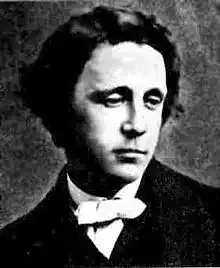
[Tjhose quite useless articles called “kisses."
19
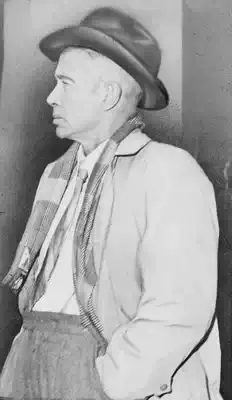
kisses are a better fate / than wisdom.
25