
Quotes
Quotes to inspire and reflect
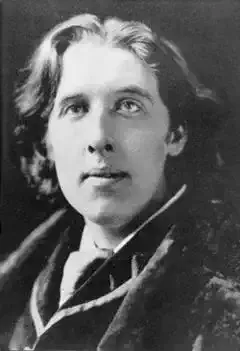
It is indeed a burning shame that thereshould be one law for men and another law for women. . . . I think that there should be no law for anybody.
California is an Italy without its art. There are subjects for the artist, but it is universally true that the only scenery which inspires utterance is that which man feels himself the master of. The mountains of California are so gigantic that they are not favorable to art or poetry. There are good poets in England but none in Switzerland. There the mountains are too high. Art cannot add to nature.
Poets, you know, are always ahead of science; all the great discoveries of science have been stated before in poetry.
Over the piano was printed a notice: Please do not shoot the pianist. He is doing his best.
I know not whether Laws be right,
To recognize that the soul of a man is unknowable is the ultimate achievement of Wisdom. The final mystery is oneself. When one has weighed the sun in a balance, and measured the steps of the moon, and mapped out the seven heavens star by star, there still remains oneself. Who can calculate the orbit of his own soul?
Just as there are false dawns before the dawn itself, and winter-days so full of sudden sunlight that they will cheat the wise crocus into squandering its gold before its time, and make some foolish bird call to its mate to build on barren boughs, so there were Christians before Christ. . . . The unfortunate thing is that there have been none since.
I was a man who stood in symbolic relations to the art and culture of my age. . . . The gods had given me almost everything. I had genius, a distinguished name, high social position, brilliancy, intellectual daring: I made art a philosophy, and philosophy an art: I altered the minds of men and the colors of things: there was nothing I said or did that did not make people wonder.
I treated Art as the supreme reality, and life as a mere mode of fiction: I awoke the imaginationof my century so that it created myth and legend around me: I summed up all systems in a phrase, and all existence in an epigram.
And I? May I say nothing, my Lord?
I have invented an invaluable permanent invalid called Bunbury, in order that I may be able to go down into the country whenever I choose.
In all things connected with money I have had a luck so extraordinary that sometimes it has made me almost afraid. I remember havingread somewhere, in some strange book, that when the gods wish to punish us they answer our prayers.
Life is never fair.
A truth ceases to be true when more than one person believes in it.
Science can never grapple with the irrational. That is why it has no future before it, in this world.
Any preoccupation with ideas of what is right or wrong in conduct shows an arrested intellectual development.
It is only by not paying one’s bills that one can hope to live in the memory of the commercial classes.
You can’t make people good by Act of Parliament.
All authority is quite degrading. It degrades those who exercise it, and degrades those over whom it is exercised.
The recognition of private property has really harmed Individualism, and obscured it, by confusing a man with what he possesses.
The true perfection of man lies, not in what man has, but in what man is.
Ernest Harrowden, one of those middle-agedmediocrities so common in London clubs who have no enemies, but are thoroughly disliked by their friends.
Crime belongs exclusively to the lower orders. I don’t blame them in the smallest degree. I should fancy that crime was to them what art is to us, simply a method of procuring extraordinary sensations.
Experience was of no ethical value. It was merely the name men gave to their mistakes.
Modern morality consists in accepting the standard of one’s age. I consider that for any man of culture to accept the standard of his age is a form of the grossest immorality.
[ Sir Thomas Burdon :] They say that when good Americans die they go to Paris. . . .
I wonder who it was defined man as a rational animal. It was the most premature definition ever given. Man is many things, but he is not rational.
How sad it is! I shall grow old, and horrible, and dreadful. But this picture will remain always young. It will never be older than this particular day of June. . . . If it were only the other way! If it were I who was to be always young, and the picture that was to grow old! For that—for that—I would give everything! Yes, there is nothing in the whole world I would not give! I would give my soul for that!
The essay simply represents an artistic standpoint, and in aesthetic criticism attitude is everything. For in art there is no such thing as a universal truth. A Truth in art is that whose contradictory is also true.
The English mind is always in a rage. The intellect of the race is wasted in the sordid and stupid quarrels of second-rate politicians or third-rate theologians.
The proper school to learn art in is not Life but Art.
All art is immoral. . . . For emotion for the sake of emotion is the aim of art, and emotion for the sake of action is the aim of life, and of that practical organization of life that we call society.
The criticism which I have quoted is criticism of the highest kind. It treats the work of art simply as a starting-point for a new creation. It does not confine itself . . . to discovering the real intention of the artist and accepting that as final.
More difficult to do a thing than to talk about it? Not at all. That is a gross popular error. It is very much more difficult to talk about a thing than to do it. In the sphere of actual life that is of course obvious. Anybody can make history. Only a great man can write it.
Anybody can write a three-volumed novel. It merely requires a complete ignorance of both life and literature.
[George] Meredith’s a prose Browning, and so is Browning. He used poetry as medium for writing in prose.
Day by day the old order of things changes, and new modes of thought pass over our world, and it may be that, before many years, talking will have taken the place of literature, and the personal screech silenced the music of impersonal utterance. Something of the dignity of the literary calling will probably be lost, and it is perhaps a dangerous thing for a country to be too eloquent.
Pathology is rapidly becoming the basis of sensational literature, and in art, as in politics, there is a great future for monsters.
That he is indeed one of the very greatest masters of painting is my opinion. And I may add that in this opinion Mr. Whistler himself entirely concurs.
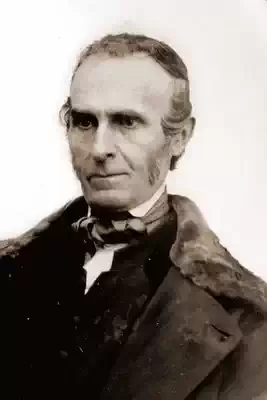
“Who touches a hair of yon gray head
The things of nature do not really belong tous; we should leave them to our children as we have received them.
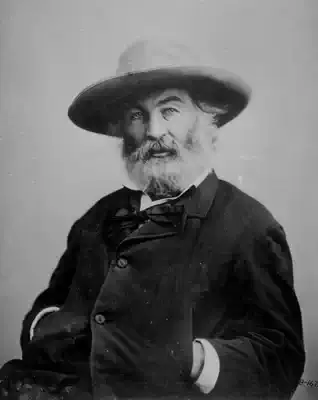
Out of the cradle endlessly rocking,
The Real War Will Never Get in the Books . And so good-bye to the war.
Passage to India.
A noiseless patient spider,
I too am not a bit tamed, I too am untranslatable,
The ship is anchor’d safe and sound, its voyage closed and done,
Walt Whitman, a kosmos, of Manhattan the son,