

Quotes

Quotes

Quotes to inspire and reflect
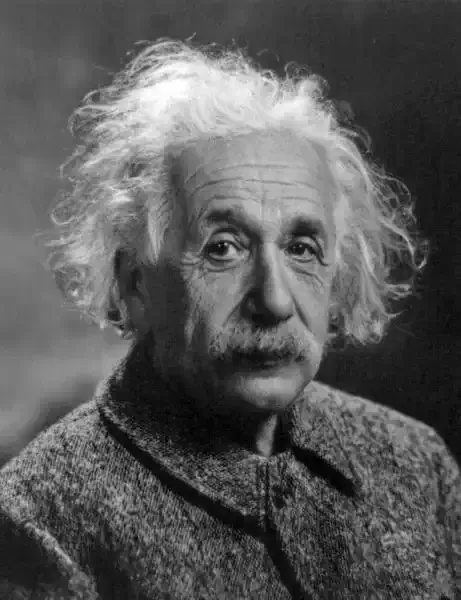
Albert Einstein
Albert Einstein

In the case of political, and even of religious, leaders, it is often very doubtful whether they have done more good or harm.

This quote is from the book The World As I See It , under the section Good and Evil.

13
Albert Einstein
Albert Einstein

The conscientious objector is a revolutionary. In deciding to disobey the law he sacrifices his personal interests to the most important cause of working for the betterment of society.

Einstein advocated refusing military service, as well as other disobedience, on moral grounds.

12
Albert Einstein
Albert Einstein

Nationalism is, in my opinion, nothing more than an idealistic rationalization for militarism and aggression.

By October 1933, when Einstein gave a speech in London’s Royal Albert Hall including this quote, he was already an exile from Hitler’s Germany, where nationalism was almost like the national religion.

18
Albert Einstein
Albert Einstein

Freedom, in any case, is only possible by constantly struggling for it. A citizenry that is politically indifferent will always end up enslaved no matter what form its constitution and legal institutions take.

Here Einstein makes the case that unchecked power and authority always will move to strengthen itself with more power and authority, whether it exists inside a democracy or not.

18
Albert Einstein
Albert Einstein

As long as I have any choice, I will stay only in a country where political liberty, toleration, and equality of all citizens before the law are the rule.

In 1933, Einstein was visiting the United States when Adolf Hitler took power in Germany. Einstein never returned to his old home.

19
Albert Einstein
Albert Einstein

The State exists for man, not man for the State… I believe that the most important mission of the State is to protect the individual and make it possible for him to develop into a creative personality. The State should be our servant; we should not be slaves of the State. The State violates this precept when it forces us to perform military service.

This comes from a 1931 article in the New York Times Magazine called “The Road to Peace.”

20
Albert Einstein
Albert Einstein

To punish me for my contempt of authority, Fate has made me an authority myself.

Spoken to a friend in 1930. Einstein always looked upon authority suspiciously, and probably wished all of those who sought his knowledge and opinions would do the same with him.

20
Albert Einstein
Albert Einstein

Individual freedom provides a better basis for productive labor than any form of tyranny.

When Einstein visited the United States in 1930, his arrival in the port of New York was a big deal. This quote comes from a broadcast with Einstein after he deboarded his ship.

12
Albert Einstein
Albert Einstein

Blind obedience to authority is the greatest enemy of the truth.

Einstein said this to one of his teachers in 1901. He was talking about a professor who he considered closed-minded, but the statement holds true of Einstein’s feelings on all types of authority figures throughout his life.

15
Albert Einstein
Albert Einstein

If my theory of relativity is proven successful, Germany will claim me as a German and France will declare that I am a citizen of the world. Should my theory prove untrue, France will say that I am a German and Germany will declare that I am a Jew.

Einstein addressed the French Philosophical Society in 1922 and included this quote. It’s an example of his negative feelings on Nationalism, which he believed manipulated people into false pride.

30
Albert Einstein
Albert Einstein

If one purges all subsequent additions from the original teachings of the Prophets and Christianity, especially those of the priests, one is left with a doctrine that is capable of curing all the social ills of humankind.

This 1933 statement comes from the Jewish publication Renasterea Noastra, of Romania.

11
Albert Einstein
Albert Einstein

I believe in Spinoza’s God, Who reveals Himself in the lawful harmony of the world, not in a God who concerns himself with the fate and the doings of mankind.

This was part of an answer to Rabbi Herbert S. Goldstein in 1929. Spinoza’s believed that God was inseparable from the material world, and so to become closer to God, a person should better understand the workings of the Universe. Elsewhere, Einstein stated explicitly that he was not an atheist.

21
Albert Einstein
Albert Einstein

In every true searcher of Nature there is a kind of religious reverence, for he finds it impossible to imagine that he is the first to have thought out the exceedingly delicate threads that connect his perceptions.

German author Alexander Moszkowski had many conversations with Einstein, which he eventually made into a book. This snippet comes from 1920.

14
Albert Einstein
Albert Einstein

The word “Jewish” has two meanings: It has to do with (1) nationality and descent; (2) religion. I am a Jew in the first sense but not in the second.

When Einstein addressed Berlin’s Jewish Community in 1921, this was part of his message. He didn’t believe in the religion of Judaism, yet he identified as a Jew.

17
Albert Einstein
Albert Einstein

I see only with deep regret that God punishes so many of his children for their numerous stupidities, for which only he himself can be held responsible; in my opinion, only his nonexistence could excuse him.

This comes quoted from a colleague in 1915. As with his feelings on pacifism and Israel, Einstein’s views on God are not easily summed up. Suffice it to say he was not a believer in any established religion.

14
Albert Einstein
Albert Einstein

Upon reading books on philosophy, I learned that I stood there like a blind man in front of a painting… the works of speculative philosophy are beyond my reach.

Einstein wrote this in 1917 to the philosopher Eduard Hartmann, with whom he corresponded regularly.

13
Albert Einstein
Albert Einstein

The scientist is possessed by a sense of universal causation… His religious feeling takes the form of a rapturous amazement at the harmony of natural law, which reveals an intelligence of such superiority that, compared with it, all the systematic thinking and acting of human beings is an utterly insignificant reflection… It is beyond question closely akin to that which has possessed the religious geniuses of all ages.

Like many great thinkers before him – Socrates being perhaps the most famous example – Einstein realized that the more questions he and humanity answered, the more new questions arose. Essentially, the more we know, the more we understand how little we know.

23
Albert Einstein
Albert Einstein

Isn’t all of philosophy like writing in honey? It looks wonderful at first sight, but when you look again it is all gone. Only the smear is left.

This quote manages to convey a complicated sentiment with vivid imagery.

15
Albert Einstein
Albert Einstein

The Jew who abandons his faith (in the formal sense of the word) is in a position similar to a snail that abandons its shell. He remains a Jew.

Einstein here offers further explanation for why he still identified as a Jew for his entire life, even though he disavowed the religious portion of being Jewish relatively early on.

17
Albert Einstein
Albert Einstein

Try to become not a man of success, but try rather to become a man of value.

Einstein was probably speaking of financial success in the Life Magazine article that came out just days after his death in 1955. He held notable disdain for the pursuit of money.

24
Albert Einstein
Albert Einstein

I am absolutely convinced that no wealth in the world can help humanity forward, even in the hands of the most devoted worker in this cause. The example of great and pure characters is the only thing that can produce fine ideas and noble deeds. Money only appeals to selfishness and always tempts its owners irresistibly to abuse it.

This quote is from the book The World As I See It , under the section Of Wealth.

15
Albert Einstein
Albert Einstein

I was originally supposed to become an engineer, but the thought of having to expend my creative energy on things that make practical everyday life even more refined, with a loathsome capital gain as the goal, was unbearable to me.

From 1918, this quote again reflects Einstein’s distaste for pursuit of money as a motivating factor. He did believe that financial gain made the world better or people happier.

22
Albert Einstein
Albert Einstein

I have reached an age when, if someone tells me to wear socks, I don’t have to.

Einstein’s neighbor, the physicist Allen Shenstone, recounted this quote sometime after Shenstone returned to the Princeton Department of Physics in 1945.

17
Albert Einstein
Albert Einstein

The ordinary object of human endeavor—property, outward success, luxury—have always seemed to me contemptible.

This quote is from the book The World As I See It , under the section The World As I See It.

14
Albert Einstein
Albert Einstein

I’m doing just fine, considering that I have triumphantly survived Nazism and two wives.

Einstein always cherished humor no matter how he felt or what was going on in the world. – 1952

14
Albert Einstein
Albert Einstein

I have now been promoted to an “evil monster” in Germany, and all my money has been taken away from me. But I console myself with the thought that the latter would soon be gone, anyway.

From 1933, the year German authorities seized Einstein’s bank account.

15
Albert Einstein
Albert Einstein

Funny people, these Germans. To them I am a stinking flower, yet they make me into a boutonniere time and time again.

This was taken from Einstein’s travel diary in 1925.

14
Albert Einstein
Albert Einstein

Like the man in the fairytale who turned everything he touched into gold, so with me everything is turned into newspaper clamor.

In speaking to a friend in 1920, Einstein of course was referring to the myth of King Midas. As the legend goes, King Midas eventually hated and cursed his power to turn everything he touched into gold. Einstein himself detested the limelight that his fame brought him.

15
Albert Einstein
Albert Einstein

She knows her way around the family of radioactive substances better than I know the way around my own family.

Einstein was Speaking of Austrian physicist Lise Meitner (1878–1968), who was part of a team that discovered nuclear fission. He had also called Meitner the “German Marie Curie.”

12
Albert Einstein
Albert Einstein

I’ve been so preoccupied with what would happen in the event of my death that I’m surprised to find myself still alive.

Einstein references the estate paperwork for his family’s inheritance, which had preoccupied him in 1918.

18
Albert Einstein
Albert Einstein

In the past it never occurred to me that every casual remark of mine would be snatched up and recorded. Otherwise I would have crept further into my shell.

Einstein told this to biographer Carl Seelig 1953, near the end of his life.

24
Albert Einstein
Albert Einstein

I lived in that solitude which is painful in youth, but delicious in maturity.

In this written statement from 1936, Einstein again expresses his fondness for living and working in peace and quiet, away from distraction.

18
Albert Einstein
Albert Einstein

You are surprised, aren’t you, at the contrast between my fame throughout the world… and the isolation and quiet in which I live here. I wished for this isolation all my life, and now I have finally achieved it here in Princeton.

This quote comes from Philipp Frank’s book, Einstein, His Life and Times . Einstein landed a job at Princeton University in 1933, where he stayed until his death in 1955. Once Hitler took control of Germany in 1933, Einstein bounced around Europe for several months before settling in Princeton, New Jersey. He never returned to Germany.

18
Albert Einstein
Albert Einstein

I have never lost an obstinate sense of detachment, of the need for solitude—a feeling which increases over the years.

This quote is from the book The World As I See It , under the section The World As I See It.

23
Albert Einstein
Albert Einstein

I hate my pictures. Look at my face. If it weren’t for this [mustache], I’d look like a woman!

The date of this quote is not known, but Einstein was talking to photographer Alan Richards sometime during his elderly years. Richards later quoted him in a book.

18
Albert Einstein
Albert Einstein

My passionate sense of social justice and social responsibility has always contrasted oddly with my pronounced freedom from the need for direct contact with other human beings and human communities.

This quote is from the book The World As I See It , under the section The World As I See It. Einstein preferred to love his neighbor from afar.

19
Albert Einstein
Albert Einstein

I have no special talents. I am only passionately curious.

In 1952, at the age of 73, Einstein still worked and still had his thirst for knowledge, but his most productive days were far behind him.

14
Albert Einstein
Albert Einstein

Why is it that nobody understands me, yet everybody likes me?

Speaking to the New York Times in 1944, this question sums up Einstein’s lifelong bewilderment with his public perception.

16
Albert Einstein
Albert Einstein

My life is a simple thing that would interest no one. It is a known fact that I was born, and that is all that is necessary.

Einstein gave this answer to a Princeton High School reporter in 1935. Speaking from experience, I can say that this is exactly the kind of answer that will cause a high school journalist to panic.

22
Albert Einstein
Albert Einstein

It strikes me as unfair, and even in bad taste, to select a few individuals for boundless admiration, attributing superhuman powers of mind and character to them. This has been my fate, and the contrast between the popular assessment of my powers and achievements and the reality is simply grotesque.

This comes from Einstein’s essay, “Impressions of the U.S.A.” from 1931. Because Einstein felt his own talents were exaggerated in the public eye, he bemoaned the same thing happening to undeserving world leaders and other public figures.

19
Albert Einstein
Albert Einstein

Thanks to my fortunate idea of introducing the relativity principle into physics, you (and others) now enormously overrate my scientific abilities, to the point where this makes me quite uncomfortable.

In 1908, Einstein was still just a 29-year-old wunderkind in the scientific world, who three years earlier has changed everything in theoretical physics with a series of papers that laid out his theory of relativity. This quote was said to Arnold Sommerfeld, a German physicist who received 81 Nobel prize nominations in his lifetime.

14
Albert Einstein
Albert Einstein

With fame I become more and more stupid, which of course is a very common phenomenon.

This 1919 quote reflects the classic Einstein tendencies to both discount his own intelligence and prefer to be left alone. He thought that people’s overestimation of his intellect lead to an undeserved fame, with people constantly demanding his time and hanging on his every word. He always preferred to be left in solitude to work.

20
Albert Einstein
Albert Einstein

For those of us who believe in physics, the distinction between past, present, and future is only a stubbornly persistent illusion.

Less than a month before dying in 1955, Einstein wrote this in a letter of condolence to the family of Michele Besso, his longtime friend who had just passed away.

18
Albert Einstein
Albert Einstein

Science is a wonderful thing if one does not have to earn a living at it. One should earn one’s living by work of which one is sure one is capable. Only when we do not have to be accountable to anyone can we find joy in scientific endeavor.

Einstein said this to a student in California in 1951.

19
Albert Einstein
Albert Einstein

Science will stagnate if it is made to serve practical goals.

This was an answer to a 1947 question from the Overseas News Agency.

16
Albert Einstein
Albert Einstein

The belief in an external world independent of the perceiving subject is the basis of all natural science. Since, however, sense perception only gives information of this external world or of “physical reality” indirectly, we can only grasp the latter by speculative means. It follows from this that our notions of physical reality can never be final.

This comes from 1931’s “Maxwell’s Influence on the Evolution of the Idea of Physical Reality.” Although this is an accepted principle, it does put a bit of a damper on the enthusiasm for the search of a unified field theory that bridges relativity and quantum mechanics.

21
Albert Einstein
Albert Einstein

The truth of a theory can never be proven, for one never knows if future experience will contradict its conclusions.

A sophisticated understanding of science must take into account that there can always be further evidence forthcoming in any field of inquiry.

20
Albert Einstein
Albert Einstein

After a certain high level of technical skill is achieved, science and art tend to coalesce in esthetics, plasticity, and form. The greatest scientists are artists as well.

Einstein told this to University of North Carolina mathematics professor Archibald Henderson in 1923, who then recounted the quote in a Durham Morning Herald article in 1955.

19