Quotes

Quotes

Quotes to inspire and reflect
William Blake
William Blake

The strongest poison ever known

Came from Caesar’s laurel crown.

16
William Blake
William Blake

If the Sun and Moon should doubt,

They’d immediately go out.

16
William Blake
William Blake

A truth that’s told with bad intent

Beats all the lies you can invent.

13
William Blake
William Blake

A robin red breast in a cage

Puts all Heaven in a rage.

17
William Blake
William Blake

It is better that ten guilty persons escape than one innocent suffer.

Commentaries on the Laws of England (1765) bk. 4, ch. 27

15
William Blake
William Blake

To see a world in a grain of sand

And a heaven in a wild flower,

20
William Blake
William Blake

The royal navy of England hath ever been its greatest defence and ornament; it is its ancient and natural strength; the floating bulwark of the island.

Commentaries on the Laws of England (1765) bk. 1, ch. 13; see Coventry 104:18

20
William Blake
William Blake

That the king can do no wrong, is a necessary and fundamental principle of the English constitution.

Commentaries on the Laws of England (1765) bk. 3, ch. 17

21
William Blake
William Blake

The king never dies.

Commentaries on the Laws of England (1765) bk. 1, ch. 7

14
Otto von Bismarck
Otto von Bismarck

If there is ever another war in Europe, it will come out of some damned silly thing in the Balkans.

attributed by Herr Ballen and quoted by Winston S. Churchill in the House of Commons, 16 August 1945

15
Otto von Bismarck
Otto von Bismarck

I do not regard the procuring of peace as a matter in which we should play the role of arbiter between different opinions … more that of an honest broker who really wants to press the business forward.

speech to the Reichstag, 19 February 1878

19
Otto von Bismarck
Otto von Bismarck

This policy cannot succeed through speeches, and shooting-matches, and songs; it can only be carried out through blood and iron.

speech in the Prussian House of Deputies, 28 January 1886

22
Otto von Bismarck
Otto von Bismarck

Not worth the healthy bones of a single Pomeranian grenadier.

of possible German involvement in the Balkans; see Harris 162:16

22
Otto von Bismarck
Otto von Bismarck

Whoever speaks of Europe is wrong, [it is] a geographical concept.

marginal note on a letter from the Russian Chancellor Gorchakov, November 1876; see Metternich 233:17

18
Otto von Bismarck
Otto von Bismarck

We will not go to Canossa.

during his quarrel with Pope Pius IX regarding papal authority over German subjects, in allusion to the Emperor Henry IV’s submission to Pope Gregory VII at Canossa in Modena in 1077

20
Otto von Bismarck
Otto von Bismarck

Politics is the art of the possible.

in conversation with Meyer von Waldeck, 11 August 1867; see Butler 79:5, Galbraith 145:5, Medawar 232:1

21
Ambrose Bierce
Ambrose Bierce

SAINT , n . A dead sinner revised and edited.

The Devil’s Dictionary (1911)

10
Otto von Bismarck
Otto von Bismarck

The secret of politics? Make a good treaty with Russia.

in 1863, when first in power

21
Ambrose Bierce
Ambrose Bierce

PEACE , n . In international affairs, a period of cheating between two periods of fighting.

The Devil’s Dictionary (1911)

23
Ambrose Bierce
Ambrose Bierce

PREJUDICE , n . A vagrant opinion without visible means of support.

The Devil’s Dictionary (1911)

11
Ambrose Bierce
Ambrose Bierce

CONSERVATIVE , n . A statesman who is enamoured of existing evils, as distinguished from the Liberal, who wishes to replace them with others.

The Cynic’s Word Book (1906)

10
Ambrose Bierce
Ambrose Bierce

HISTORY , n . An account, mostly false, of events, mostly unimportant, which are brought about by rulers, mostly knaves, and soldiers, mostly fools.

The Cynic’s Word Book (1906)

12
Ambrose Bierce
Ambrose Bierce

BATTLE , n . A method of untying with the teeth a political knot that would not yield to the tongue.

The Cynic’s Word Book (1906)

12
Ambrose Bierce
Ambrose Bierce

APPLAUSE , n . The echo of a platitude.

The Cynic’s Word Book (1906)

12
Ambrose Bierce
Ambrose Bierce

ALLIANCE , n. In international politics, the union of two thieves who have their hands so deeply inserted in each other’s pocket that they cannot separately plunder a third.

The Cynic’s Word Book (1906)

12
Bhagavad Gita
Bhagavad Gita

Only by love can men see me, and know me, and come unto me.

ch. 11, v. 54

15
Bhagavad Gita
Bhagavad Gita

If any man thinks he slays, and if another thinks he is slain, neither knows the ways of truth. The Eternal in man cannot kill: the Eternal in man cannot die.

He is never born, and he never dies. He is in Eternity, he is for evermore. Never-born and eternal, beyond times gone or to come, he does not die when the body dies.

25
Bhagavad Gita
Bhagavad Gita
I [Krishna] am all-powerful Time which destroys all things, and I have come here to slay these men. Even if thou does not fight, all the warriors facing thee shall die. ch. 11, v. 32; see Oppenheimer 253:17
19
Bhagavad Gita
Bhagavad Gita
textual translations are those of J. Mascaro, 1978
19
John Berryman
John Berryman

And moreover my mother told me as a boy (repeatingly) ‘Ever to confess you’re bored means you have no

Inner Resources.’

30
Wendell Berry
Wendell Berry

And I feel above me the day-blind stars waiting with their light.

‘The Peace of Wild Things’ (1968)

16
John Berryman
John Berryman

We must travel in the direction of our fear.
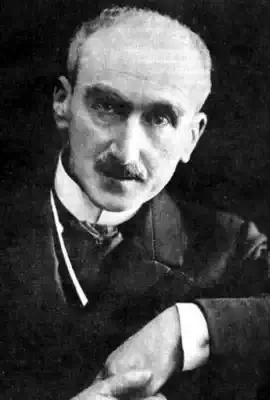
‘A Point of Age’ (1942)

48
Henri Bergson
Henri Bergson

The present contains nothing more than the past, and what is found in the effect was already in the cause.

L’Évolution créatrice [Creative Evolution] (1907) ch. 1

33
Henri Bergson
Henri Bergson

L’élan vital.

The vital spirit.

26
Jeremy Bentham
Jeremy Bentham

All punishment is mischief: all punishment in itself is evil.

Principles of Morals and Legislation (1789) ch. 13, para. 2

19
Jeremy Bentham
Jeremy Bentham

The question is not, Can they reason? nor,

Can they talk? but, Can they suffer?

14
Jeremy Bentham
Jeremy Bentham

Natural rights is simple nonsense: natural and imprescriptible rights, rhetorical nonsense—nonsense upon stilts.

Anarchical Fallacies in J. Bowring (ed.) Works vol. 2 (1843)

23
Jeremy Bentham
Jeremy Bentham

The greatest happiness of the greatest number is the foundation of morals and legislation.

Bentham claimed to have acquired the ‘sacred truth’ either from Joseph Priestley or Cesare Beccaria (1738–94)

19
Robert Benchley
Robert Benchley

It took me fifteen years to discover that I had no talent for writing, but I couldn’t give it up because by that time I was too famous.

Nathaniel Benchley Robert Benchley (1955) ch. 1

18
Robert Benchley
Robert Benchley

STREETS FLOODED. PLEASE ADVISE. message sent on arriving in Venice

R. E. Drennan (ed.) Wits End (1973) ‘Robert Benchley’

19
Robert Benchley
Robert Benchley

The surest way to make a monkey of a man is to quote him.

My Ten Years in a Quandary (1936)

18
Robert Benchley
Robert Benchley

In America there are two classes of travel—first class, and with children.
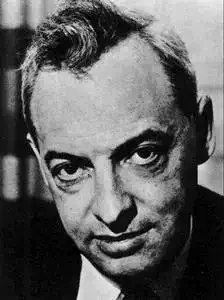
Pluck and Luck (1925)

14
Saul Bellow
Saul Bellow

Art has something to do with the achievement of stillness in the midst of chaos. A stillness which characterizes prayer, too, and the eye of the storm … an arrest of attention in the midst of distraction.

George Plimpton Writers at Work (1967) 3rd series

15
Saul Bellow
Saul Bellow

If I am out of my mind, it’s all right with me, thought Moses Herzog.
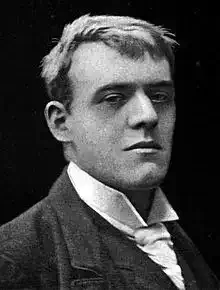
Herzog (1961)

12
Hilaire Belloc
Hilaire Belloc

There’s nothing worth the wear of winning,

But laughter and the love of friends.

22
Hilaire Belloc
Hilaire Belloc

Do you remember an Inn,

Miranda?

20
Hilaire Belloc
Hilaire Belloc

Pale Ebenezer thought it wrong to fight,

But Roaring Bill (who killed him) thought it right.

23
Hilaire Belloc
Hilaire Belloc

When I am dead, I hope it may be said:

‘His sins were scarlet, but his books were read.’

30