
Quotes
Quotes to inspire and reflect
And the look of the bay mare shames silliness out of me.
Has any one supposed it lucky to be born? I hasten to inform him or her it is just as lucky to die, and I know it.
And now it seems to me the beautiful uncut hair of graves.
A child said What is the grass? fetching it to me with full hands; How could I answer the child? I do not know what it is any more than he. I guess it must be the flag of my disposition, out of hopeful green stuff woven.
Swiftly arose and spread around me the peace and knowledge that pass all the argument of the earth, And I know that the hand of God is the promise of my own, And I know that the spirit of God is the brother of my own, And that all the men ever born are also my brothers, and the women my sisters and lovers, And that a kelson of the creation is love.
Stop this day and night with me and you shall possess the origin of all poems.
I celebrate myself, and sing myself, And what I assume you shall assume, For every atom belonging to me as good belongs to you. I loafe and invite my soul, I lean and loafe at my ease observing a spear of summer grass.
To confront night, storms, hunger, ridicule, accidents, rebuffs, as the trees and animals do.
I hear America singing, the varied carols I hear.
One’s-Self I sing, a simple separate person, Yet utter the word Democratic, the word En-Masse.
But me they’ll lash in hammock, drop me deep. Fathoms down, fathoms down, how I’ll dream fast asleep. I feel it stealing now. Sentry, are you there? Just ease these darbies [manacles] at the wrist, And roll me over fair! I am sleepy, and the oozy weeds about me twist.
Dies, all dies! The grass it dies, but in vernal rain Up it springs and it lives again; Over and over, again and again It lives, it dies and it lives again.
Ah, why should tears the pale cheek fret For aught that waneth here below. Let go, let go!
All civil charms And priestly spells which late held hearts in awe— Fear-bound, subjected to a better sway Than sway of self; these like a dream dissolve, And man rebounds whole aeons back in nature.
If Luther’s day expand to Darwin’s year, Shall that exclude the hope—foreclose the fear?
Foemen at morn, but friends at eve— Fame or country least their care: (What like a bullet can undeceive!)
What troops Of generous boys in happiness thus bred— Saturnians through life’s Tempe led, Went from the North and came from the South, With golden mottoes in the mouth, To lie down midway on a bloody bed.
All wars are boyish, and are fought by boys.
The poor old Past, The Future’s slave.

When I was a beggarly boy, And lived in a cellar damp, I had not a friend nor a toy, But I had Aladdin’s lamp.
No, never say nothin’ without you’re compelled tu, An’ then don’t say nothin’ thet you can be held tu.
Ef you want peace, the thing you’ve gut tu du Is jes’ to show you’re up to fightin’, tu.
It’s ’most enough to make a deacon swear.
I don’t believe in princerple, But oh I du in interest.
My gran’ther’s rule was safer ’n ’tis to crow: Don’t never prophesy—onless ye know.
You’ve gut to git up airly Ef you want to take in God.
Ez fer war, I call it murder— There you hev it plain an’ flat; I don’t want to go no furder Than my Testyment fer that.
Nature fits all her children with something to do, He who would write and can’t write, can surely review.
There comes Poe, with his raven, like Barnaby Rudge, Three fifths of him genius and two fifths sheer fudge.
And I honor the man who is willing to sink Half his present repute for the freedom to think, And, when he has thought, be his cause strong or weak, Will risk t’ other half for the freedom to speak.
In creating, the only hard thing’s to begin; A grass-blade’s no easier to make than an oak.
For a cap and bells our lives we pay, Bubbles we buy with a whole soul’s tasking: ’Tis heaven alone that is given away, ’Tis only God may be had for the asking.
And what is so rare as a day in June? Then, if ever, come perfect days.
Truth forever on the scaffold, Wrong forever on the throne— Yet that scaffold sways the future, and, behind the dim unknown, Standeth God within the shadow, keeping watch above his own.
Not only around our infancy Doth heaven with all its splendors lie; Daily, with souls that cringe and plot, We Sinais climb and know it not.
The nurse of full-grown souls is solitude.
Once to every man and nation comes the moment to decide, In the strife of Truth with Falsehood, for the good or evil side.
They are slaves who dare not be In the right with two or three.
They are slaves who fear to speak For the fallen and the weak.
But not without men’s hands: He could not make Antonio Stradivari’s violins Without Antonio.
Blessed are the horny hands of toil!

Thou shalt not covet, but tradition Approves all forms of competition.
O may I join the choir invisible Of those immortal dead who live again In minds made better by their presence.
No graven images may be Worshipped, except the currency.
And almost everyone when age, Disease, or sorrows strike him, Inclines to think there is a God, Or something very like Him.
Grace is given of God, but knowledge is bought in the market.
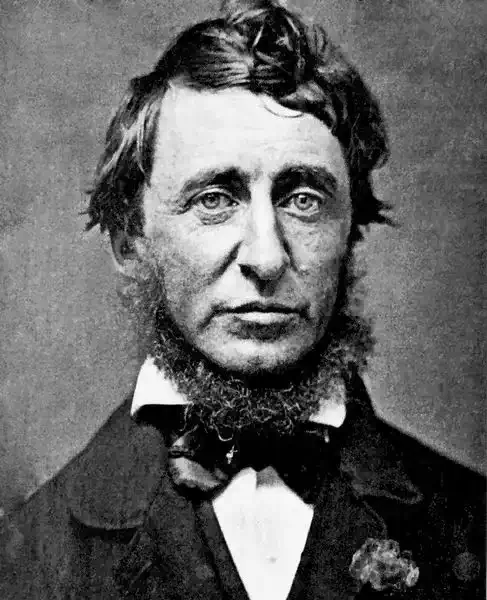
My life has been the poem I would have writ, But I could not both live and utter it.
The vessel, though her masts be firm, Beneath her copper bears a worm.