
Quotes
Quotes to inspire and reflect

That’s the wise thrush; he sings each song twice over, Lest you should think he never could recapture The first fine careless rapture!
I sprang to the stirrup, and Joris, and he; I galloped, Dirck galloped, we galloped all three.
Round the cape of a sudden came the sea, And the sun looked over the mountain’s rim: And straight was a path of gold for him, And the need of a world of men for me.
It was roses, roses all the way.
One more devils’-triumph and sorrow for angels, One more wrong to man, one more insult to God!
We that had loved him so, followed him, honored him, Lived in his mild and magnificent eye, Learned his great language, caught his clear accents, Made him our pattern to live and to die!
Shakespeare was of us, Milton was for us, Burns, Shelley, were with us—they watch from their graves!
Just for a handful of silver he left us, Just for a riband to stick in his coat.
It’s a long lane that knows no turnings.
When the liquor’s out, why clink the cannikin?
And out of the houses the rats came tumbling. Great rats, small rats, lean rats, brawny rats, Brown rats, black rats, gray rats, tawny rats. Grave old plodders, gay young friskers, Fathers, mothers, uncles, cousins, Cocking tails and pricking whiskers, Families by tens and dozens, Brothers, sisters, husbands, wives— Followed the Piper for their lives.
Hamelin Town’s in Brunswick, By famous Hanover city.
Rats! They fought the dogs and killed the cats, And bit the babies in the cradles, And ate the cheeses out of the vats, And licked the soup from the cooks’ own ladles.
Boot, saddle, to horse, and away!
Marching along, fifty-score strong, Great-hearted gentlemen, singing this song.
She had A heart—how shall I say?—too soon made glad.
I gave commands; Then all smiles stopped together.
“You’re wounded!” “Nay,” the soldier’s pride Touched to the quick, he said: “I’m killed, Sire!” And his chief beside, Smiling the boy fell dead.
That’s my last Duchess painted on the wall, Looking as if she were alive.
You know, we French stormed Ratisbon.
In the morning of the world, When earth was nigher heaven than now.
Some unsuspected isle in far-off seas.
The year’s at the spring And day’s at the morn; Morning’s at seven; The hillside’s dew-pearled; The lark’s on the wing; The snail’s on the thorn: God’s in his heaven— All’s right with the world.

The most despairing songs are the loveliest of all, I know immortal ones composed only of tears.
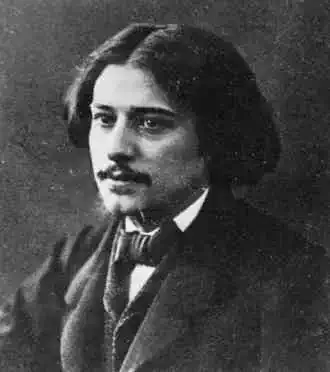
Everything passes—Robust art Alone is eternal. The bust Survives the city. 1
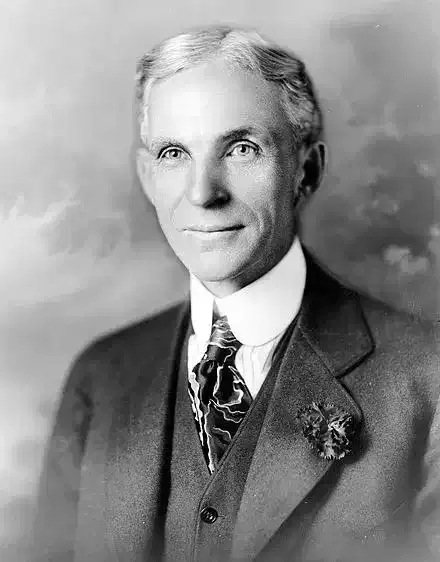
Come, ye thankful people, come, Raise the song of harvest-home; All is safely gathered in, Ere the winter storms begin.
I have come too late into a world too old. 1
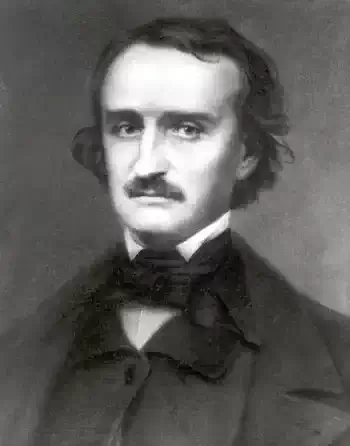
In her sepulcher there by the sea— In her tomb by the sounding sea.
Keeping time, time, time, In a sort of Runic rhyme, To the tintinnabulation that so musically wells From the bells, bells, bells, bells, Bells, bells, bells.
I was a child and she was a child, In this kingdom by the sea, But we loved with a love that was more than love— I and my Annabel Lee— With a love that the wingèd seraphs of Heaven Coveted her and me.
And neither the angels in Heaven above Nor the demons down under the sea, Can ever dissever my soul from the soul Of the beautiful Annabel Lee.
And the fever called “Living” Is conquered at last.
And this maiden she lived with no other thought Than to love and be loved by me.
“Over the Mountains Of the Moon, Down the Valley of the Shadow, Ride, boldly ride,” The shade replied— “If you seek for Eldorado!”
Thus I pacified Psyche and kissed her, And tempted her out of her gloom.
It was down by the dank tarn of Auber, In the ghoul-haunted woodland of Weir.
Here once, through an alley Titanic, Of cypress, I roamed with my Soul— Of cypress, with Psyche, my Soul.
The skies they were ashen and sober; The leaves they were crispèd and sere— The leaves they were withering and sere: It was night in the lonesome October Of my most immemorial year.
And my soul from out that shadow that lies floating on the floor Shall be lifted—nevermore!
And the Raven, never flitting, still is sitting, still is sitting On the pallid bust of Pallas just above my chamber door.
“Take thy beak from out my heart, and take thy form from off my door!” Quoth the Raven, “Nevermore.”
“Prophet!” said I, “thing of evil!—prophet still, if bird or devil!”
“Ghastly grim and ancient Raven wandering from the Nightly shore— Tell me what thy lordly name is on the Night’s Plutonian shore!” Quoth the Raven, “Nevermore.”
Deep into that darkness peering, long I stood there wondering, fearing, Doubting, dreaming dreams no mortal ever dared to dream before.
The silken, sad, uncertain rustling of each purple curtain.
For the rare and radiant maiden whom the angels name Lenore— Nameless here for evermore.
Ah, distinctly I remember it was in the bleak December; And each separate dying ember wrought its ghost upon the floor.
Once upon a midnight dreary, while I pondered, weak and weary, Over many a quaint and curious volume of forgotten lore— While I nodded, nearly napping, suddenly there came a tapping, As of someone gently rapping, rapping at my chamber door.