
Quotes

Quotes

Quotes to inspire and reflect
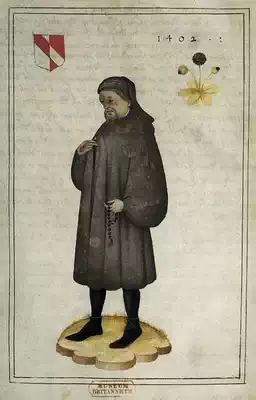
Geoffrey Chaucer
Geoffrey Chaucer

This world nys but a thurghfare ful of wo, And we been pilgrymes, passing to and fro. Deeth is an ende of every worldly soore.

The Canterbury Tales. The Knight’s Tale, l. 2847

17
Geoffrey Chaucer
Geoffrey Chaucer

And was al his chiere, as in his herte.

The Canterbury Tales. The Knight’s Tale, l. 2683

8
Geoffrey Chaucer
Geoffrey Chaucer

What is this world? what asketh men to have? Now with his love, now in his colde grave Allone, withouten any compaignye.

The Canterbury Tales. The Knight’s Tale, l. 2777

15
Geoffrey Chaucer
Geoffrey Chaucer

Up roos the sonne, and up roose Emelye.

The Canterbury Tales. The Knight’s Tale, l. 2273

15
Geoffrey Chaucer
Geoffrey Chaucer

Myn be the travaille, and thyn be the glorie!

The Canterbury Tales. The Knight’s Tale, l. 2406

14
Geoffrey Chaucer
Geoffrey Chaucer

The smylere with the knyf under the cloke.

The Canterbury Tales. The Knight’s Tale, l. 1999

10
Geoffrey Chaucer
Geoffrey Chaucer

Upon his shuldres wynges hadde he two; And blynd he was, as it is often seene; A bowe he bar and arwes brighte and kene.

The Canterbury Tales. The Knight’s Tale, l. 1963

9
Geoffrey Chaucer
Geoffrey Chaucer

For pitee renneth soone in gentil herte.

The Canterbury Tales. The Knight’s Tale, l. 1761

10
Geoffrey Chaucer
Geoffrey Chaucer

Now up, now doun, as boket in a welle.

The Canterbury Tales. The Knight’s Tale, l. 1533

9
Geoffrey Chaucer
Geoffrey Chaucer

That “feeld hath eyen, and the wode hath eres.” 9

The Canterbury Tales. The Knight’s Tale, l. 1522

10
Geoffrey Chaucer
Geoffrey Chaucer

May, with alle thy floures and thy grene, Welcome be thou, faire, fresshe May.

The Canterbury Tales. The Knight’s Tale, l. 1510

12
Geoffrey Chaucer
Geoffrey Chaucer

The bisy larke, messager of day.

The Canterbury Tales. The Knight’s Tale, l. 1491

14
Geoffrey Chaucer
Geoffrey Chaucer

Ech man for hymself.

The Canterbury Tales. The Knight’s Tale, l. 1182

7
Geoffrey Chaucer
Geoffrey Chaucer

Whoso shal telle a tale after a man, He moot reherce as ny as evere he kan Everich a word, if it be in his charge, Al speke he never so rudeliche and large, Or ellis he moot telle his tale untrewe, Or feyne thyng, or fynde wordes new.

The Canterbury Tales. Prologue, l. 731

17
Geoffrey Chaucer
Geoffrey Chaucer

For May wol have no slogardie anyght. The sesoun priketh every gentil herte, And maketh hym out of his slep to sterte.

The Canterbury Tales. The Knight’s Tale, l. 1042

12
Geoffrey Chaucer
Geoffrey Chaucer

Wel loved he garleek, oynons, and eek lekes, And for to drynken strong wyn, reed as blood.

The Canterbury Tales. Prologue, l. 634

8
Geoffrey Chaucer
Geoffrey Chaucer

And whan that he wel dronken hadde the wyn, Than wolde he speke no word but Latyn.

The Canterbury Tales. Prologue, l. 637

7
Geoffrey Chaucer
Geoffrey Chaucer

And yet he hadde a thombe of gold. 8

The Canterbury Tales. Prologue, l. 563

8
Geoffrey Chaucer
Geoffrey Chaucer

That hadde a fyr-reed cherubynnes face.

The Canterbury Tales. Prologue, l. 624

8
Geoffrey Chaucer
Geoffrey Chaucer

But Cristes loore and his apostles twelve He taughte, but first he folwed it hymselve.

The Canterbury Tales. Prologue, l. 527

9
Geoffrey Chaucer
Geoffrey Chaucer

If gold ruste, what shal iren do?

The Canterbury Tales. Prologue, l. 500

16
Geoffrey Chaucer
Geoffrey Chaucer

She was a worthy womman al hit lyve, Housbondes at chirche dore she hadde fyve.

The Canterbury Tales. Prologue, l. 459

11
Geoffrey Chaucer
Geoffrey Chaucer

This noble ensample to his sheep he yaf, That first he wroghte, and afterward he taughte.

The Canterbury Tales. Prologue, 1. 496

14
Geoffrey Chaucer
Geoffrey Chaucer

His studie was but litel on the Bible.

The Canterbury Tales. Prologue, l. 438

8
Geoffrey Chaucer
Geoffrey Chaucer

For gold in phisik is a cordial, Therefore he lovede gold in special.

The Canterbury Tales. Prologue, l. 443

19
Geoffrey Chaucer
Geoffrey Chaucer

It snewed in his hous of mete and drynke.

The Canterbury Tales. Prologue, l. 345

9
Geoffrey Chaucer
Geoffrey Chaucer

For he was Epicurus owene sone.

The Canterbury Tales. Prologue, l. 336

7
Geoffrey Chaucer
Geoffrey Chaucer

And gladly wolde he lerne, and gladly teche.

The Canterbury Tales. Prologue, l. 308

10
Geoffrey Chaucer
Geoffrey Chaucer

Nowher so bisy a man as he ther nas, And yet he semed bisier than he was.

The Canterbury Tales. Prologue, l. 321

9
Geoffrey Chaucer
Geoffrey Chaucer

As leene was his hors as is a rake.

The Canterbury Tales. Prologue, l. 287

8
Geoffrey Chaucer
Geoffrey Chaucer

For hym was levere have at his beddes heed Twenty bookes, clad in blak or reed, Of Aristotle and his philosophie, Than robes riche, or fithele, or gay sautrie, But al be that he was a philosophre, Yet hadde he but litel gold in cofre.

The Canterbury Tales. Prologue, l. 293

17
Geoffrey Chaucer
Geoffrey Chaucer

Somwhat he lipsed, for his wantownesse, To make his Englissh sweete upon his tonge.

The Canterbury Tales. Prologue, l. 264

10
Geoffrey Chaucer
Geoffrey Chaucer

A Clerk ther was of Oxenford also.

The Canterbury Tales. Prologue, l. 285

10
Geoffrey Chaucer
Geoffrey Chaucer

A Frere ther was, a wantowne and a merye.

The Canterbury Tales. Prologue, l. 208

13
Geoffrey Chaucer
Geoffrey Chaucer

He knew the tavernes wel in every toun.

The Canterbury Tales. Prologue, l. 240

8
Geoffrey Chaucer
Geoffrey Chaucer

And theron heng a brooch of gold ful sheene, On which ther was first write a crowned A, And after Amor vincit omnia.

The Canterbury Tales. Prologue, l. 160

10
Geoffrey Chaucer
Geoffrey Chaucer

His palfrey was as broun as is a berye.

The Canterbury Tales. Prologue, l. 207

11
Geoffrey Chaucer
Geoffrey Chaucer

Ful weel she soong the service dyvyne, Entuned in hir nose ful semely; And Frenssh she spak ful faire and fetisly, After the scole of Stratford atte Bowe For Frenssh of Parys was to hir unknowe.

The Canterbury Tales. Prologue, l. 122

16
Geoffrey Chaucer
Geoffrey Chaucer

She wolde wepe, if that she saugh a mous Kaught in a trappe, if it were deed or bledde.

The Canterbury Tales. Prologue, l. 144

16
Geoffrey Chaucer
Geoffrey Chaucer

He koude songes make and wel endyte.

The Canterbury Tales. Prologue, l. 95

10
Geoffrey Chaucer
Geoffrey Chaucer

Curteis he was, lowely, and servysable, And carf biforn his fader at the table.

The Canterbury Tales. Prologue, l. 99

8
Geoffrey Chaucer
Geoffrey Chaucer

He was a verray, parfit gentil knyght.

The Canterbury Tales. Prologue, l. 72

9
Geoffrey Chaucer
Geoffrey Chaucer

He was as fressh as is the month of May.

The Canterbury Tales. Prologue, l. 92

13
Geoffrey Chaucer
Geoffrey Chaucer

And smale foweles maken melodye, That slepen al the nyght with open yë, (So priketh hem nature in hit corages); Thanne longen folk to goon on pilgrimages.

The Canterbury Tales. Prologue, l. 9

16
Geoffrey Chaucer
Geoffrey Chaucer

Whan that Aprille with his shoures soote The droghte of March hath perced to the roote.

The Canterbury Tales [c. 1387]. Prologue, l. 1

24
Geoffrey Chaucer
Geoffrey Chaucer

Whan that the month of May Is comen, and that I here the foules synge, And that the floures gynnen for to sprynge, Farewel my bok, and my devocioun!

The Legend of Good Women [c. 1386], l. 36

14
Geoffrey Chaucer
Geoffrey Chaucer

That, of al the floures in the mede, Thanne love I most thise floures white and rede, Swiche as men callen daysyes in our toun.

The Legend of Good Women, l. 41

13
Geoffrey Chaucer
Geoffrey Chaucer

O moral Gower, this book I directe To the.

Troilus and Criseyde, V, l. 1856

12