
Quotes
Quotes to inspire and reflect
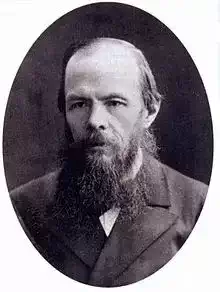
We have corrected Thy work and have founded it upon miracle, mystery , and authority . And men rejoiced that they were again led like sheep, and that the terrible gift that brought them such suffering, was, at last, lifted from their hearts.
The world will be saved by beauty.
I agree that two times two is four is an excellent thing; but if we’re going to start praising everything, then two times two is five is sometimes also a most charming little thing.
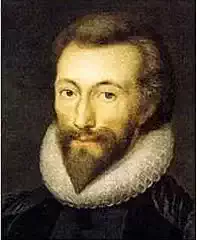
[ Letter to his wife, after being dismissed from the service of his father-in-law :] John Donne, Anne Donne, Un-done.
If poisonous minerals, and if that tree,
No man is an Island, entire of it self; every man is a piece of the Continent, a part of the main; if a clod be washed away by the sea, Europe is the less, as well as if a promontory were, as well as if a manor of thy friends or of thine own were; any man’s death diminishes me, because I am involved in Mankind; And therefore never send to know for whom the bell tolls; it tolls for thee.
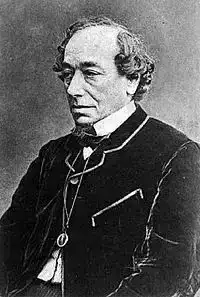
[ To Edward Bulwer-Lytton :] Damn your principles! Stick to your party.
Mollify it with thy tears, or sweat, or blood.
[ On his deathbed, declining a visit from Queen Victoria :] No it is better not. She would only ask me to take a message to Albert.
[ Correcting proofs of his last parliamentary speech, 31 Mar. 1881 :] I will not go down to posterity talking bad grammar.
[ To an author who had sent him an unsolicited manuscript :] Many thanks; I shall lose no time in reading it.
[ Of attacks in Parliament :] Never complain and never explain.
[ On becoming prime minister in 1868 :] I have climbed to the top of the greasy pole.
[ Of William E. Gladstone :] A sophistical rhetorician, inebriated with the exuberance of his own verbosity, and gifted with an egotistical imagination that can at all times command an interminable and inconsistent series of arguments to malign an opponent and to glorify himself.
Finality is not the language of politics.
[ Of the Treasury Bench :] You behold a range of exhausted volcanoes.
All the great things have been done by little nations. It is the Jordan and the Ilyssus which have civilized the modern races.
Tobacco is the tomb of love.
If you wish to be great, you must give men new ideas, you must teach them new words, you must modify their manners, you must change their laws, you must root out prejudices, subvert convictions. Greatness no longer depends on rentals: the world is too rich; nor on pedigrees: the world is too knowing.
Christianity is completed Judaism, or it is nothing. Christianity is incomprehensible without Judaism, as Judaism is incomplete without Christianity.
Let me see property acknowledging as in the old days of faith, that labor is his twin brother.
In England when a new character appears in our circles, the first question always is, “Who is he?” In France it is, “What is he?” In England, “How much a year?” In France, “What has he done?”
A good eater must be a good man; for a good eater must have a good digestion, and a good digestion depends upon a good conscience.
A dark horse, which had never been thought of, and which the careless St James had never even observed in the list, rushed past the grand stand in sweeping triumph.
The microcosm of a public school.
To be a great lawyer, I must give up my chance of being a great man.

I think we are well advised to keep on nodding terms with the people we used to be, whether we find them attractive company or not. Otherwise they turn up unannounced and surprise us, come hammering on the mind’s door at 4 a.m. of a bad night and demand to know who deserted them, who betrayed them, who is going to make amends.

This was the universe about which we have read so much and never before felt: the universe as a clockwork of loose spheres flung at stupefying, unauthorized speeds. How could anything moving so fast not crash.
It was the United States of America in the cold late spring of 1967, and the market was steady and the G.N.P. high and a great many articulate people seemed to have a sense of high social purpose and it might have been a spring of brave hopes and national promise, but it was not, and more and more people had the uneasy apprehension that it was not.
Writers are always selling someone out.
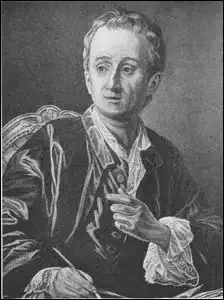
Et des boyaux du dernier prêtre
If your little savage were left to himself and to his native blindness, he would in time join the infant’s reasoning to the grown man’s passion—he would strangle his father and sleep with his mother.
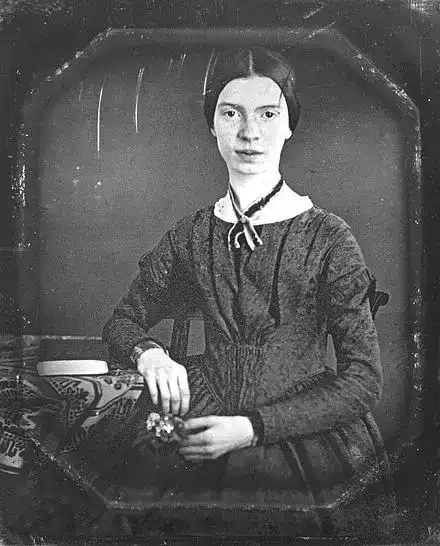
My life closed twice before its close.
On peut tromper quelques hommes, ou les tromper tous dans certains lieux & en certain tems [sic], mais non pas tous les hommes dans tous les lieux & dans tous les siècles .
Yet never met this fellow,
The Pedigree of Honey
I never spoke with God
If I can stop one Heart from breaking
I never saw a Moor.
Much Madness is divinest Sense—
Alter! When the hills do—
Are you too deeply occupied to say if my Verse is alive?
I died for beauty—but was scarce
I like to see it lap the Miles—
“Hope” is the thing with feathers—
Because I could not stop for Death—He kindly stopped for me—.
I’m Nobody! Who are you?
Inebriate of air am I,