
Quotes
Quotes to inspire and reflect
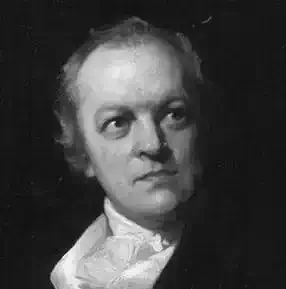
The king, moreover, is not only incapable of doing wrong, but even of thinking wrong: he can never mean to do an improper thing: in him is no folly or weakness.
All presumptive evidence of felony should be admitted cautiously; for the law holds, that it is better that ten guilty persons escape, than that one innocent suffer.
Whence it is that in our law the goodness of a custom depends upon its having been used time out of mind; or, in the solemnity of our legal phrase, time whereof the memory of man runneth not to the contrary.
In all tyrannical governments the supreme magistracy, or the right both of making and of enforcing the laws, is vested in one and the same man, or one and the same body of men; and wherever these two powers are united together, there can be no public liberty.
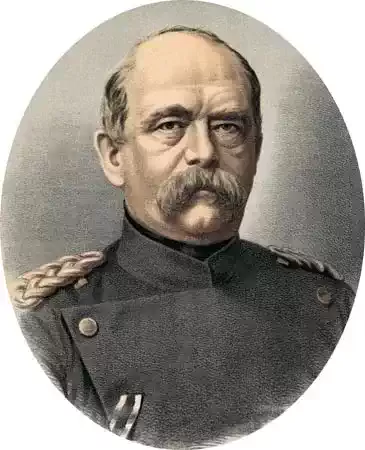
One day the great European War [will] come out of some damned foolish thing in the Balkans.
Man was formed for society.
[ Remark to Meyer von Waldeck, 11 Aug. 1867 :] Die Politik ist die Lehre von Möglichen . Politics is the art of the possible.
[ Of possible German military intervention in the Balkans :] Not worth the healthy bones of a single Pomeranian grenadier. Speech to Reichstag, 5 Dec. 1876
[ Of his dispute with Pope Pius IX over papal authority in Germany, alluding to Emperor Henry IV’s obeisance to Pope Gregory VII at Canossa in 1077 :] We will not go to Canossa.
Let us put Germany in the saddle, so to speak—it already knows how to ride.

Until everything
The great questions of the day will not be settled by means of speeches and majority decisions . . . but by iron and blood.
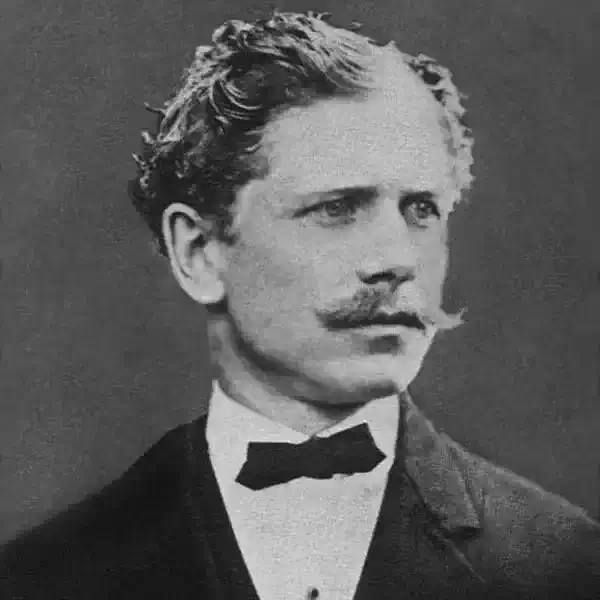
[ One-sentence book review :] The covers of this book are too far apart.
You are not permitted to kill a woman that has injured you, but nothing forbids you to reflect that she is growing older every minute. You are avenged 1440 times a day.
The bold and discerning writer who, recognizing the truth that language must grow by innovation if it grow at all, makes new words and uses the old in an unfamiliar sense has no following and is tartly reminded that “it isn’t in the dictionary”—although down to the time of the first lexicographer (Heaven forgive him!) no author ever had used a word that was in the dictionary.
All men are created equal. Some, it appears, are created a little more equal than others. Wasp (San Francisco), 16 Sept. 1882
Year, n . A period of three hundred and sixty-five disappointments.
Ultimatum, n . In diplomacy, a last demand before resorting to concessions.
Telescope, n . A device having a relation to the eye similar to that of the telephone to the ear, enabling distant objects to plague us with a multitude of needless details. Luckily it is unprovided with a bell summoning us to the sacrifice.
Truthful, adj . Dumb and illiterate.
Telephone, n . An invention of the devil which abrogates some of the advantages of making a disagreeable person keep his distance.
Selfish, adj . Devoid of consideration for the selfishness of others.
Self-esteem, n . An erroneous appraisement.
Self-evident, adj . Evident to one’s self and to nobody else.
Scriptures, n . The sacred books of our holy religion, as distinguished from the false and profane writings on which all other faiths are based.
Robber, n . A candid man of affairs.
Resolute, adj . Obstinate in a course that we approve.
Revolution, n . In politics, an abrupt change in the form of misgovernment. Specifically, in American history, the substitution of the rule of an Administration for that of a Ministry, whereby the welfare and happiness of the people were advanced a full half-inch.
Recount, n . In American politics, another throw of the dice, accorded to the player against whom they are loaded.
Resident, adj . Unable to leave.
Really, adv . Apparently.
Rash, adj . Insensible to the value of our advice.
Public, n . The negligible factor in problems of legislation.
Prophecy, n . The art and practice of selling one’s credibility for future delivery.
Prevaricator, n . A liar in the caterpillar state.
Projectile, n . The final arbiter in international disputes. Formerly these disputes were settled by physical contact of the disputants, with such simple arguments as the rudimentary logic of the times could supply—the sword, the spear, and so forth. With the growth of prudence in military affairs the projectile came more and more into favor, and is now held in high esteem by the most courageous. Its capital defect is that it requires personal attendance at the point of propulsion.
Pretty, adj . Vain, conceited, as “a pretty girl.” Tiresome, as “a pretty picture.”
President, n . The leading figure in a small group of men of whom—and of whom only—it is positively known that immense numbers of their countrymen did not want any of them for President.
Present, n . That part of eternity dividing the domain of disappointment from the realm of hope.
Present, n . Something given in expectation of something better. To-day’s payment for tomorrow’s service.
Preference, n . A sentiment, or frame of mind, induced by the erroneous belief that one thing is better than another.
Predict, v.t . To relate an event that has not occurred, is not occurring, and will not occur.
Polite, adj . Skilled in the art and practice of dissimulation.
Politician, n . An eel in the fundamental mud upon which the superstructure of organized society is reared. When he wriggles he mistakes the agitation of his tail for the trembling of the edifice. As compared with the statesman, he suffers the disadvantage of being alive.
Plutocracy, n . A republican form of government deriving its powers from the conceit of the governed—in thinking they govern.
Plebiscite, n . A popular vote to ascertain the will of the sovereign.
Please, v . To lay the foundation for a superstructure of imposition.
Platonic, adj . . . . Platonic Love is a fool’s name for the affection between a disability and a frost.