William Butler Yeats
Author of the day

William Butler Yeats

William Butler Yeats was a prominent Irish poet, playwright, and mystic, widely regarded as one of the greatest poets of the 20th century. His early work was deeply influenced by Irish mythology and folklore, and he was a key figure in the Irish Literary Revival. Over his career, his style evolved, becoming more personal, symbolic, and philosophical, grappling with themes of love, aging, politics, and the spiritual life. Yeats's poetry is characterized by its rich imagery, musicality, and intel…

Poem of the day

Grass

Carl Sandburg
Pile the bodies high at Austerlitz and Waterloo.
Shovel them under and let me work
-I am the grass; I cover all.

And pile them high at Gettysburg
And pile them high at Ypres and Verdun.
Shovel them under and let me work.
Two years, ten years, and the passengers ask the conductor:

What place is this?
Where are we now?

I am the grass.
Let me work.
Read full poem

Born on this day

13
Amândio César

Amândio César was a Portuguese poet, playwright, and essayist, a prominent figure in 20th-century literature. His work is characterized by lyrical depth, exploration of existential themes, and reflection on the human condition, often permeated by a critical view of society and the human condition.

Pablo Neruda

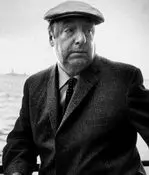
Pablo Neruda was a Chilean poet, diplomat, and politician. He is widely regarded as one of the most influential poets of the 20th century, celebrated for his lyrical and evocative verse, which often explored themes of love, nature, politics, and everyday life. Neruda's prolific output and diverse thematic concerns earned him international acclaim, culminating in the Nobel Prize in Literature in 1971. His work is characterized by its passionate imagery, sensuous language, and profound connection to the landscapes and people of Latin America.

‘Carnal apple, Woman filled, burning moon,’
Max Jacob

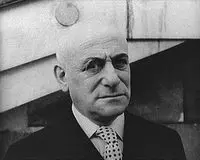
Max Jacob was a French poet, writer, and painter, a prominent figure of modernism. His poetic work, often marked by a peculiar lyricism and surreal humor, explores themes such as religion, mysticism, the human condition, and the very nature of art. He was a friend of figures like Picasso and Apollinaire, and his bohemian life and conversion to Catholicism profoundly marked his career and writing. His poetry is recognized for its originality, formal experimentation, and ability to merge the everyday with the sublime.

Lobo da Costa

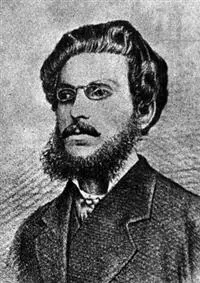
Lobo da Costa, whose full name was Aníbal Lobo da Costa, was a Portuguese poet and doctor, whose poetic works explore sensuality, beauty, melancholy, and the ephemerality of life. His poetry, often lyrical and evocative in tone, reflects a refined sensitivity to the nuances of human feeling and nature. With a body of work that fits into the literary context of his time, Lobo da Costa left a poetic record that, despite sometimes being associated with more classical tendencies, carries an originality in the expression of its themes and in the sonority of its verses.

Constantin Noica

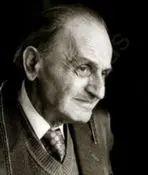
Constantin Noica was an influential Romanian philosopher, considered one of the most important thinkers of the 20th century in Romania. His work is marked by a deep reflection on metaphysics, history, culture, and Romanian identity, often with a poetic and aphoristic style. He was a defender of the 'Romanian man' and his spirituality, seeking to rescue and reinterpret the country's philosophical tradition. His influence extended beyond philosophy, touching Romanian literature and cultural thought.

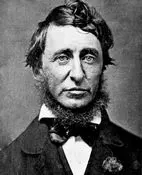
Henry David Thoreau

Henry David Thoreau was a towering figure of American transcendentalism, renowned for his profound connection to nature, his incisive social criticism, and his advocacy for civil disobedience. As an author, philosopher, and naturalist, Thoreau challenged societal norms and championed a life of simplicity, self-reliance, and deliberate living. His seminal work, 'Walden,' remains a cornerstone of American literature, inspiring readers to re-examine their relationship with the natural world and with society.

Read the best books first, or you may not have a c
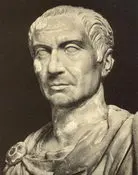
Júlio César

Gaius Julius Caesar was a Roman general and statesman who played a crucial role in the events that led to the end of the Roman Republic and the rise of the Roman Empire. He became a prominent figure through his military conquests, especially in the Gallic Wars. Caesar formed a political alliance known as the First Triumvirate with Crassus and Pompey. After the death of Crassus and the subsequent falling out with Pompey, Caesar crossed the Rubicon, triggering a civil war from which he emerged as the supreme leader of Rome. He was appointed dictator for life but was assassinated in 44 BC by a group of senators.

João Grave

João Grave was a Portuguese poet and physician, whose work is marked by a strong existential charge and a profound reflection on the human condition. His poetry, sometimes dark and melancholic, addresses themes such as death, time, loneliness, and the incessant search for meaning. His writing is distinguished by its expressiveness and its ability to convey intense emotions, using a language that combines clinical precision with lyrical sensibility. Grave is recognized as a poet of great value in 20th-century Portuguese literature.

Rusty Morrison

Rusty Morrison is an American poet known for her exploration of the complexities of inner life and human experience. Her work frequently addresses themes of memory, perception, and the transient nature of existence, using lyrical language and evocative imagery. Her poetic style is characterized by deep introspection and a keen sensitivity to the nuances of emotion and thought. Morrison's compositions invite the reader to reflect on their own subjectivity and the interconnectedness between the self and the external world.

Died on this day

6
Isabel Ary dos Santos

Isabel Ary dos Santos is a contemporary Portuguese poet, known for her poetic work that explores intimacy, memory, and the human condition with sensitivity and depth. Her writing is characterized by careful language and a lyrical tone, addressing universal themes through a personal and reflective perspective. With a literary production that has been gaining recognition, Isabel Ary dos Santos has established herself as an important voice in current Portuguese poetry. Her works invite introspection and dialogue with the reader, addressing the complexity of emotions and the search for meaning in life.

José de Lacerda

José de Lacerda was a poet whose writing is characterized by a deep sensibility and an exploration of language that distinguishes him in the literary landscape. His work, rich in imagery and reflection, addresses themes such as nature, the passage of time, and the human condition. Lacerda is recognized for his technical mastery and his ability to evoke intense emotions through carefully constructed verses.

D. João de Meneses

D. João de Meneses was a Portuguese nobleman and poet, known for his participation in the political and literary life of his time. His poetic work, although not extensive, is part of the context of Portuguese Arcadian poetry, reflecting the conventions and themes of the era. As a figure linked to the court, his poetry reveals a scholarly trait and a certain classicism, characteristics common to 18th-century poets. His literary output, while less prominent than that of other contemporaries, contributed to the Portuguese poetic landscape, marking his presence in the literature of that period.

Jovan Koteski

Jovan Koteski is a renowned Macedonian poet and writer. His work is known for exploring historical and cultural themes, often with a critical and reflective perspective on society. He is considered one of the important names in the contemporary poetry of his country. Koteski's poetry is marked by a vigorous and imagistic style, which addresses both social and philosophical issues. His work has contributed to the enrichment of Macedonian literature with its deep reflections and expressive language.