Poem of the day

Grass

Carl Sandburg
Pile the bodies high at Austerlitz and Waterloo.
Shovel them under and let me work
-I am the grass; I cover all.

And pile them high at Gettysburg
And pile them high at Ypres and Verdun.
Shovel them under and let me work.
Two years, ten years, and the passengers ask the conductor:

What place is this?
Where are we now?

I am the grass.
Let me work.
Read full poem

Born on this day

16
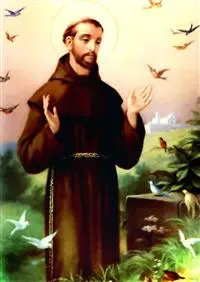
S. Francisco de Assis

Francis of Assisi was an Italian Catholic friar and preacher, founder of the Franciscan Order. He is known worldwide for his deep devotion to God, his love for creation, and his life of poverty and humility. His words and example have inspired millions of people over the centuries. His poetic work, though not vast, is marked by simple and direct language, expressing an ardent love for nature and all creatures, seen as reflections of divine goodness. The "Canticle of the Creatures" is his most famous legacy.

Quintino Cunha

Quintino Cunha, also known by the literary pseudonym 'O Zé Povinho', was a multifaceted figure of the 19th and early 20th centuries, noted as a caricaturist, writer, and journalist. His work, strongly marked by humor and social criticism, sharply depicted the customs and ills of Portuguese society of his time, contributing to the formation of civic consciousness through his biting and popular perspective.

Firmino Teixeira do Amaral

Firmino Teixeira do Amaral was a Portuguese poet, short-story writer, and columnist, known for his lyrical poetry and his careful prose. His work, although less prominent than that of other authors of his generation, reflects sensitivity and a mastery of language, exploring themes such as love, saudade, and nature.

João Ribeiro

João Ribeiro was a notable Portuguese poet, professor, and essayist. Recognized for his poetic work, which explored themes such as identity, memory, and the passage of time, Ribeiro also dedicated himself to the study of literature and culture, being an influential figure in the Portuguese intellectual landscape. His writing is marked by deep reflection and careful language, consolidating him as one of the important names in contemporary poetry.

João Mello

João Mello was a Portuguese poet and university professor, whose poetic work developed from the second half of the 20th century. His poetry is often characterized by a strong existential charge and the exploration of themes such as memory, time, and identity, with a language that combines lyricism and intellectual rigor. In addition to his literary activity, he dedicated himself to teaching and research in the field of literature.

Sílvio Péllico

Silvio Pellico was an Italian writer, poet, patriot, and revolutionary, known for his work "Le mie prigioni" (My Prisons), an autobiographical account of his experiences as a political prisoner. His life was marked by political engagement for the unification of Italy and the consequences of his actions, which led him to years of captivity.

Joaquim Manuel de Macedo

Joaquim Manuel de Macedo was a Brazilian writer, journalist, and politician, a prominent figure of Romanticism in Brazil. He is best known for his novel "A Moreninha" (The Brunette), which became a landmark in national literature. His work contributed to the consolidation of a Brazilian literary identity, exploring themes such as love, society, and the customs of the time, with a style that blended sentimentalism with nationalism.

Ambrose Bierce

Ambrose Bierce was an American writer, journalist, poet, and satirist. Known for his dark and biting humor, Bierce served in the American Civil War, where he was wounded multiple times. His combat experience profoundly influenced his work, especially his tales of war and the macabre.

Logic: The art of thinking and reasoning in strict
Pedro Oom

Pedro Oom was a Portuguese poet whose work is situated within the context of modernism. His poetry is marked by formal experimentation and the exploration of urban and existential themes. Despite a not extensive literary output, he left a mark through his originality and the way he approached modernity in Portuguese poetry.

Silva Tavares

Silva Tavares was a Portuguese poet whose work is part of the Neo-Realism movement. He explored social and existential themes, reflecting on the human condition during a period of profound transformations in Portugal. His poetry is characterized by accessible language, yet loaded with meaning and sensitivity, addressing daily life, popular aspirations, and the ephemerality of existence.

Eloy Sánchez Rosillo

Eloy Sánchez Rosillo is a Spanish poet known for his lyrical and introspective work. His poetry explores themes such as time, memory, and the human condition, with careful and evocative language. He stands out for the depth of his verses and his ability to create striking poetic images. Throughout his career, Sánchez Rosillo has consolidated a recognized authorial voice in the landscape of contemporary Spanish-language poetry. His writing is often associated with a particular sensitivity to the nuances of existence and the search for meaning amidst everyday experiences.

Jorge Teillier

Chilean poet Jorge Teillier is a central figure of the so-called "Generation of the '50s" in Chile, a group of writers who sought to renew Chilean poetry with a more direct language and themes centered on daily life, memory, and landscape. His work is characterized by melancholy, nostalgia for the past, and a profound sense of the local, portraying the rural world and the small towns of Chile with a lyrical and evocative voice.

Died on this day

6
Junqueira Freire

Junqueira Freire was a Brazilian poet, one of the most expressive of Romanticism in his country, especially associated with the ultraromantic period. His work is intensely marked by exaggerated sentimentalism, melancholy, platonic love, and deep religiosity, often expressed in tones of mysticism and amorous suffering. His poetry, although short in extent, possesses a notable emotional force. With a personal life marked by illness and devotion, Junqueira Freire left a poetic legacy that dialogues with human fragility in the face of love and the divine, consolidating himself as a unique and poignant voice in Brazilian literature.

Nico Fagundes

Nico Fagundes is a Cape Verdean poet and writer, whose work stands out for its deep connection with the identity and culture of Cape Verde. His poetry is a mirror of the islands, addressing themes such as saudade, the sea, emigration, the human condition, and the search for a place in the world. With a language that evokes Creole orality and musicality, Fagundes has established himself as an important voice in Cape Verdean and Lusophone literature, exploring the nuances of the soul and landscape of his archipelago.

Antônio Mendes Cardoso

Antônio Mendes Cardoso was a highly significant poet, whose work stands out for its lyrical depth and exploration of universal themes. His poetry reflects a unique sensitivity to the nuances of human existence, addressing love, death, time, and spirituality with a rich and evocative language. His contribution to literature is marked by a singular poetic voice that dialogues with tradition while innovating in form and content, leaving a lasting legacy in Portuguese-language poetry.

Leonardo Aires Araujo

Leonardo Aires Araujo is a writer whose work is characterized by a profound exploration of the human condition, often set in landscapes that evoke rural life and traditions. His texts address themes such as identity, land, memory, and interpersonal relationships, with a language rich in imagery and a sensitivity that connects the reader to their roots. His writing reflects a keen eye for the complexities of life and its simplest manifestations.

Zalina Rolim

Zalina Rolim is an emerging figure in contemporary poetry, known for her introspective writing and exploration of universal themes such as identity, time, and the complexities of human relationships. Her work stands out for its careful language and its ability to evoke sensory images that resonate deeply with the reader. With a distinct poetic voice, Rolim navigates between lyricism and existential reflection, addressing the fragilities and strengths inherent in the human condition. Her poetry invites contemplation, offering unique perspectives on the inner world and its interconnections with the external space.

Alberto Figueira Gomes

Alberto Figueira Gomes was a Portuguese poet whose work stands out for its profound exploration of the human condition, marked by a refined language and keen sensibility. His poetry addresses universal themes such as love, loneliness, and the passage of time, reflecting an introspective and, at times, melancholic view of existence. His contribution to contemporary Portuguese poetry is valued for its stylistic originality and the expressive power of his verses.