

Awards
Premio Internacional de Poesía Ciudad de Melilla
Ciudad de Melilla
Description
Origin and Purpose of the Award
The Premio Internacional de Poesía Ciudad de Melilla is one of the most prestigious awards in the Spanish-language poetry scene. Established by the Autonomous City of Melilla, in Spain, this award aims to promote poetic creation, encourage reading, and publicize the work of poets, both emerging and established, who write in Spanish.
Relevance and Value of the Award
Its relevance lies not only in the monetary value of the award, which usually includes a significant sum of money and the publication of the winning work by a renowned publisher, but also in the prestige it confers upon its laureates.
Selection Process and International Character
The competition is open to unpublished poetic works, written in Spanish, and the selection process is rigorous. A jury composed of renowned poets, literary critics, and academics evaluates the submitted works, ensuring literary quality and originality of the proposals. The international nature of the award attracts entries from poets worldwide, enriching cultural and literary exchange and demonstrating the vitality of Spanish-language poetry globally.
History and Consolidation
The award's history dates back to [insert founding year, if available, or describe its evolution]. Over the years, the Ciudad de Melilla has established itself as a springboard for many poets, helping to give visibility to important voices and works that might otherwise have remained unknown to a wider audience. The publication of the winning works by the award's official publisher, or by partner publishers, ensures that the poems reach readers in various countries, contributing to the dissemination of Spanish-language literature.
Categories and Regulations
The award categories, if they exist, are generally focused on unpublished poetic works. There is usually no distinction based on age or nationality, which reinforces its universal character within the Spanish linguistic space. However, it is common for the regulations to specify the number of verses or pages of the work submitted, as well as the conditions of originality and non-prior publication.
Cultural Impact and Transcendence
The significance of the Premio Internacional de Poesía Ciudad de Melilla transcends the borders of Spain. It serves as a meeting point for the Spanish-speaking poetry community, promoting dialogue and reflection on contemporary poetry. The city of Melilla, with its multicultural history and strategic location, thus becomes a privileged stage for the celebration of the poetic word.
Curiosities and Legacy
Curiosities about the award may include the diversity of origins of the winners, the thematic or formal originality of the awarded works, or the impact that winning this award has had on the careers of the laureate poets. With each edition, the award reaffirms its commitment to poetic excellence and its ability to identify and celebrate talents that shape the future of Spanish-language poetry. Its continuity and prestige are a testament to the importance that poetry continues to hold in society and culture.
Winners

Ben Clark

Ben Clark is an Anglo-Spanish writer and poet, known for his work that spans novels, poetry, and short stories, often exploring urban themes, youth, and identity in a contemporary context. His writing is characterized by a direct and energetic style, with a sharp eye for the social and existential realities of his characters. Clark has established himself as a relevant voice in recent Spanish literature, in both prose and verse.

Yolanda Castaño

Yolanda Castaño is a Galician poet and writer, recognized for her intense lyricism and her ability to address themes such as identity, love, society, and the female condition with a powerful and contemporary voice. With a body of work distinguished by its musicality, expressive force, and depth of reflection, Castaño has established herself as one of the most relevant voices in contemporary Galician poetry, exploring the nuances of existence and the complexities of human relationships.

Guillermo Marco Remón
Guillermo Marco Remón is a Spanish writer and historian, with a special interest in military history and aspects of society and culture that shaped conflicts and historical periods. His work combines academic research with accessible narrative, making complex themes understandable to a wider audience. He is dedicated to investigating events and personalities that have had a significant impact on history, presenting them in a detailed and contextualized manner. His approach seeks to unravel the motivations and consequences of human actions in different eras.

Víctor Rodríguez Núñez


Diego Medina Poveda

Javier Velaza
Javier Velaza is a scholar and writer focused on areas such as philology and history. His work is dedicated to the investigation and dissemination of aspects of culture and language, especially in the context of the Iberian Peninsula. He is known for his erudition and the clarity with which he presents complex topics, making his knowledge accessible to a wider audience. His research ranges from antiquity to more recent periods of history and literature.

Isabel Pérez Montalbán
Isabel Pérez Montalbán is a Spanish writer and researcher, known for her contribution to literature and popular culture studies. Her work encompasses both literary creation and academic analysis, exploring contemporary themes and the relationship between culture and society. She stands out for her ability to move between fiction and non-fiction, offering unique perspectives on the human experience and cultural phenomena. Her literary production is marked by engaging language and thematic depth that resonates with a diverse audience.

Karmelo C. Iribarren

Loreto Sesma

José Antonio Mesa Toré

José Luis Rey
José Luis Rey is a Spanish writer, known for his literary production that spans various genres, including poetry, prose, and literary criticism. His work is often characterized by careful language and the exploration of themes such as identity, memory, and human relationships. As a critic, Rey has contributed to the dissemination and analysis of contemporary literature, demonstrating a deep knowledge of the literary landscape. His writing is marked by a refined sensibility and an attentive ability to observe the world around him.

Juan Antonio González-Iglesias
Juan Antonio González-Iglesias is a Spanish poet and university professor, known for his work that blends erudition and lyricism. His poetry explores classical and contemporary themes, with careful language and a deep reflection on culture, art, and life.

Eduardo GarcÃa

Juan Van Halen
Juan Van Halen is a Spanish author known for his work in the field of history and literature. His writing covers historical themes, often with a focus on Spain and its traditions. He is an explorer of narratives that connect the past to the present, seeking to present content in an accessible and engaging way.

Manuel Vilas
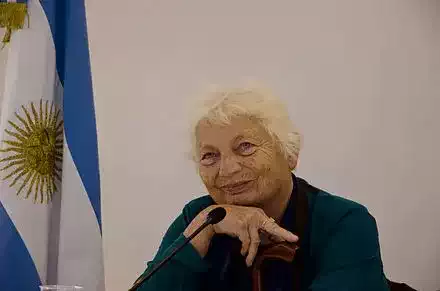
Diana Bellessi

Diana Bellessi is an Argentine poet whose work is characterized by a powerful lyrical voice and a deep exploration of the human condition, time, and identity. Her poetry, marked by precise and imagistic language, dialogues with literary tradition while innovating in form and content. Bellessi has been building a significant legacy, recognized for her contribution to contemporary Spanish-language poetry.

Marco Antonio Campos


Antonio Lucas
Antonio Lucas is a Spanish poet, journalist, and literary critic, known for his incisive poetry and his approach to social and existential themes. His work is marked by a direct style and critical reflection on contemporary reality. As a journalist and critic, Lucas has closely followed the cultural and literary scene, offering sharp analyses and actively participating in public debate. His writing is valued for its intelligence, conciseness, and the relevance of his observations.

Miguel García-Posada

Gioconda Belli

Gioconda Belli is a prominent Nicaraguan poet and novelist, known for her work that addresses themes such as love, sensuality, politics, and female identity. With a powerful and lyrical voice, Belli explores the experience of women in Latin America, challenging social norms and celebrating freedom and resistance. Her writing is often marked by a strong erotic charge and a clear social and political commitment.

Luis Alberto de Cuenca

Spanish poet, literary critic, and translator, Luis Alberto de Cuenca is a prominent figure in the poetry of the second half of the 20th century and the early 21st century. His work is characterized by profound erudition, a conversational tone, and constant intertextuality with popular culture and literary tradition. Through poetry that is accessible yet rich in nuance, he explored universal themes such as love, death, and the passage of time, often with an undertone of melancholy and existential reflection.

Francisco Díaz de Castro

Antonio Cabrera

Antonio Jiménez Millán
Antonio Jiménez Millán is a Spanish poet whose work is part of the tradition of experience poetry and reflection on contemporary life. His writing is marked by clarity, restraint, and depth of thought.

BenjamÃn Prado

Ángeles Mora

Itzíar López Guil

Clara Janés
Clara Janés is an internationally renowned Spanish poet, translator, and novelist, whose work is marked by philosophical depth, sensuality, and a rich, evocative language. Her poetry explores themes such as identity, spirituality, the body, and the human relationship with the universe, often influenced by Eastern and mystical traditions. A translator of fundamental works by authors like Rumi and Hafez, Janés has established a cross-cultural dialogue that is reflected in her own writing. Her vast body of work, encompassing poetry, prose, and essays, has consolidated her as one of the most unique and influential voices in contemporary Spanish-language literature.

Luis Antonio de Villena
Luis Antonio de Villena is a prominent Spanish poet, writer, and literary critic. His work is marked by a deep sensitivity, exploring themes such as love, beauty, ephemerality, and the human condition. With a lyrical and dense style, he has established himself as an important voice in contemporary Spanish-language poetry. In addition to his poetic production, Villena has also dedicated himself to prose, with novels and essays that reflect his vast culture and his critical view of society and art. His figure is associated with a certain aestheticism and a constant search for formal perfection in his texts.

Juan Carlos Suñén

Vicente Gallego
Vicente Gallego is a contemporary Spanish poet, recognized for his work that blends colloquial language with deep philosophical reflections. His poetry stands out for its originality and its ability to address complex themes in an accessible way. He moves between the real and the symbolic, inviting the reader to question reality and explore new perspectives on life, art, and language itself.

Felipe Benítez Reyes

Javier Yagüe Bosch

Rafael Morales
Rafael Morales is a Spanish writer, with a work that spans different literary genres, but often leans towards poetry and short fiction. His writing is recognized for its musicality, exploration of universal themes, and a language that combines simplicity with depth.

Ángel García López

Arcadio López-Casanova

Pablo García Baena
Pablo García Baena was a distinguished Spanish poet, recognized for his lyrical work of profound sensuality and his connection to surrealism and the Generation of '50. His poetry is characterized by the exploration of themes such as eroticism, the beauty of the body, classical mythology, and decadence, often tinged with a melancholic tone and great verbal plasticity. Baena cultivated a language rich in sensory images and symbolism, creating a poetic universe that is both intimate and universal. His literary career was recognized with important awards, consolidating him as a unique and fundamental figure in contemporary Spanish poetry.

Almudena Guzmán
Almudena Guzmán is a Spanish writer whose work focuses on fiction, often exploring the complexities of interpersonal relationships and the dilemmas of modern life. Her narrative is marked by an insightful look at the human condition and the ability to create characters with whom the reader can identify.

Elsa López

Antonio Abad
Antonio Abad is a Spanish writer whose work stands out for its psychological depth and exploration of themes such as identity, memory, and human relationships. His writing is characterized by a careful prose and a narrative that frequently transitions between realism and introspection.

Miguel Velasco

Fernando Quiñones
Fernando Quiñones was a Spanish poet, writer, and journalist. His work is marked by the influence of post-war Spanish poetry and his connection to the land and Andalusian culture. With a rich and evocative language, Quiñones portrayed in his verses and prose the soul of Andalusia, exploring themes such as identity, memory, and landscape.

Pedro Molina Temboury
Pedro Molina Temboury is a Spanish writer and intellectual, known for his contribution in areas such as literary criticism and essay writing. His work often addresses culture, society, and artistic manifestations. With a sharp and analytical eye, Temboury develops reflections that enrich the debate on contemporary issues, drawing from a solid foundation in history and cultural theory.

Miguel Fernández

Luis Rosales
Luis Rosales was a Spanish poet whose work is associated with the Generation of '27, although his style developed its own voice and a profound reflection on the human condition and beauty. His poetry is characterized by a refined lyricism, precise language, and a constant search for harmony and transcendence. Rosales explored themes such as love, death, time, nature, and memory, often with an existential and metaphysical perspective. He is recognized for his formal mastery, his balance between tradition and modernity, and his ability to evoke deep emotions through suggestive images and a musical rhythm. His work represents a valuable legacy in 20th-century Spanish poetry, marked by lyrical intensity and the nobility of his expression.

Mariano Roldán
Mariano Roldán is a name associated with literature, with contributions extending to poetry and possibly prose. His work is noted for its lyrical sensitivity and an exploration of themes that touch the soul. He stands out for the way he weaves words, creating vivid images and deep emotions in his verses. Roldán's work reflects a profound observation of the world and human experience, seeking to express universal truths through his literary art.

Alfonso Canales
Alfonso Canales was a Spanish poet and professor. His poetic work is marked by a deep reflection on existence, the human condition, and the ephemerality of time. With a style that moves between the lyrical and the existential, Canales masterfully explored language, seeking to express the complexities of the soul. In addition to his literary production, Canales also dedicated himself to teaching, sharing his love for literature and writing with new generations. His influence extends to both the field of poetry and the educational area, leaving a legacy of sensitivity and thought.