

Awards
Premio Princesa de Asturias de las Letras
Princesa de Asturias de las Letras
Description
Origin and Characteristics of the Award
The Princess of Asturias Award for Literature, formerly known as the Prince of Asturias Award for Literature, is one of the eight awards granted annually by the Princess of Asturias Foundation. Created in 1981, the award distinguishes the work of authors who, through their literary creation, have significantly enriched the universal literary cultural heritage.
Scope and Selection Criteria
Its scope is vast, encompassing all forms of literary expression, from poetry and prose to essays and theater. The selection of the laureates is carried out by a jury composed of renowned personalities in the world of letters, academia, and culture, who evaluate the quality, originality, influence, and universal relevance of the candidate works. The award is not limited to a specific genre and can be given to authors of fiction, non-fiction, poetry, drama, among others.
Cultural Importance
Its importance lies not only in the prestige it confers on the laureates but also in the recognition of literature as a fundamental pillar of human culture and thought.
Distinguished Laureates
Throughout its history, the award has celebrated authors from diverse nationalities and literary traditions, reflecting the diversity and richness of world literary production. Among the winners are names such as Gabriel García Márquez, Susan Sontag, Günter Grass, Philip Roth, Mario Vargas Llosa, Alice Munro, Haruki Murakami, Maryse Condé, and Olga Tokarczuk, among many others.
Ceremony and International Recognition
The award ceremony, which takes place annually in Oviedo, Asturias, is an event of great cultural significance, presided over by the Monarchs of Spain, and attracting the attention of the international literary community. The award is often seen as an indicator of literary excellence and a recognition of literature's ability to transcend borders and cultures, promoting dialogue and understanding among peoples.
Mission and Continuous Evolution
The Princess of Asturias Foundation, with this award, reaffirms its commitment to promoting culture and knowledge, celebrating those who, through the written word, shape our perception of the world and enrich our human experience. The selection of laureates is a rigorous process aimed at identifying and honoring literary excellence in all its fullness, ensuring that the award continues to be a beacon of recognition for the great literary creators of today and the future. Its history is marked by constant evolution, adapting to new times and new literary voices, but always maintaining its focus on the quality and universal relevance of literary work.
Winners

Eduardo Mendoza


Ana Blandiana

Ana Blandiana is a Romanian poet, essayist, and political activist, recognized for her lyrical and engaged poetry, which frequently addresses themes such as freedom, memory, and the human condition under authoritarian regimes. Her work is a reflection of her experiences and her commitment to civil rights and democracy.
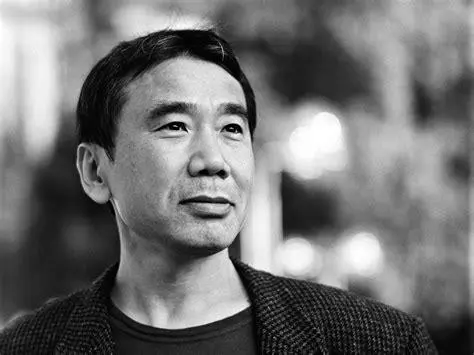
Haruki Murakami

Juan Mayorga

Emmanuel Carrère


Anne Carson

Anne Carson is a Canadian poet, essayist, and novelist known for her scholarly and interdisciplinary approach to literature. Her works often blend genres, exploring themes such as classical mythology, philosophy, history, and literary criticism.

Siri Hustvedt


Fred Vargas

Adam Zagajewski


Richard Ford

Leonardo Padura

John Banville


Antonio Muñoz Molina

Philip Roth

Leonard Cohen

Amin Maalouf

Ismail Kadaré

Margaret Atwood
Margaret Atwood is an acclaimed Canadian novelist, poet, literary critic, and activist. She is known for her dystopian novels, speculative fiction, and works that explore themes of gender, power, and the environment.

Amos Oz

Paul Auster

Nélida Piñon

Claudio Magris

Fatima Mernissi


Susan Sontag
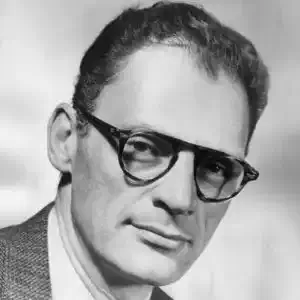
Arthur Miller
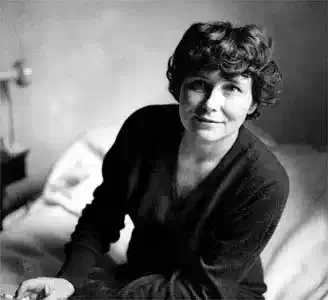
Doris Lessing

Doris Lessing was an Anglo-Iranian novelist and short-story writer, known for her works that explore social, political, and psychological issues, with a strong inclination towards science fiction and feminism. She was awarded the Nobel Prize in Literature in 2007.

Augusto Monterroso
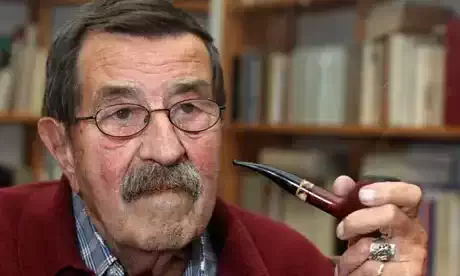
Günter Grass

Günter Grass was a German writer, born in 1927 and died in 2015, winner of the Nobel Prize in Literature in 1999. He is one of the most influential and recognized German-language authors of the post-war period, known for his works that address German history, guilt, and collective memory.

Francisco Ayala

Álvaro Mutis

Álvaro Mutis was a Colombian poet and novelist, a central figure in 20th-century Latin American literature. His work, marked by a profound melancholy, the exploration of identity, and reflection on time and memory, is characterized by a refined language and great musicality. He is especially known for his character Maqroll el Gaviero, a globetrotter who embodies the figure of the exile and the eternal traveler, a symbol of the human condition in modernity. Mutis left a literary legacy of great value, internationally recognized for his stylistic mastery and his profound vision of the world.

Francisco Umbral

Carlos Bousoño
Carlos Bousoño was a distinguished Spanish poet and literary critic, a central figure in post-war Spanish poetry and one of the foremost experts on the work of Juan Ramón Jiménez. His poetic work, marked by a profound reflection on being, time, and reality, is characterized by its formal rigor, careful language, and constant search for truth and beauty. As a critic, his analysis of contemporary poetry and his erudition established him as an undisputed authority in the Spanish literary sphere.

Carlos Fuentes

Claudio Rodríguez
Claudio Rodríguez was a Spanish poet whose work is characterized by his profound reflection on existence, nature, and transcendence. His poetry, rooted in Spanish tradition but open to contemporary currents, stands out for its vigorous language and its ability to find the extraordinary in the everyday. Throughout his career, he explored universal themes with a hopeful and vitalistic perspective, becoming a key figure in Spanish poetry of the second half of the 20th century.

Francisco Nieva

Arturo Uslar Pietri

Ricardo Gullón

Carmen Martín Gaite

José Ángel Valente
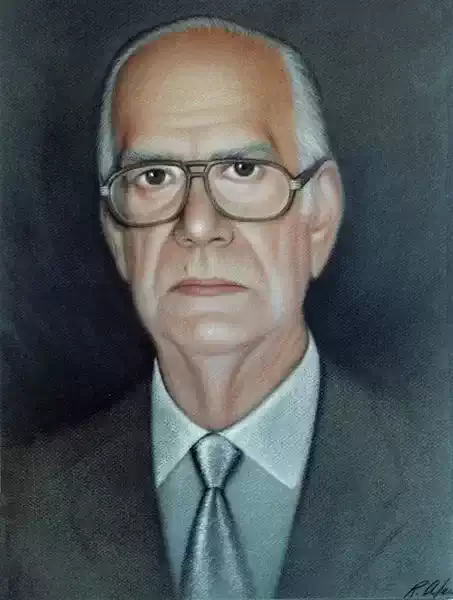
Camilo José Cela
Camilo José Cela was a prominent Spanish writer, awarded the Nobel Prize in Literature in 1989. His work, which includes novels, short stories, and poetry, is known for its rich language, raw realism, and exploration of the complexities of Spanish society. He is considered a central figure in 20th-century Spanish literature, particularly known for novels such as "The Family of Pascual Duarte" and "The Hive," which portray the harsh reality of post-civil war Spain.

Mario Vargas Llosa

Rafael Lapesa
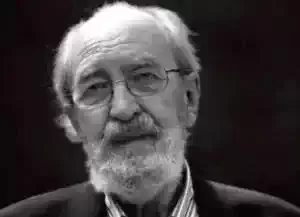
Angel González
Ángel González was a Spanish poet, one of the most representative figures of the so-called "Generation of the 50s" or "Post-war Generation." His poetry is characterized by a colloquial, ironic, and often critical tone, which addresses daily life, love, memory, and the human condition from a lucid and disillusioned perspective. With direct and accessible language, González managed to connect with a broad audience, distancing himself from grandiloquent rhetoric. His work is a mirror of the social and sentimental reality of his time, with a deep reflection on identity and the fleetingness of existence.

Pablo García Baena
Pablo García Baena was a distinguished Spanish poet, recognized for his lyrical work of profound sensuality and his connection to surrealism and the Generation of '50. His poetry is characterized by the exploration of themes such as eroticism, the beauty of the body, classical mythology, and decadence, often tinged with a melancholic tone and great verbal plasticity. Baena cultivated a language rich in sensory images and symbolism, creating a poetic universe that is both intimate and universal. His literary career was recognized with important awards, consolidating him as a unique and fundamental figure in contemporary Spanish poetry.

Juan Rulfo

Gonzalo Torrente Ballester

Miguel Delibes
Miguel Delibes was one of the most important Spanish writers of the 20th century, known for portraying the rural life of Castile and traditional values. His work is characterized by a realistic style, accessible language, and a profound social and environmental concern. He is recognized for his ability to give voice to peasants and for his subtle critique of modernity.
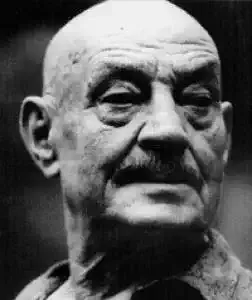
José Hierro
José Hierro was a Spanish poet, one of the central figures of post-war social poetry and one of the innovators of poetic language in Spain. His work is characterized by a profound humanism, a concern for social and existential reality, and constant formal and thematic experimentation. His poetry is distinguished by its reflective tone, its commitment to the human condition, and its search for a language that can name the complexity of the world and of being. Hierro is considered a poet of doubt, of constant questioning, and his work is a testament to the search for meaning in an often turbulent and contradictory world.