

Awards
Premio Nacional de Letras de Argentina
Premio Nacional de Letras
Description
Origin and Purpose of the Prize
The National Prize for Literature of Argentina, established in 1942, is the highest honor awarded by the Argentine State to a writer in recognition of their complete body of work and their contribution to national literature. Its creation aimed to value and encourage Argentine literary production, elevating it to a level of national and international prestige.
Selection Process and Criteria
Throughout its history, the prize has been awarded to prominent figures who have shaped the country's literary identity, encompassing various genres and styles. The selection of laureates is carried out by a jury composed of renowned academics, literary critics, and writers, who evaluate the literary quality, originality, thematic depth, and cultural impact of the candidate's work. The evaluation criteria are rigorous, seeking to identify authors whose production has transcended time and space, influencing generations of readers and writers.
The prize is not limited to a specific genre, and can honor poets, novelists, short story writers, playwrights, and essayists. This scope reflects the diversity and richness of Argentine literature.
Evolution and Cultural Relevance
Over the decades, the National Prize for Literature has been a thermometer of the evolution of Argentine literature, awarding from established canons to emerging voices that brought new perspectives and languages. The award ceremony is an event of great cultural relevance, often presided over by high government authorities, and serves as a platform for reflection on the state of literary art in the country.
The importance of the prize lies not only in the individual recognition of the writer but also in the valuation of literature as a fundamental pillar of national culture and identity. Many of the winners have become emblematic figures, whose works are studied in schools and universities, and who continue to inspire new talents.
The history of the prize is also marked by moments of debate and reflection on the selection criteria and representativeness, which demonstrates the vitality and constant re-evaluation of the Argentine literary landscape.
Distinctive Features
The absence of specific categories for distinct literary genres, such as poetry or novels, focuses the recognition on the author's entire body of work, giving it a more comprehensive and, for many, more prestigious character.
International Projection
The relevance of the National Prize for Literature transcends Argentine borders, serving as an indicator of the quality and strength of Spanish-language literary production. Its continuity and the prestige surrounding it attest to Argentina's commitment to the promotion and valorization of its literature.
Winners

Susana Villalba

Susana Villalba is an Argentine writer whose works explore the complexities of the human condition, with a keen eye on social relationships and existential dilemmas. Her prose, often engaging and introspective, invites the reader to delve into narratives that address themes such as memory, identity, and the challenges of contemporary life.

Jorge Aulicino

Diana Bellessi
Diana Bellessi is an Argentine poet whose work is characterized by a powerful lyrical voice and a deep exploration of the human condition, time, and identity. Her poetry, marked by precise and imagistic language, dialogues with literary tradition while innovating in form and content. Bellessi has been building a significant legacy, recognized for her contribution to contemporary Spanish-language poetry.

Fermín Estrella Gutiérrez

Luis Leopoldo Franco

Baldomero Fernández Moreno

Argentine poet known for his lyrical and costumbrista work. His poetry is characterized by simplicity, musicality, and the evocation of daily life, especially that of Buenos Aires. He addressed themes such as love, nature, and the city with an accessible and emotional language.

Ezequiel Martínez Estrada
Ezequiel Martínez Estrada was an Argentine essayist, poet, literary critic, and diplomat, whose work was characterized by a deep reflection on Argentine and Latin American reality. His critical thinking addressed themes such as national identity, history, literature, and the human condition, often with a pessimistic but lucid vision. Considered a central figure in 20th-century Argentine thought, Martínez Estrada was a tireless polemicist and a keen observer of the social and political complexities of his time. His legacy lies in his vast essayistic and poetic production, which continues to be an unavoidable reference for understanding the culture and history of Latin America.
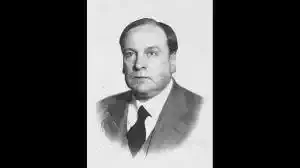
Pedro Miguel Obligado
Pedro Miguel Obligado is an Argentine writer who has left his mark on literature through a body of work rich in descriptions and reflections on life and society. His writing is often praised for its clarity and depth in addressing various themes, from everyday life to more complex philosophical questions. He stands out for his ability to create vivid settings and memorable characters, using a language that makes his narratives accessible and captivating. Obligado's work is an invitation to carefully observe the world and reflect on the individual's role in their various spheres of action.

Ataliva Herrera
Ataliva Herrera is a prominent figure in literature, with a work distinguished by its depth and the rigor with which it approaches universal themes. His writing is marked by precise language and a critical view of society and the human condition. He is dedicated to exploring the complexities of existence, moral dilemmas, and interpersonal relationships. His literary legacy is built on a foundation of deep reflection, translated into dense and meaningful narratives. Herrera is an author who invites meditation on life, art, and the individual's role in the world, leaving an indelible mark on the literary field.