

Awards
Premio Internacional Alfonso Reyes
Premio Alfonso Reyes
Description
Origins and Objectives
The Premio Internacional Alfonso Reyes is one of the most prestigious literary awards in Mexico and Latin America, created in 1973 by the National Institute of Fine Arts and Literature (INBAL) and the Sociedad Alfonsina Internacional.
The award aims to honor the memory and work of the illustrious Mexican writer, diplomat, and essayist Alfonso Reyes (1889-1959), considered one of the pillars of Hispanic American literature and one of the great humanists of the 20th century.
Criteria and Philosophy
The distinction is awarded to writers of any nationality who have distinguished themselves through their literary output, especially in the field of prose, essays, and literary criticism, and whose work contributes to the enrichment of universal culture and thought.
The choice of laureates falls on works that demonstrate intellectual depth, stylistic rigor, and a commitment to the humanistic values that characterized Reyes's career.
Laureates and Tradition
Throughout its history, the award has been presented to internationally renowned figures, whose names are inscribed in the pantheon of contemporary literature. Among the winners are writers of various nationalities, reflecting the universalist vocation of the award.
The award ceremony is usually held in Monterrey, Nuevo León, the birthplace of Alfonso Reyes, as part of the celebrations of his birthday on May 17.
Selection Process
The selection criteria emphasize literary quality, originality, influence, and the consistency of the author's work throughout their career. It is not about awarding a specific book, but rather the entirety of a writer's literary production, recognizing their impact and relevance in the global literary scene.
The Sociedad Alfonsina Internacional plays a crucial role in promoting the work of Reyes and organizing the award, keeping his intellectual legacy alive.
Scope and Impact
The Premio Internacional Alfonso Reyes is not limited to a specific literary genre, although its strong connection to Reyes's prose and essays makes it particularly suited for authors who explore these areas. However, its scope allows for the recognition of excellence in various forms of writing, from novels and short stories to poetry and drama, provided the work demonstrates the required depth and quality.
The importance of this award lies not only in the prestige of its laureates but also in its ability to project Hispanic American literature onto the global stage and to celebrate the figure of Alfonso Reyes as a model of an intellectual and writer. It is a recognition that transcends borders, honoring those who, through their words, contribute to the understanding of the world and the elevation of the human spirit. Its longevity and the quality of its winners consolidate it as an unmissable milestone in the history of literary awards.
Winners

Patrick Johansson


Alberto EnrÃquez Perea

Elsa Cross

Malva Flores
Malva Flores is a Mexican poet and essayist, known for her work that moves between lyrical reflection and social commentary. Her poetry is marked by sensitivity, exploration of the human condition, and keen observation of the world around her, often with a touch of irony and existential depth.

Liliana Weinberg

Carlos GarcÃa Gual


Héctor Perea

Adolfo Castañón

Alberto Manguel


Sergio Pitol

Ida Vitale

Fernando del Paso

Ignacio Bosque

Eduardo Lizalde
Eduardo Lizalde was a Spanish poet, essayist, and literary critic, whose work is marked by a profound reflection on existence, art, and the human condition. His poetry, often enigmatic and philosophical, invites introspection and questioning. Lizalde also stood out for his activity as a critic, incisively analyzing literature and culture.

Mario Vargas Llosa

Alfonso Rangel Guerra

Ernesto de la Peña

George Steiner


Margit Frenk

Antonio Candido

José Emilio Pacheco

Mexican poet, essayist, narrator, translator, and academic. Known for his introspective lyricism and his sharp reflection on time, memory, and identity. His work is characterized by deep melancholy, precise language, and a constant interconnection between the personal and the social. He reflected on history, popular culture, and the human condition in the modern world. He stood out for his ability to move between high culture and daily life, integrating diverse elements into a unique poetic worldview.

Harold Bloom


Rafael Gutiérrez Girardot


Arturo Uslar Pietri

Juan José Arreola

Germán Arciniegas

JoaquÃn DÃez-Canedo

Arnaldo Orfila Reynal

Andrés Henestrosa

Adolfo Bioy Casares

Laurette Séjourné

Ramón Xirau

Gutierre Tibón

Alí Chumacero
Alí Chumacero was a distinguished Mexican poet, essayist, and literary critic, whose work is characterized by a deep reflection on the human condition, the passage of time, and the beauty of language. His poetry, often marked by a melancholic and contemplative tone, explores universal themes with great formal mastery and a particular lyrical sensibility. He was an influential figure in 20th-century Mexican literature, not only for his poetic work but also for his role as a cultural promoter and editor, leaving a significant legacy in Hispanic letters.
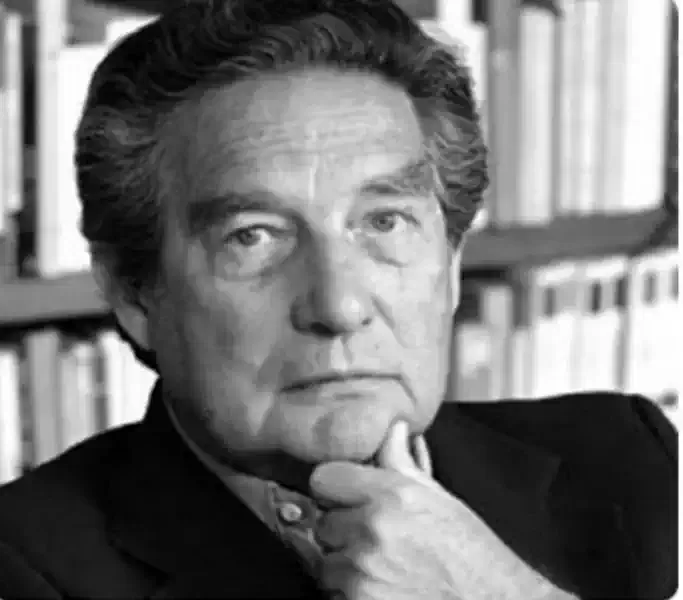
Octavio Paz
Octavio Paz was one of the most important poets and essayists of the 20th century, awarded the Nobel Prize in Literature in 1990. His work is vast and multifaceted, exploring themes such as love, solitude, Mexican identity, the human condition, time, and the search for transcendence. With a rich and innovative language, Paz moved between lyrical poetry, philosophical reflection, and cultural criticism, leaving an invaluable intellectual and artistic legacy.

Rubén Bonifaz Nuño

Paulette Patout

José Luis MartÃnez

Jacques Soustelle

Ernesto Mejía Sánchez
Ernesto Mejía Sánchez was a Mexican poet, essayist, and literary critic, known for his profound erudition and his lyrical and reflective style. His work is notable for its exploration of Mexican culture, history, and Ibero-American literature. He was an important figure in the Mexican intellectual landscape of the 20th century, contributing his poetic sensibility and critical vision to the literature and thought of his country.

Carlos Fuentes

James Willis Robb

Jorge Guillén
Spanish poet, one of the central figures of the Generation of '27 and one of the most important representatives of pure poetry in the Spanish language. His work is characterized by a celebration of existence, light, and formal perfection, seeking a poetry stripped of anecdotes and excessive sentimentality. Throughout his extensive production, Guillén explored the beauty of the world and the fullness of being through a refined language and constant aesthetic rigor.

André Malraux

Alejo Carpentier
Alejo Carpentier was a distinguished Cuban narrator, essayist, and musicologist, a key figure in 20th-century Latin American literature. His work is characterized by the fusion of the real and the marvelous, "marvellous realism," and by a profound exploration of the history, culture, and identity of the American continent. Considered one of the greatest exponents of the Latin American Boom, Carpentier developed a rich and complex narrative style, with exuberant language and profound erudition. His literary legacy is fundamental to understanding contemporary narrative in Spanish.

Marcel Bataillon

Jorge Luis Borges
Jorge Luis Borges was an Argentine writer, poet, essayist, and translator. His work is characterized by its philosophical depth, intricate plots, and exploration of themes such as time, infinity, identity, and the nature of reality. Borges is considered one of the most significant literary figures of the 20th century, renowned for his innovative use of literary devices and his profound influence on postmodern literature.