
Awards
Premio de la Crítica (Poesía catalana)
Crítica Poesia Catalana
Description
A Seal of Excellence in Catalan Poetry
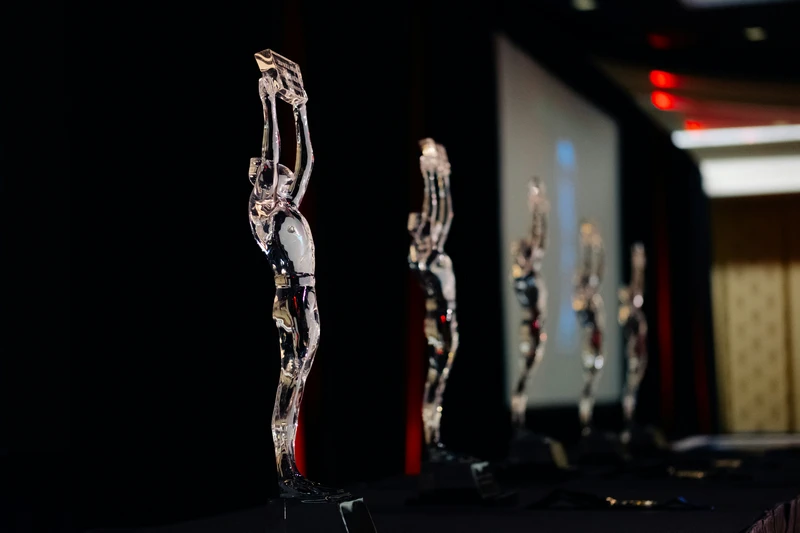
The Premio de la Crítica de Poesía Catalana is one of the most prestigious awards in the Catalan literary landscape, annually distinguishing excellence in poetic production in the Catalan language. Created in 1961 by the Spanish Association of Literary Critics (AECL), the award's main objective is to recognize and promote literary quality, encouraging authors and publishers to maintain a high standard of creation and publication. Its importance lies not only in the prestige it confers upon the winners but also in the role it plays in the visibility and consolidation of Catalan literature within the Spanish and international context.
Selection Criteria and Jury
The selection criteria are rigorous and based on the evaluation of artistic quality, originality, thematic depth, mastery of language, and the aesthetic impact of the work. A jury composed of literary critics, academics, and specialists in the field of Catalan poetry is responsible for choosing the winner. The selection is made from works published in the calendar year prior to the award ceremony, which ensures that the award reflects the most recent trends and innovations in the field of Catalan poetry.
Winners and Historical Trajectory
Throughout its history, the Premio de la Crítica de Poesía Catalana has been awarded to some of the most important names in contemporary Catalan poetry, such as Salvador Espriu, Vicent Andrés Estellés, Miquel Martí i Pol, Maria Mercè Marçal, Enric Casasses, Mireia Calafell, among many others. Its trajectory reflects the evolution of Catalan poetry itself, keeping pace with its stylistic and thematic transformations.
Distinctive Features
One of the distinctive features of the award is its independence and its exclusive focus on the Catalan language, which differentiates it from other literary awards of a more general scope. This specialization allows for a more in-depth and specialized analysis of poetic production in Catalan, valuing its specificities and richness.
Nature and Award Ceremony
The award does not involve a significant monetary endowment, which reinforces its nature as a purely literary and prestigious recognition. The value of the award lies primarily in the recognition of specialized criticism and the projection it provides to the author and their work. The award ceremony, generally held in Barcelona, is a relevant cultural event, bringing together authors, publishers, critics, and literature lovers, serving as a meeting point and celebration of Catalan poetry.
Relevance and Cultural Impact
The Premio de la Crítica de Poesía Catalana is, therefore, a fundamental milestone in the literary life of Catalonia, a seal of quality that attests to poetic excellence and a driving force for the continuous renewal and vitality of literature in the Catalan language. Its longevity and the respect it inspires among industry professionals confirm its relevance and its irreplaceable role in promoting Catalan culture.
Winners

Adrià Targa


Marc Granell
Marc Granell is a Valencian poet and writer, known for his work in the Catalan language. His poetry is characterized by a lyrical and reflective approach, often exploring themes such as nature, love, memory, and the passage of time. With a language rich in imagery and sensitivity, he stands out in contemporary literature. His poetic work is marked by the ability to capture the beauty of everyday life and transform personal experiences into universal verses. Granell also works in other cultural areas, being an active figure in the artistic scene.

Àngels Marzo
Àngels Marzo is a Spanish writer and poet, whose work is predominantly in the Catalan language. Her writing is marked by sensitivity and the exploration of themes such as memory, the passage of time, and the complexities of human relationships. With lyrical and evocative language, she has established herself as an important voice in contemporary literature. Her poetry tends to be introspective, inviting reflection on existence and emotions. Marzo has also actively participated in literary and cultural events, contributing to the vitality of the literary scene in her region.

Joan Todó

Maria Josep EscrivÃ

Dolors Miquel

Enric Casasses

Zoraida Burgos
Zoraida Burgos is a Spanish writer and poet, known for her literary work that frequently addresses social and historical themes, as well as the human condition. Her writing is characterized by sensitivity and depth in exploring characters and narratives that resonate with reality and emotions. With a career dedicated to literature, Burgos has contributed to the Spanish-language literary scene with various works exploring different genres. Her voice is recognized for its strength and ability to connect with the reader through impactful and reflective stories.

LluÃs SolÃ

Gemma Gorga

MÃ rius Sampere

Carles Duarte

Jordi Llavina

Perejaume

Anna Montero
Anna Montero is a Catalan writer and poet, known for her work that spans both poetry and prose. Her writing is often characterized by a sensitive and introspective approach, exploring themes such as identity, emotions, and human relationships. With a careful and evocative language, Montero builds literary universes that invite the reader to a deep immersion. Her contribution to contemporary Catalan literature is marked by originality and the ability to connect with the audience through universal themes treated with authenticity.

Carles Miralles

Teresa Pascual

Joan Margarit

Ponç Pons

Josep LluÃs Aguiló

Jordi PÃ mias

Maria Beneyto
MÃ rius Sampere
LluÃs SolÃ

Jaume Pont

Jordi Sarsanedas

Carles Torner

Jordi Cornudella

Joan Perucho
Joan Perucho was a prominent Catalan writer and literary critic. His work is marked by rich language and overflowing imagination, exploring themes such as the fantastic, the historical, and the exotic. He is known for his elaborate prose and his ability to create unique literary universes, where reality blends with fantasy in a hypnotic way. His influence on contemporary Catalan literature is notable, and his texts continue to be appreciated for their originality and depth.

Joan Brossa

Joan Brossa was a Spanish poet, playwright, and visual artist, a key figure of surrealism and visual poetry in Catalonia. Known for his avant-garde spirit and his experimentation with language, Brossa explored the possibilities of the object poem, scenic poetry, and artistic intervention in public spaces. His work challenged literary and artistic conventions, inviting playful and critical reflection on reality.

Miquel Martí i Pol
Enric Casasses

Antoni Puigverd
Miquel Martí i Pol

Narcís Comadira
Narcís Comadira is a Spanish poet, translator, and playwright, whose poetic work is distinguished by its formal rigor and its exploration of classical mythology, history, and the human condition. His writing, often marked by deep existential reflection and notable musicality, moves between tradition and modernity, seeking in language the vehicle to unravel the complexities of being. Recognized for his work as a translator of classical and modern authors, Comadira has significantly contributed to the enrichment of the literary landscape in the Catalan language. His poetry invites a dialogue with the past and the present, offering a lucid and committed voice to the exploration of beauty and truth in art.

Antoni MarÃ

Pere Gimferrer
Poet, essayist, and literary critic from Spain, Pere Gimferrer is a central figure in contemporary Catalan and Spanish literature. His poetic work is characterized by profound erudition, constant formal experimentation, and a desire to dialogue between popular culture and high culture. Throughout his extensive career, he has explored themes such as memory, identity, cinema, painting, and mythology, creating a rich and multifaceted lyrical universe. His influence extends to various generations of writers, consolidating his position as one of the most important authors of Catalan and Spanish literature of the 20th and 21st centuries. His work as an essayist and critic has been equally fundamental to understanding the literature and art of his time.

Blai Bonet
Blai Bonet was a Spanish poet, writer, and translator, an important figure in Catalan literature. His poetic work is recognized for its lyrical intensity and exploration of themes such as existence, sensuality, death, and the search for beauty, with a language often marked by experimentation and the influence of surrealism. Bonet left a significant legacy as one of the great poets of his generation, whose work continues to be studied and admired for its originality and aesthetic depth.
Joan Brossa
Joan Brossa was a Spanish poet, playwright, and visual artist, a key figure of surrealism and visual poetry in Catalonia. Known for his avant-garde spirit and his experimentation with language, Brossa explored the possibilities of the object poem, scenic poetry, and artistic intervention in public spaces. His work challenged literary and artistic conventions, inviting playful and critical reflection on reality.
Josep Vicenç Foix
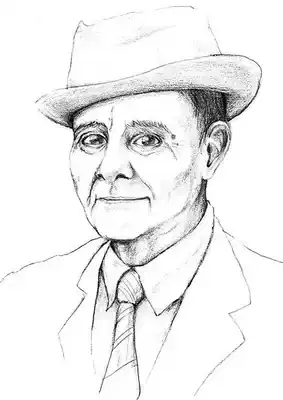
Josep Vicenç Foix was a Spanish poet, writer, and literary critic, one of the most unique and representative figures of 20th-century Catalan literature. His poetic work, marked by a deep spirituality, personal mysticism, and a constant exploration of identity, is characterized by the fusion of tradition and avant-garde. Foix is known for his aphoristic language, cryptic symbolism, and his vocation to explore the limits of poetic expression. Throughout his extensive career, he remained faithful to his personal universe, becoming an unavoidable reference for contemporary Catalan poetry.

Joan Vinyoli

Francesc Parcerisas

Agustà Bartra
Joan Margarit

Josep M. Llompart
Miquel Martí i Pol

Ramon Pinyol
Joan Vinyoli
Blai Bonet
Blai Bonet was a Spanish poet, writer, and translator, an important figure in Catalan literature. His poetic work is recognized for its lyrical intensity and exploration of themes such as existence, sensuality, death, and the search for beauty, with a language often marked by experimentation and the influence of surrealism. Bonet left a significant legacy as one of the great poets of his generation, whose work continues to be studied and admired for its originality and aesthetic depth.